Water Damage Drying for Roaring Fork Valley CO Property Owners
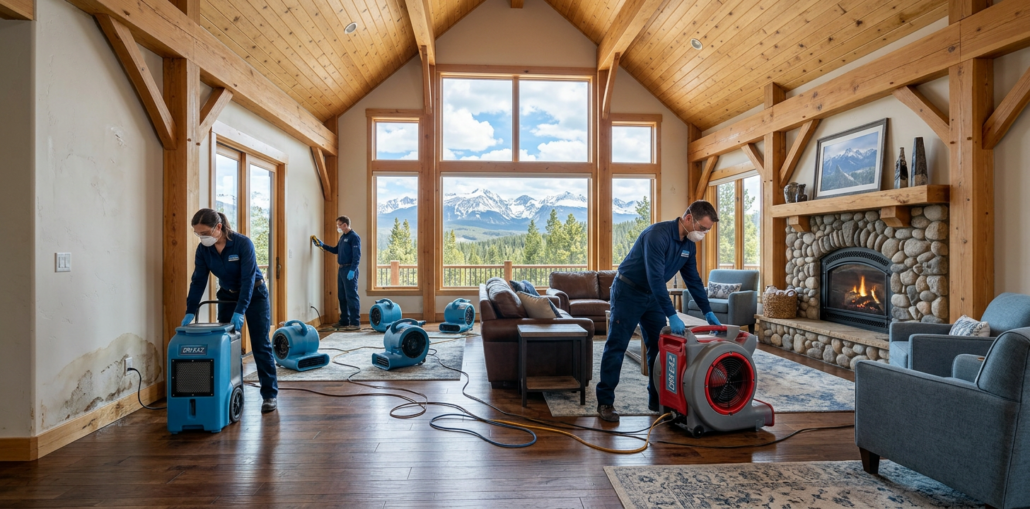
A burst pipe, roof leak, or overflow can leave more behind than visible water. Moisture can settle beneath flooring, behind drywall, inside cabinets, and within insulation, where it continues damaging a home long after the surface looks dry.
For homeowners and property managers, water damage Aspen properties experience requires more than opening windows or placing a household fan in the room. Effective drying and dehumidification services across the Roaring Fork Valley use measured moisture control to protect materials, reduce mold risk, and create a clear path toward repairs.
Why Professional Drying Matters After Water Damage
Professional drying removes moisture from both the air and building materials, which is essential after water intrusion. Extraction handles standing water, but dehumidification and controlled airflow help pull retained moisture from drywall, subfloors, framing, carpet, and furnishings.
The U.S. Environmental Protection Agency advises drying water-damaged areas and belongings within 24 to 48 hours to help prevent mold growth. That window is why a prompt response matters after frozen pipes, appliance leaks, snowmelt intrusion, or a flooded basement. Read the EPA’s guidance on controlling moisture after water damage.
Drying is not simply about making a room feel comfortable again. A proper plan addresses three connected issues:
- Liquid water, removed through pumps or extraction equipment
- Trapped moisture, found in porous materials and hidden assemblies
- High indoor humidity, reduced with commercial dehumidifiers
When these pieces are handled together, property owners have a better chance of saving materials and limiting the scope of reconstruction.
How Drying and Dehumidification Services Work
A reliable drying plan begins with identifying where the water traveled, then setting equipment based on the materials and conditions inside the property. We do not rely on touch alone because drywall, insulation, carpet padding, and wood framing can hold moisture long after the visible water is gone.
Inspection and Moisture Mapping
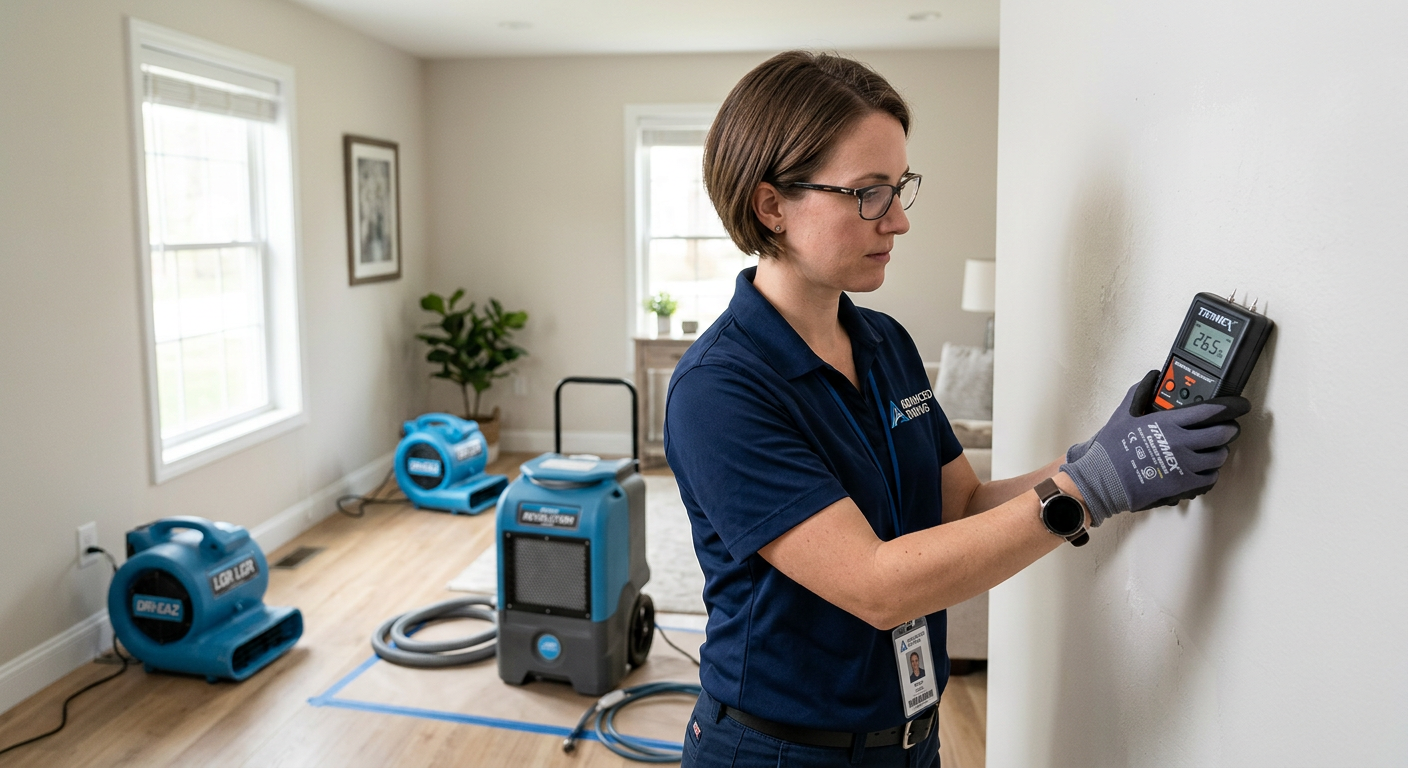
The first step is to locate the source, stop further water intrusion, and inspect affected areas. Moisture meters and thermal imaging, when appropriate, help reveal water behind walls, under flooring, above ceilings, and in other concealed spaces.
This assessment also helps determine which materials can likely be dried and which may need removal. For example, a small clean-water leak caught early may allow some flooring or drywall to be restored. Saturated insulation, swollen cabinetry, contaminated materials, or warped flooring may require a different approach.
Water Extraction Before Drying Equipment
Removing standing water quickly makes the drying process more efficient. Extraction reduces the amount of moisture that air movers and dehumidifiers must manage, helping protect flooring, trim, furnishings, and nearby rooms.
For larger water losses, this can include carpet extraction, water removal from crawl spaces, or controlled removal of damaged materials. If water came from sewage or another potentially contaminated source, avoid using fans or attempting extensive cleanup before the area has been professionally assessed.
Controlled Airflow and Dehumidification
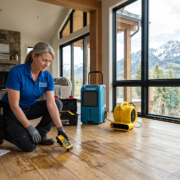
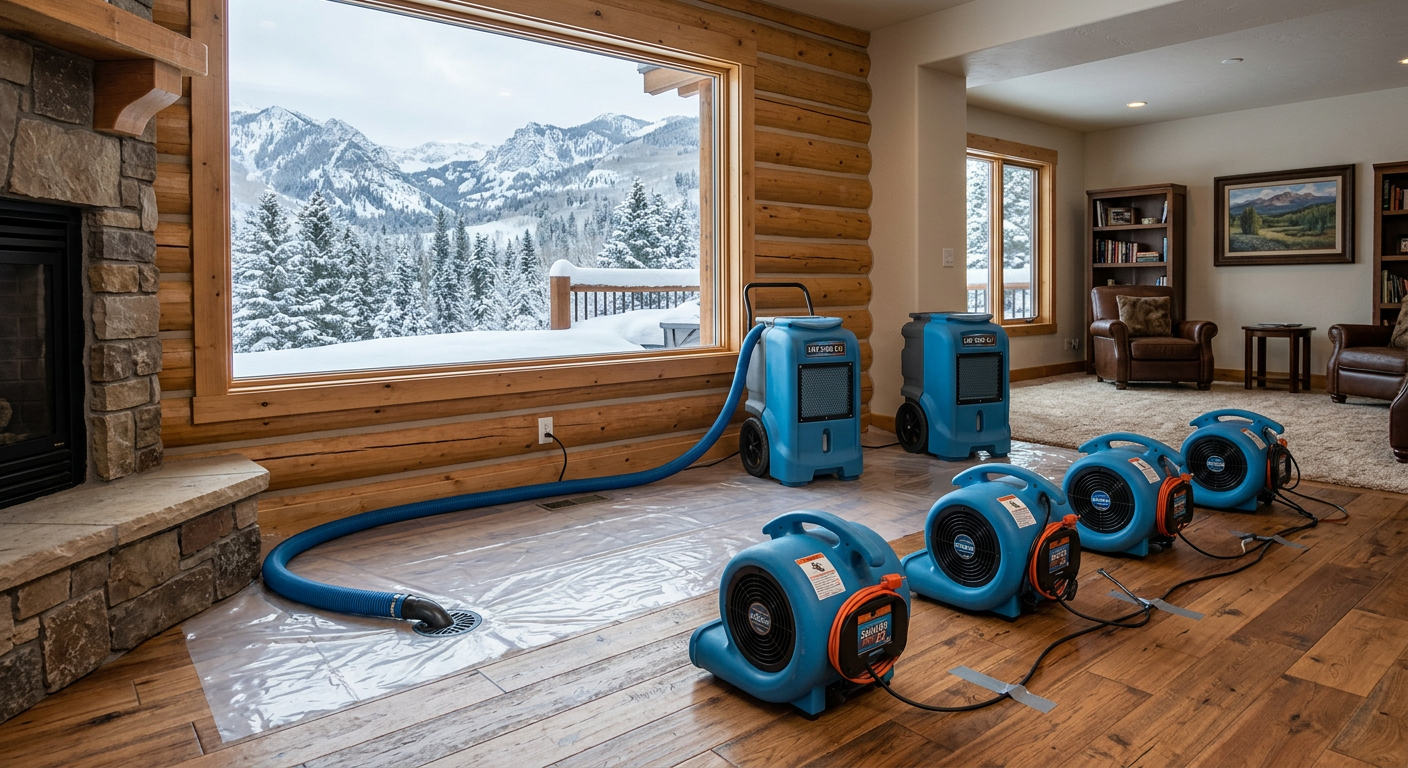
Air movers speed evaporation from wet surfaces. Dehumidifiers capture that moisture from the air so it does not simply settle elsewhere in the structure. The equipment works as a system, creating conditions that help materials dry steadily rather than trapping dampness inside the building.
A professional team monitors progress with repeat moisture readings and adjusts equipment as conditions change. This documentation is valuable for decision-making, repair planning, and insurance communication.
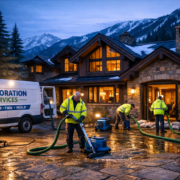
Helpers Restoration provides this measured approach as part of local water damage restoration services for homes, vacation properties, commercial spaces, and managed buildings throughout the valley.
Roaring Fork Valley Conditions Can Change the Drying Plan
Mountain weather, seasonal occupancy, and changing temperatures make controlled drying especially important in Aspen, Snowmass Village, Basalt, Carbondale, and Glenwood Springs. A room may feel dry after a few warm afternoons while moisture remains inside materials that received the initial water exposure.
Cold Weather and Frozen Pipe Losses
Winter pipe breaks can release significant water before anyone is on-site, especially in a second home or vacant rental. Once the pipe is repaired, the restoration work still needs to address wet flooring, wall cavities, insulation, and contents.
Opening windows is not always the best answer in cold conditions. Purposeful dehumidification and airflow allow drying to continue without introducing outside weather or creating unnecessary temperature swings.
Vacation Homes and Managed Properties
Property managers and caretakers often need a clear record of what happened, what equipment is running, and what materials were affected. Consistent moisture monitoring supports better communication with owners, insurers, and repair professionals.
For condo owners and HOA-managed buildings, fast action also helps limit water migration between units. Water can travel through ceilings, shared walls, utility openings, and lower-level spaces before it becomes visible.
Snowmelt, Roof Leaks, and Slow Plumbing Failures
Not every loss arrives as a dramatic flood. A slow refrigerator line leak, ice dam, failing supply line, or roof intrusion can create a long-running moisture problem. Warning signs include a musty odor, peeling paint, soft flooring, staining, swollen baseboards, or recurring condensation.
When those signs appear, arranging an inspection can be less disruptive than waiting for a larger water damage event. Our Aspen water cleanup team can help assess suspected moisture and determine the next appropriate step.
What Property Owners Should Do Before Help Arrives
The safest first actions are simple: stop the water source if it is safe, protect people from electrical hazards, and keep children and pets away from affected areas. Then document the visible damage with photos and move dry belongings away from the water when doing so will not create a safety risk.
Avoid these common mistakes:
- Do not enter standing water near outlets, appliances, or electrical panels.
- Do not assume a dry-looking floor means the subfloor is dry.
- Do not leave soaked carpet padding, wet insulation, or saturated drywall in place without an assessment.
- Do not use household fans on water that may be contaminated.
- Do not wait on contacting your insurer before taking reasonable steps to prevent further damage.
A plumber and a restoration company serve different roles. The plumber repairs the failed pipe or fixture. A water restoration team handles extraction, moisture detection, structural drying, documentation, and damage mitigation.
Get 24/7 Help With Water Damage in the Roaring Fork Valley
If your home or managed property has a burst pipe, flood, leak, or hidden moisture concern, Helpers Restoration is ready to respond. Call (970) 927-3600 for 24/7 emergency cleanup in Aspen, Basalt, Carbondale, Snowmass Village, Glenwood Springs, and nearby Roaring Fork Valley communities.
Request help through the Helpers Restoration contact page or visit Helpers Restoration to learn more about our local emergency services and insurance-focused documentation.
Frequently Asked Questions
How long does professional drying usually take?
Most drying projects require several days, but the timeline depends on the volume of water, how long materials were wet, indoor conditions, and the affected building materials. Larger losses or water that reached wall cavities, subfloors, and insulation may take longer.
Can dehumidifiers dry water behind walls or under flooring?
Dehumidifiers help create the right drying conditions, but they are usually part of a larger system that includes extraction, airflow, moisture monitoring, and, in some cases, selective removal of damaged materials. Hidden moisture must be identified before anyone can determine the right drying approach.
Will my homeowners insurance cover drying and dehumidification?
Many policies may cover sudden and accidental water damage, such as a burst pipe or appliance failure, but coverage depends on the policy, cause of loss, maintenance history, and exclusions. Keep photos, notes, and receipts, then contact your carrier for guidance on your specific claim.
Can hardwood floors be saved after a water leak?
Some hardwood floors can be dried and restored when cleanup begins quickly and the water was clean. The outcome depends on the wood type, exposure time, amount of saturation, and whether boards have cupped, buckled, or separated.
When should I worry about mold after a leak?
Mold is a concern when moisture remains in porous materials or hidden spaces. Musty odors, discoloration, bubbling paint, soft drywall, or a leak that went unnoticed are all reasons to request a moisture inspection and consider mold damage recovery services.
Is a portable home dehumidifier enough after a burst pipe?
A portable unit may help with minor humidity in a small, dryable space, but it is not a substitute for extraction and monitored structural drying after a significant water loss. Professional equipment is designed to manage larger moisture loads and support measurable drying results.
Summary
Drying and dehumidification services protect more than a room’s appearance. They address retained moisture that can affect drywall, flooring, insulation, framing, contents, and indoor air quality after a leak or flood.
For water damage in Aspen and across the Roaring Fork Valley, the best next step is a prompt assessment, effective extraction, controlled drying, and moisture verification. Learn more about common restoration questions on the Helpers water damage FAQ page.
A Dry Building Requires More Than Time
Waiting for a wet area to air out can leave hidden moisture behind and turn a manageable repair into a larger restoration project. Fast extraction, deliberate dehumidification, and documented moisture checks give homeowners and property managers a practical way to protect the property and move forward with confidence.