
A musty smell in a basement, a discolored patch near a window, or a recurring moisture issue after a pipe leak can signal a problem that needs more than surface cleaning. For Basalt homeowners, rental owners, and property managers, mold remediation Basalt CO services are about finding the moisture source, stopping contamination from spreading, and restoring affected materials safely.
Mold often follows water damage that seemed minor at first. A slow plumbing leak, ice-dam intrusion, wet crawl space, appliance overflow, or flood cleanup delay can leave moisture inside drywall, flooring, cabinets, and insulation. When that happens, a careful response protects both the property and the people who use it.
Mold Remediation in Basalt Starts With Moisture Control
The most important part of mold cleanup is correcting the water or humidity issue that allowed indoor growth to develop. Removing visible spotting without drying the structure and resolving the source can allow the problem to return behind finished surfaces.
The U.S. Environmental Protection Agency advises drying water-damaged areas and items within 24 to 48 hours to help prevent mold growth. That window matters after burst pipes, roof leaks, snowmelt intrusion, or appliance failures, especially when moisture has reached porous materials such as drywall, carpet padding, insulation, or unfinished wood.
In Basalt, conditions can vary from one property to the next. A seasonal home may have an unnoticed plumbing leak for days. A condo or rental may have moisture migrating from an adjacent unit. A lower-level room may stay damp because water collected beneath flooring or inside a wall cavity, even after the surface looked dry.
Signs You Should Not Ignore
Mold is not always obvious, but a few common warning signs deserve attention:
- Persistent musty or earthy odors
- Discoloration on drywall, trim, ceilings, grout, or stored belongings
- Bubbling paint, warped baseboards, or soft drywall
- Repeated condensation around windows or plumbing fixtures
- A history of water damage, flooding, or a slow leak
- Allergy-like irritation that seems worse in a particular room
A visual check is useful, but it does not show every moisture pocket. Hidden mold can develop beneath flooring, inside cabinets, behind drywall, and around crawl spaces where water damage was not thoroughly dried.
Why Water Damage and Mold Are Closely Connected
Water damage is often the starting point, even when the mold issue is discovered weeks or months later. The right sequence is to stop the water, assess moisture, dry affected materials, and then determine what can be cleaned or needs removal.
The EPA notes that a small area of mold, generally less than about 10 square feet, may be suitable for careful homeowner cleanup when the moisture source has been fixed. Larger areas, extensive water damage, contaminated water, HVAC involvement, or health concerns call for an experienced remediation professional. EPA guidance for home mold cleanup also cautions that porous materials may need disposal when mold cannot be fully removed.
For a recent pipe break or overflow, review our local Basalt water damage cleanup services to understand why extraction and measured structural drying come before repairs. Fast drying can reduce the chance that a manageable water loss becomes a larger mold restoration project.
What a Professional Mold Remediation Plan Should Include
A reliable remediation plan focuses on the source, the affected materials, and preventing cross-contamination during cleanup. It should not rely on fragrance, paint, or a quick wipe-down to hide the issue.
Inspection and Scope Assessment
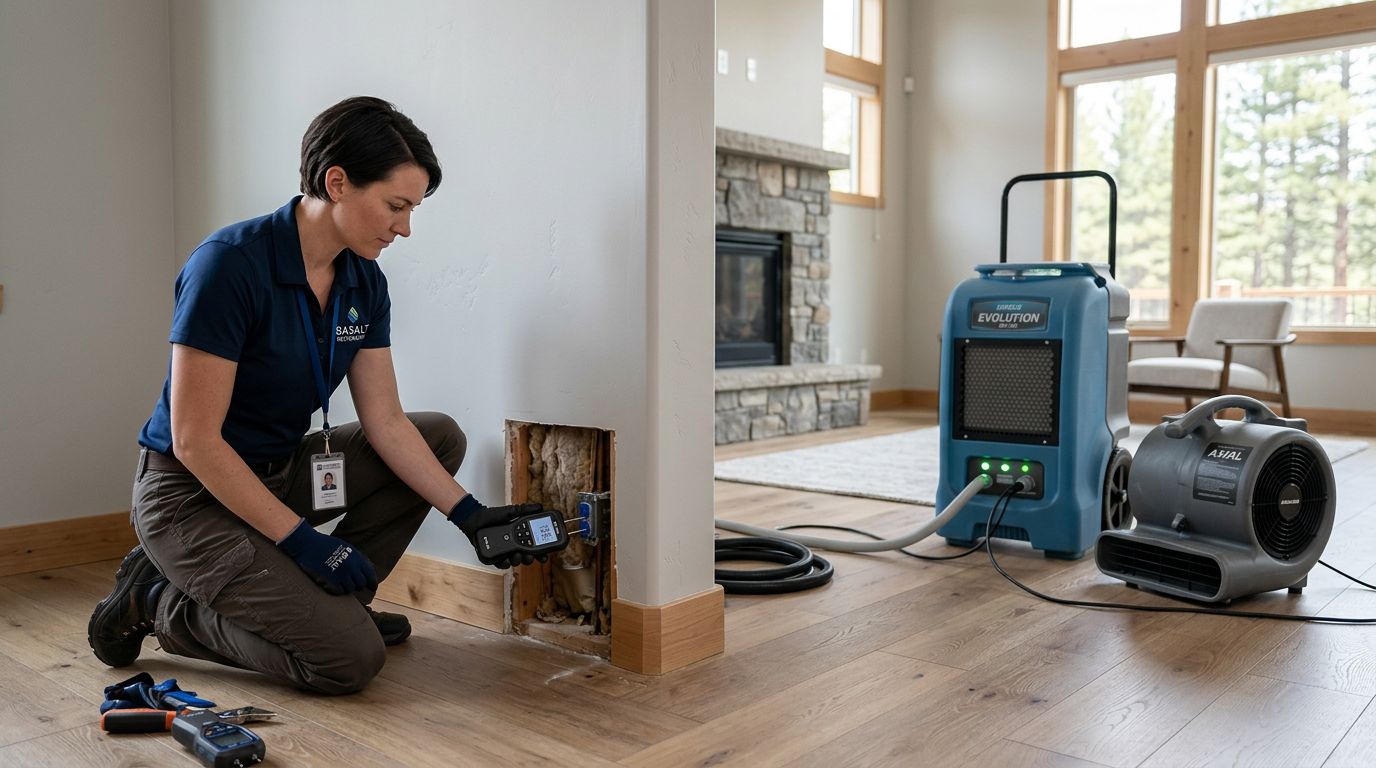
We begin by looking for the moisture source and identifying the materials affected. This may include checking nearby plumbing, roof areas, exterior drainage, bathrooms, laundry spaces, crawl spaces, and prior water-damaged building materials.
The goal is not simply to identify what is visible. It is to establish a practical scope, including whether moisture has traveled into cavities, beneath finishes, or into contents that need specialized cleaning or removal.
Containment and Air Management
When removal work is necessary, containment helps keep dust and spores from moving into unaffected rooms. Controlled work areas, filtration equipment, and careful handling of affected materials are especially important in occupied homes, vacation rentals, offices, and multi-unit properties.
This step is one reason aggressive do-it-yourself demolition can create more disruption than expected. Disturbing moldy drywall or insulation without containment may spread debris into clean areas of the property.
Removal, Cleaning, and Drying
Some nonporous materials can often be cleaned and dried effectively. Other materials, particularly mold-affected carpet padding, insulation, swollen drywall, or heavily contaminated porous contents, may require removal and replacement.
Drying remains central throughout the work. Moisture readings and condition checks help confirm that the building is moving toward normal, dry conditions before repairs close up wall cavities or flooring systems.
Repair Documentation and Insurance Support
For property managers and homeowners filing a claim, documentation can make the next steps clearer. Photos, moisture findings, affected-material lists, and a record of mitigation work help explain what occurred and why specific restoration work was necessary.
Insurance coverage depends on the cause of loss and the policy language. A sudden pipe break can be handled differently from long-term seepage, deferred maintenance, groundwater, or surface flooding. Report the loss promptly, preserve photos, and ask the insurer what documentation it needs before discarding damaged belongings when it is safe to wait.
A Local Response Plan for Basalt Properties
Mold concerns in the Roaring Fork Valley are not limited to one type of building. We see different risks in primary homes, mountain cabins, vacation rentals, commercial spaces, and condominium buildings.
For a homeowner, the priority may be protecting hardwood floors, cabinets, and family belongings after a hidden leak. For a property manager, it may be limiting downtime between tenants, documenting conditions clearly, and coordinating access with owners, guests, or an HOA. In both situations, the best results come from a calm, documented process rather than guessing at what is dry behind finished materials.
Helpers Restoration serves Basalt and nearby Aspen, Snowmass Village, Carbondale, Glenwood Springs, and the wider Roaring Fork Valley. Our team provides inspection, containment, removal, drying, cleaning, restoration planning, and insurance-friendly documentation for water and mold-related property damage.
If the moisture source involved a drain backup or contaminated water, treat it as a different level of concern. Review our sewage backup cleanup information before entering or handling affected materials, since contaminated water can introduce additional health and sanitation risks.
What We Recommend Before Help Arrives
The safest immediate steps are simple: protect people, stop active water if it is safe, and avoid actions that spread contamination. Do not begin tearing out walls or running household fans through a visibly moldy area.
Take These Steps
- Keep children, pets, and people with respiratory concerns away from the affected space.
- Shut off the water source if you can do so safely.
- Photograph visible damage, wet materials, and the suspected source before cleanup begins.
- Move dry valuables away from the affected area when possible.
- Avoid painting, caulking, or applying cover-up products over mold.
- Do not run HVAC equipment if you suspect mold has entered the system.
- Contact your insurer promptly if a covered water event may be involved.
For answers about dry-out timelines, insurance documentation, and related emergency services, visit our water damage restoration FAQ page.
Get Calm, Local Help With Mold Damage in Basalt
When you need a clear plan after a leak, flood, or suspected hidden moisture problem, we are ready to help. Call Helpers Restoration at (970) 927-3600 for 24/7 emergency cleanup in Basalt, or contact our restoration team to request help with assessment, drying, mold remediation, and insurance documentation.
We will help you understand the condition of the property, the next practical steps, and what needs attention first so recovery can move forward with less uncertainty.
Frequently Asked Questions
How long does mold remediation take in Basalt?
The timeline depends on the size of the affected area, the materials involved, whether moisture is still active, and the repairs needed afterward. Small, contained projects may move quickly, while hidden moisture, crawl-space involvement, extensive demolition, or reconstruction can extend the schedule.
Can I stay in my house during mold remediation?
Sometimes, yes, when the affected area can be properly isolated and the work scope is limited. Temporary relocation may be the safer option when contamination is widespread, the HVAC system may be affected, or someone in the household has asthma, severe allergies, or a compromised immune system.
Does homeowners insurance cover mold removal?
It can, but coverage varies widely by policy and cause of loss. Mold resulting from a sudden, covered water event may be treated differently than mold tied to a long-term leak, maintenance issue, or excluded source, so it is important to review the policy and report the damage promptly.
Should I use bleach to remove mold from drywall?
Bleach is not a reliable solution for moldy drywall or other porous building materials. The affected material may need removal, and the underlying moisture problem must be corrected before the area is rebuilt.
Is mold testing always necessary?
Not always. When visible mold and a clear moisture source are present, the priority is often correcting the moisture problem and remediating affected materials. Testing can be useful in some situations, including unclear sources, complex claims, post-remediation verification, or occupant health concerns.
Can a musty smell mean mold even if I cannot see it?
Yes. A persistent musty odor can indicate hidden moisture or microbial growth behind walls, under flooring, in cabinetry, or within a crawl space. An inspection helps determine whether the odor is related to a leak, damp materials, or another source.
Summary
Mold remediation in Basalt works best when the moisture source is found and corrected, affected materials are handled safely, and the structure is thoroughly dried before repairs begin. The 24-to-48-hour drying window after water damage is important, but even older leaks can be addressed with a careful inspection and documented restoration plan.
A clean-looking wall is not always a dry, healthy wall. Addressing water damage, hidden moisture, and mold at the source helps preserve the property, reduce unnecessary repairs, and give homeowners and property managers a clearer path back to normal.
Protect the Property by Solving the Cause
The lasting answer to indoor mold is never cosmetic cleanup alone. Find the moisture, correct the conditions that allowed growth, remove or clean affected materials appropriately, and verify that drying and repairs are completed with care.
For Basalt homes and properties throughout Aspen, Snowmass Village, Carbondale, Glenwood Springs, and the Roaring Fork Valley, a measured response can prevent a small water issue from becoming a long-term restoration problem.