
A burst pipe can turn a quiet Basalt morning into a stressful property emergency in minutes. Water may travel beneath flooring, into wall cavities, and through ceilings long before the full extent of the damage is visible.
For homeowners and property managers, burst pipe cleanup Basalt is about more than removing standing water. A safe recovery means stopping the source, protecting people from electrical hazards, documenting the loss, removing moisture from hidden building materials, and making informed repair decisions before a small leak becomes larger water damage.
What To Do First After a Pipe Bursts
The first priority is safety and stopping additional water from entering the property. Avoid rushing into standing water, especially near outlets, appliances, electrical panels, or a sagging ceiling.
Shut Off the Water and Contact a Plumber
Turn off the home’s main water supply if it is safe to do so. A licensed plumber should repair or isolate the failed pipe, while the restoration work focuses on extracting water and drying the affected structure.
If the pipe burst in a vacant home, tell the plumber and restoration team when the property was last checked. That timing can help determine how long materials may have been exposed to moisture.
Protect People, Pets, and Valuables
Keep children and pets away from affected rooms. Move dry belongings out of the area only when it can be done safely, and avoid lifting heavy wet carpet, furniture, or soaked drywall without help.
Take wide photos and close-up photos before cleanup begins. Photograph the broken pipe, water lines on walls, damaged contents, and any affected rooms. Those records can be useful when discussing the claim with your insurance carrier.
Do Not Assume a Dry Surface Means a Dry Home
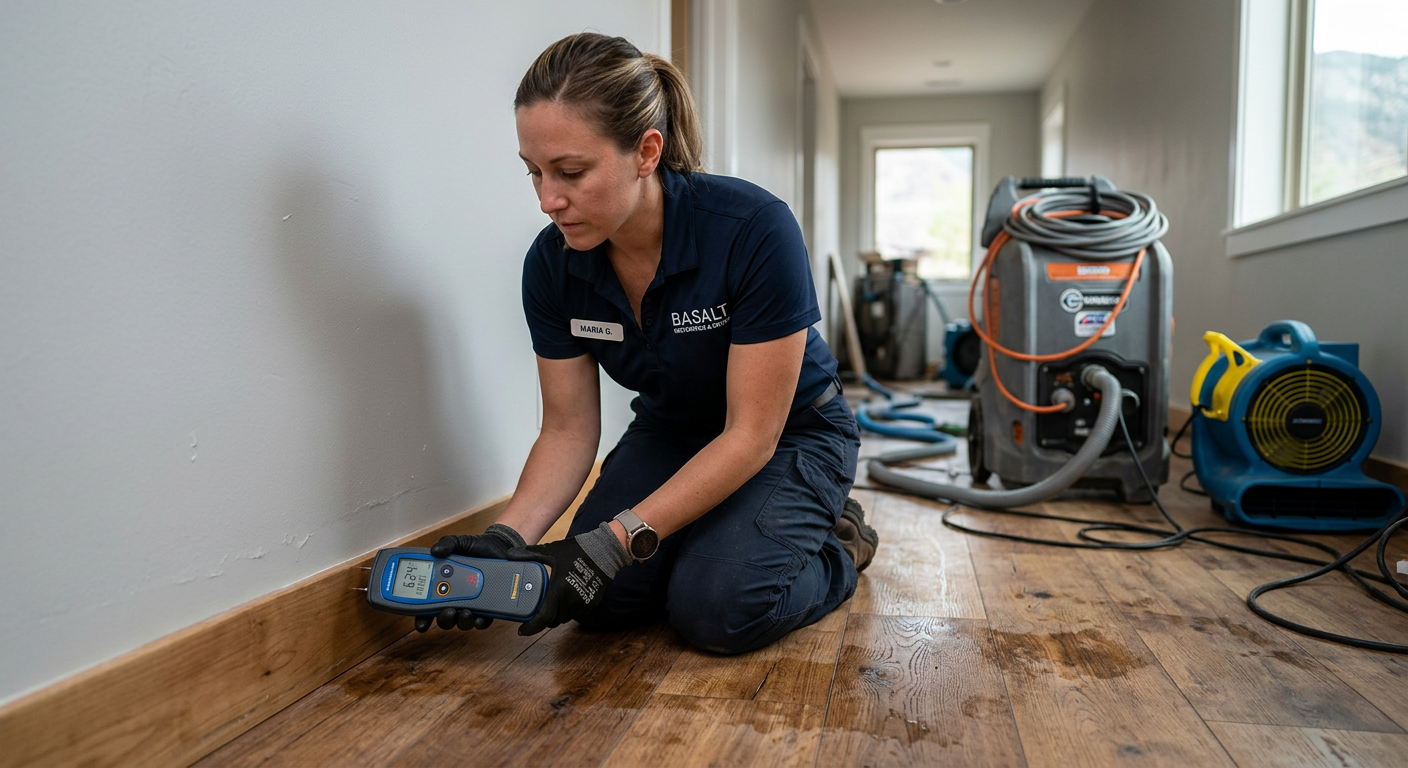
Hardwood, drywall, insulation, subflooring, and cabinets can retain moisture even after visible water has been removed. The EPA’s water-damage cleanup guidance recommends drying clean-water-damaged materials within 24 to 48 hours to reduce mold risk. (epa.gov)
Why Burst Pipes Need More Than a Shop Vacuum
Burst-pipe water often spreads farther than homeowners expect, particularly in multi-level homes, crawl spaces, condos, and properties that were empty when the pipe failed. Effective water cleanup combines extraction with controlled drying and ongoing moisture checks.
Water Can Move Behind Finished Surfaces
Water follows gravity, seams, framing, and gaps around plumbing penetrations. A burst pipe upstairs may affect insulation, drywall, flooring, and light fixtures below. A leak near a kitchen or bathroom can also travel beneath cabinets and under finished flooring.
This is why we recommend an assessment that looks beyond the obvious wet area. Moisture detection helps identify whether materials can be dried in place or should be removed to prevent swelling, odor, deterioration, or mold growth.
Water Source Changes the Cleanup Plan
A clean supply-line break is handled differently from water affected by a sewer backup, appliance discharge, or outdoor flooding. If the source is questionable, avoid using household fans or handling contaminated materials yourself. The EPA notes that contaminated floodwater can carry sewage or chemicals, which may require more cautious removal, cleaning, and sanitation decisions. (epa.gov)
For suspected contamination, our sewage backup cleanup service can help determine a safer next step for the affected property.
A Practical Burst Pipe Cleanup Plan for Basalt Properties
A clear sequence helps reduce confusion when water is actively damaging a home or building. We focus on stabilizing the property first, then documenting conditions and moving into measured drying and restoration.
Assess the Water Damage and Create a Drying Scope
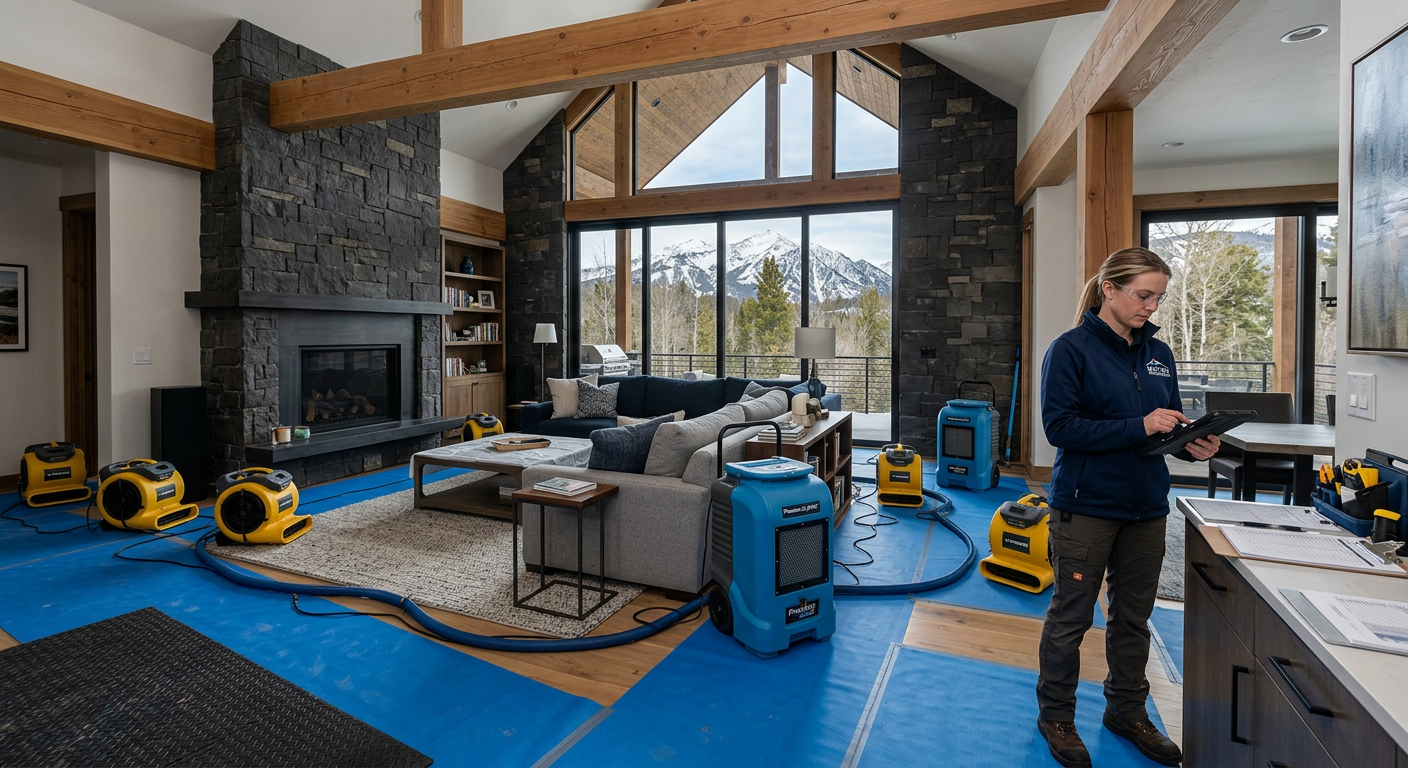
The process begins with identifying where water started, where it traveled, which materials are wet, and whether electrical or structural concerns exist. We also consider access issues that are common in the Roaring Fork Valley, including second homes, managed properties, winter road conditions, and shared walls in condos.
For larger losses, the assessment may include rooms that do not look damaged at first glance. That can include adjoining closets, lower-level ceilings, underlayment, crawl spaces, and nearby mechanical areas.
Extract Water Before It Soaks Deeper
Extraction removes standing water from floors, carpet, pads, and other accessible materials. Fast removal can limit how much water migrates into porous building components, but extraction alone is not the finish line.
After the bulk water is removed, drying equipment and dehumidification help reduce moisture in the air and materials. The goal is not simply to make the room feel dry. It is to verify that affected materials are returning to appropriate moisture conditions.
Monitor Drying and Make Material Decisions
Some materials can be dried and saved when the water is clean and the response is prompt. Others, such as saturated insulation, swollen particleboard, delaminated flooring, or compromised drywall, may need removal and replacement.
The EPA advises that absorbent materials wet for 48 hours or more can become a continuing source of mold growth if they cannot be thoroughly cleaned and dried. (epa.gov) A careful evaluation helps avoid both unnecessary demolition and the bigger mistake of closing wet materials back into the building.
Common Burst Pipe Problems in the Roaring Fork Valley
Freezing temperatures are a familiar concern, but pipe failures do not happen only during a deep freeze. Seasonal vacancies, poorly insulated plumbing runs, sudden temperature changes, appliance connections, and aging supply lines can all create risk.
Vacant and Second Homes
An unoccupied home may allow water to run longer before anyone notices it. Property owners should make sure a local contact, caretaker, or property manager can authorize access and receive updates when an emergency occurs.
If you manage a home from outside the valley, share gate codes, alarm instructions, utility shutoff locations, and the best contact for building access. These practical details can reduce delays during emergency water cleanup.
Condos, Rentals, and Commercial Spaces
In a condo or multi-unit property, a single burst line can affect neighboring units, common areas, and building systems. Notify the association or building manager promptly, then document which spaces may be affected.
Commercial and rental properties also need clear communication with tenants and owners. We encourage property managers to keep a written emergency plan for water shutoffs, preferred plumbing contacts, building access, and insurance reporting.
Hidden Moisture After the Obvious Cleanup
A room can look normal while moisture remains behind baseboards or under flooring. Watch for cupping wood floors, peeling paint, a musty odor, discoloration, soft drywall, warped trim, or humidity that seems unusually high.
If you are concerned about hidden moisture after a burst pipe, our mold and moisture restoration information explains why moisture control matters before mold cleanup becomes necessary.
How We Help With Water Damage in Basalt
Helpers Restoration provides local emergency water cleanup from our Basalt base, with water extraction, structural drying, documentation, and restoration planning tailored to the property. Our team works with homeowners, second-home owners, and property managers throughout Basalt and the surrounding Roaring Fork Valley. (helpersrestoration.com)
When an Aspen property, Snowmass Village condo, Carbondale rental, or Glenwood Springs business has related water damage, our nearby service areas also allow us to coordinate restoration needs across the valley. For Aspen-specific water emergencies, visit our Aspen water cleanup service page.
Get Help With a Burst Pipe in Basalt
If water is entering your property, call Helpers Restoration at (970) 927-3600 for 24/7 emergency cleanup in Basalt. We will discuss the property location, immediate conditions, access needs, and the next appropriate step for water removal and drying.
For a non-emergency inspection request, use our contact page. Online requests are useful for scheduling, but active water emergencies should always be handled by phone. (helpersrestoration.com)
Frequently Asked Questions
Should I call a plumber or a restoration company first?
Call a plumber to stop or repair the broken pipe, then call a restoration company for water removal and drying. In a major leak, you may need both at the same time so the source is controlled while the property is protected from further damage.
Will homeowners insurance cover burst pipe cleanup?
Coverage depends on the policy, cause of loss, exclusions, and deductible. Many policies may cover sudden and accidental water damage, but your insurer makes the final coverage decision. Keep photos, notes, receipts, and restoration documentation for your claim.
How long does drying after a burst pipe take?
Drying time depends on the amount of water, materials affected, temperature, humidity, and how quickly extraction began. A professional assessment should use moisture readings rather than a fixed number of days or a visual guess.
Can hardwood floors be saved after a pipe burst?
Sometimes, yes. Prompt extraction and controlled drying may save certain wood floors, but cupping, buckling, adhesive failure, and prolonged exposure can change the outcome. Inspection is the best way to determine whether drying or replacement makes sense.
Should I remove wet drywall myself?
Do not remove wet drywall if there are electrical hazards, possible contamination, or signs of structural damage. For a clean-water loss, an assessment can determine whether drying in place is possible or whether removal is the safer choice.
What if the burst pipe happened while I was away?
Start by having a trusted local person or professional confirm that the water is shut off and the property is safe to enter. Give your restoration team access instructions, insurance contact details, and a communication plan so you can receive updates even if you are out of town.
Summary
Fast action after a burst pipe helps limit water damage, but the most important work often happens after standing water is gone. A complete plan includes source control, extraction, moisture detection, drying, documentation, and repair decisions based on the actual condition of the home.
For Basalt homeowners and property managers, the goal is simple: protect the property, reduce disruption, and address hidden moisture before it creates a more expensive problem. For more answers about restoration timing, insurance documentation, and what to expect, review our water damage restoration FAQs. (helpersrestoration.com)