
Water Damage Insurance Claims Aspen: Steps That Protect Homes
A burst pipe, appliance leak, roof leak, or runoff intrusion can turn an ordinary day into a difficult insurance decision. The strongest water damage insurance claims in Aspen begin with a calm response: protect people, stop additional damage when it is safe, document the loss, and report it promptly.
For Aspen homeowners and property managers, the details matter. A mountain home may be vacant between visits, a condo may involve shared plumbing, or a cold snap may complicate the cause of loss. Water damage insurance claims Aspen property owners file are easier to understand when the cause, damage, mitigation work, and communications are organized from the start.
Start With Safety, Documentation, and a Claim Number
The first goal is to limit damage without putting anyone at risk. Do not enter standing water near electrical equipment, avoid contaminated water, and call emergency services if conditions are unsafe.
Once the immediate danger has passed, take wide photos and video of every affected room before moving belongings or beginning major cleanup. Capture the water source, water lines on walls, wet flooring, ceilings, cabinets, damaged possessions, and any visible plumbing failure. If possible, include the date and time in your notes.
The National Flood Insurance Program claims checklist advises policyholders to report the loss promptly, keep a log of insurance conversations, and preserve damaged property until it can be reviewed, unless it creates a health or safety concern. For flood-policy claims, the program states that an adjuster should contact the policyholder within 48 hours and that required supporting documents are generally due within 60 days, unless the insurer provides another deadline.
What to collect in your claim folder
Create one digital folder and one paper folder, if possible. Keep the following items together:
- Claim number, policy number, deductible, and adjuster contact details
- Photos and videos taken before cleanup or disposal
- A brief timeline showing when you discovered the damage and what actions you took
- Plumber reports, invoices, and photos of the failed component
- Emergency mitigation invoices, moisture readings, drying logs, and equipment records
- A room-by-room list of damaged belongings, including model and serial numbers when available
- Receipts for reasonable emergency expenses, temporary repairs, and lodging if the home cannot be occupied
- Notes from every conversation with the insurer, contractor, HOA, or property manager
Know Which Water Event You Are Claiming
The source of water often shapes the coverage discussion. A sudden pipe break inside the home can be treated differently from snowmelt entering from outside, a gradual plumbing leak, or a sewer backup.
| Water event | Typical coverage question | Helpful documentation |
|---|---|---|
| Sudden burst pipe | Was the loss accidental and sudden? | Plumber report, photos, timeline |
| Frozen pipe | Were reasonable heating precautions maintained? | Thermostat records, caretaker logs |
| Slow hidden leak | Was there long-term wear or prior damage? | Maintenance records, inspection notes |
| Exterior flooding or runoff | Is separate flood coverage in place? | Water-entry photos, flood policy details |
| Sewer or drain backup | Is there a backup endorsement? | Source report, sanitation scope |
Standard homeowners insurance and flood insurance are not the same product. Flood coverage commonly applies to water that enters from the ground up, while a sudden plumbing discharge may fall under a homeowners policy, subject to exclusions, deductibles, limits, and policy conditions. Ask your carrier to explain its coverage decision in writing, especially if more than one source of water may be involved.
For example, a frozen pipe may burst during a spring thaw. Photos of the broken pipe, a plumber's diagnosis, and separate documentation of any exterior water intrusion can help clarify what happened. This is particularly useful in Aspen, Snowmass Village, Basalt, Carbondale, Glenwood Springs, and throughout the Roaring Fork Valley, where weather and vacant-home conditions can add complexity.
Mitigation Protects the Property and Supports the Claim
You do not need to wait for an adjuster to stop active damage. Insurers generally expect property owners to take reasonable steps to prevent the loss from getting worse, but permanent repairs should be coordinated carefully with the carrier when possible.
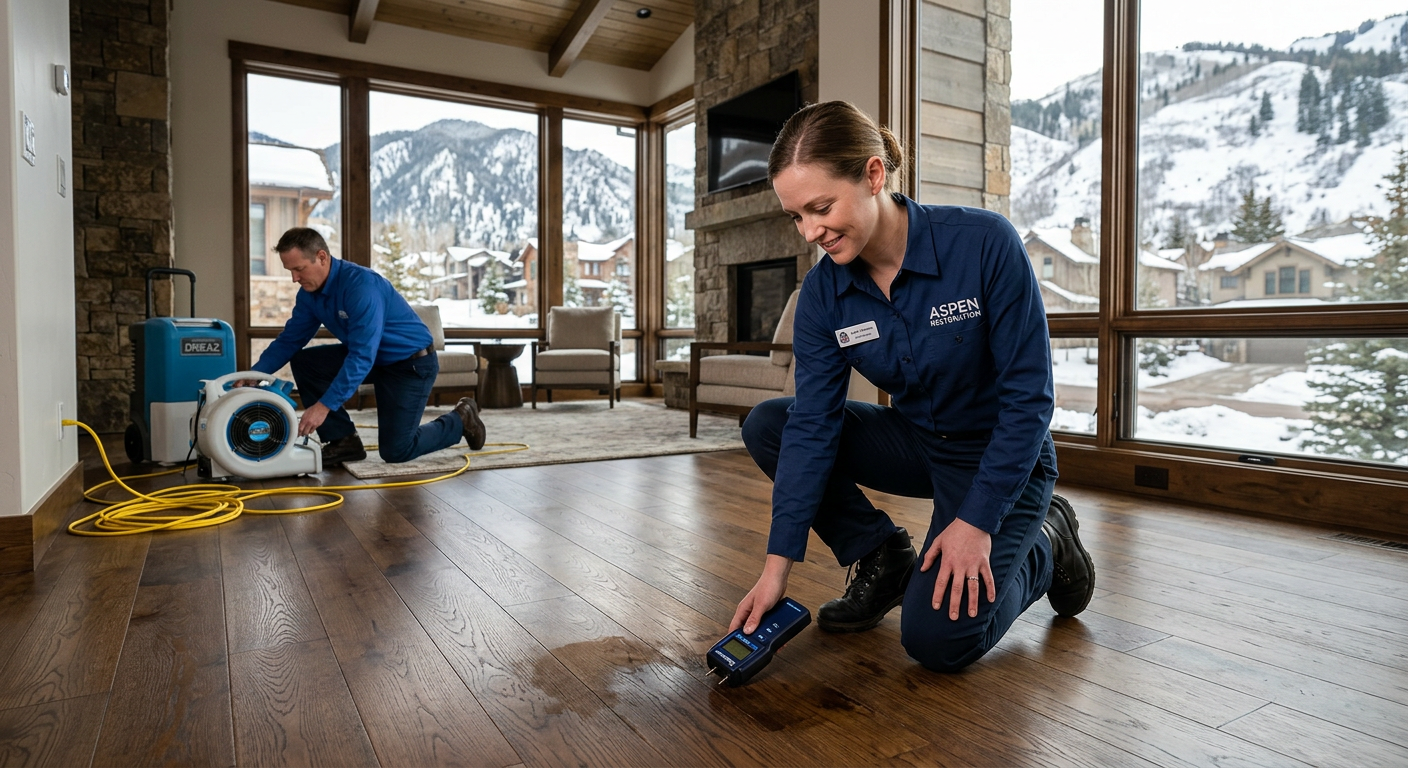
Emergency water extraction, controlled drying, and moisture monitoring can show what was affected and what was done to stabilize the property. Surface dryness alone is not proof that floors, insulation, or wall cavities are dry. Professional records help create a clear timeline between the initial water event, mitigation, and eventual reconstruction.
For claims involving a burst or frozen line, review the local Aspen burst-pipe water cleanup service for a clear explanation of the separate roles of a plumber and restoration team. The plumber repairs the failed pipe. The restoration team addresses the resulting water, moisture, affected materials, and drying plan.
Avoid these common claim mistakes
A few understandable decisions can make an already stressful claim harder to document:
- Throwing away damaged carpet, drywall, or belongings before photographing them
- Starting demolition without recording moisture conditions and affected materials
- Forgetting to report a loss until days after discovering it
- Mixing unrelated maintenance work with damage caused by the current water event
- Approving repairs without confirming what the insurer has reviewed
- Relying only on verbal coverage statements instead of asking for written clarification
If materials must be removed for health or safety reasons, photograph them thoroughly and retain samples when practical. The National Flood Insurance Program also recommends keeping repair receipts and documenting serial numbers for damaged appliances and electronics.
Aspen Second Homes, Condos, and Managed Properties Need Extra Records
Vacation homes and managed properties need a more detailed record because the discovery date may be different from the date the damage started. We recommend documenting who checks the home, how often it is checked, heating settings, access arrangements, and any winterization steps.
For a condominium, notify the HOA or building manager early. Water can travel between units, and a common-area pipe, roof issue, or neighboring unit may affect the repair process. Request copies of incident reports and preserve communication about access, responsibility, and repairs to shared systems.
Property managers can make claims more manageable by preparing a simple emergency file before a loss occurs. Include owner authorization contacts, insurance details, plumbing contacts, shutoff locations, HOA information, and recent property-condition photos. A few minutes of preparation can reduce confusion when water damage occurs during a busy season or while an owner is away.
How Helpers Restoration Supports the Documentation Process
Helpers Restoration helps homeowners and property managers stabilize water-damaged properties with emergency cleanup, moisture assessment, drying documentation, and clear restoration scopes. We serve Aspen and the Roaring Fork Valley, including Snowmass Village, Basalt, Carbondale, and Glenwood Springs, while helping clients communicate the restoration work to their insurers.
Our role is to document the damage and required restoration work, not to decide coverage. Your insurance company makes the final decision under your policy. For broader service details, review our water damage restoration solutions for Roaring Fork Valley properties and our Aspen water cleanup services.
Questions Aspen Homeowners Ask About Insurance Claims
Does homeowners insurance cover a burst pipe in Aspen?
Often, a sudden and accidental pipe burst may be covered, but coverage depends on your policy language, deductible, maintenance history, and the facts of the loss. Ask your insurer to explain coverage for the damaged pipe separately from the water damage it caused.
Do we have to wait for an adjuster before starting water cleanup?
No, you should take reasonable steps to prevent additional damage when it is safe. Document conditions before work begins, keep all invoices and drying records, and report the claim promptly so the carrier understands the mitigation work.
Is snowmelt water damage covered by a homeowners policy?
It may not be covered under a standard homeowners policy if water entered from outside as surface water or flooding. Review your policy and any separate flood insurance coverage, because the cause and path of water are important.
What if we find more damage after the first adjuster visit?
Notify the insurer and provide photos, contractor findings, moisture records, and an updated estimate. Hidden moisture behind walls, beneath flooring, or in insulation may become apparent during professional assessment and drying.
Can a property manager file a claim for an absentee owner?
A manager can often report the loss and coordinate emergency work, but authority depends on the owner agreement and insurance policy. Keep written authorization, owner contact details, and all communications in the claim file.
Will insurance cover mold after water damage?
Mold coverage varies by policy and by the underlying cause. Prompt mitigation and clear documentation may be important when mold results from a covered sudden loss, while long-term moisture or delayed cleanup can lead to coverage limitations.
Get Clear Help With Your Aspen Water Damage Claim
If water is actively spreading, call Helpers Restoration at (970) 927-3600 for 24/7 emergency cleanup in Aspen. You can also request an inspection from our local restoration team for non-emergency support, and visit our water damage restoration FAQ page for more answers about cleanup, drying, and insurance documentation.
Summary
Water damage insurance claims in Aspen are strongest when the response is organized from the first hour. Put safety first, stop the source when possible, document every affected area, report the loss promptly, save every record, and separate the cause of water damage from the restoration work required to dry and repair the property.
A clear claim file cannot guarantee coverage, but it gives your insurer a more complete picture of the loss and gives you a better foundation for recovery. With timely mitigation and reliable documentation, homeowners and property managers can move forward with greater confidence after a difficult water event.