
A burst pipe, overflowing appliance, or snowmelt intrusion can force a fast decision at a stressful moment. When comparing SERVPRO vs ServiceMaster Restore, Aspen homeowners and property managers should look beyond a familiar brand name and focus on local availability, communication, drying documentation, and the crew’s plan for the specific property.
Both companies are established national restoration networks with 24/7 water-loss services, trained technicians, and insurance support. The better choice depends on the local franchise responding, the type of water involved, the scope of damage, and how clearly the team explains its work before equipment arrives.
How SERVPRO and ServiceMaster Restore Compare
SERVPRO and ServiceMaster Restore offer many of the same core services, including extraction, structural drying, dehumidification, cleanup, and reconstruction coordination. The meaningful differences are usually found in local staffing, availability, project communication, and the experience of the specific office assigned to the loss.
| Decision Point | SERVPRO | ServiceMaster Restore | What Aspen Owners Should Ask |
|---|---|---|---|
| Network scale | More than 2,400 locations | More than 850 locations | Which local office will handle our loss? |
| Emergency service | 24/7 | 24/7/365 | When can a crew inspect our property? |
| Water mitigation | Extraction, drying, documentation | Extraction, drying, dehumidification | How will moisture be measured and recorded? |
| Insurance support | Claim documentation support | Claims management support | Who communicates with our adjuster? |
| Reconstruction | Available through many locations | Available through many locations | Is reconstruction handled in-house or separately? |
SERVPRO states that its network has more than 2,400 locations across the United States and Canada, which can be an advantage when a regional event stretches local resources. SERVPRO’s water damage service page also describes 24/7 emergency availability, extraction, drying, contents work, and help documenting an insurance claim.
ServiceMaster Restore reports more than 850 locations nationwide and outlines a three-stage assessment, mitigation, and restoration process. Its water damage restoration service page confirms 24/7 service, water extraction, dehumidification, odor control, and reconstruction support.
What Matters More Than the National Brand
For water damage Aspen property owners face, the response plan is more important than the logo on the truck. A mountain home, condo, or managed rental may have custom finishes, limited access, vacant periods, shared walls, or a caretaker who needs authority to approve work.
Confirm Who Will Actually Arrive
National networks operate through local franchises or local offices. Before authorizing work, ask for the responding company’s name, office location, emergency contact, and expected arrival window. If you manage a second home, provide an authorized access contact and explain any gate, building, or HOA requirements early.
Ask whether the same team will handle inspection, mitigation, daily moisture checks, contents coordination, and reconstruction. A single point of contact can reduce confusion when the project involves an insurer, property manager, plumber, and multiple affected units.
Ask for a Moisture-Based Drying Plan
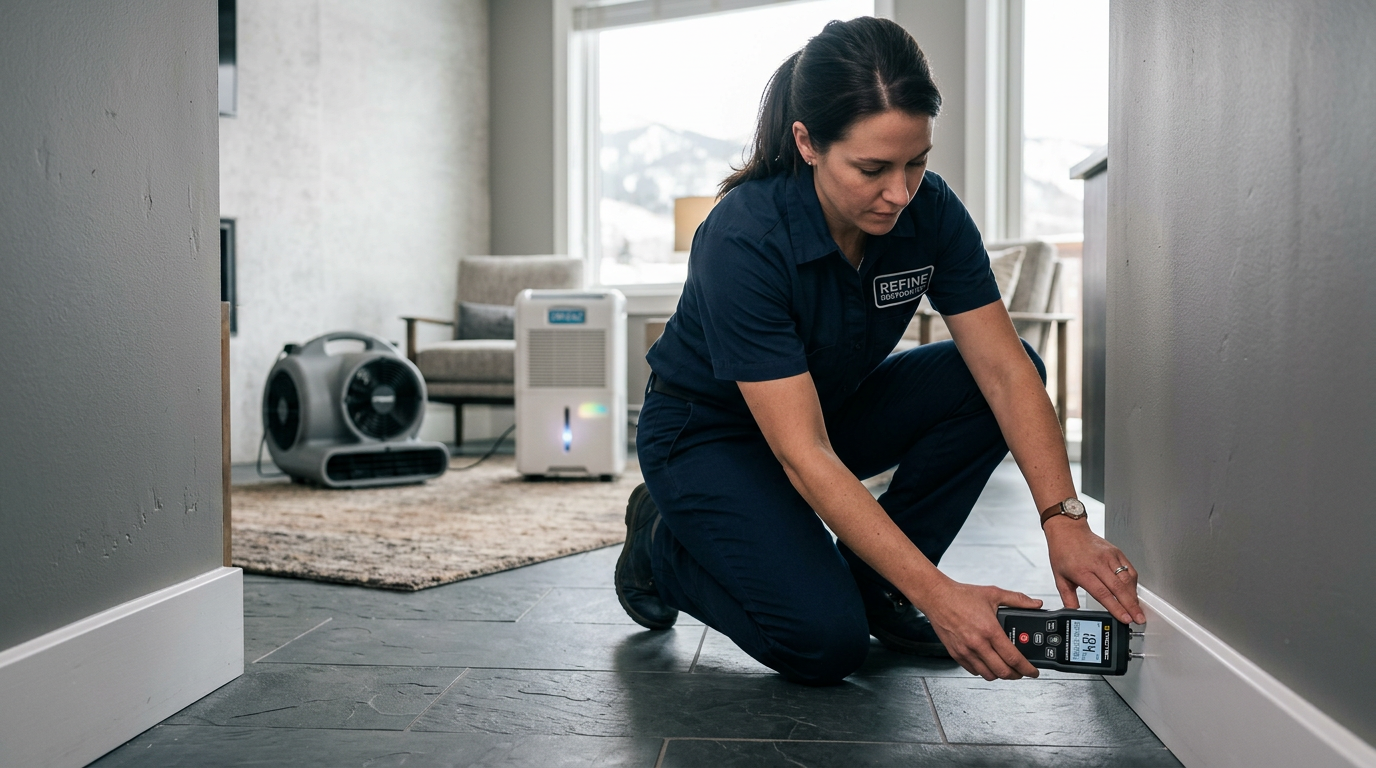
Visible water removal is only the first stage. Water can travel beneath flooring, behind baseboards, into insulation, and through wall cavities. A professional plan should explain the affected materials, the equipment being used, the areas being monitored, and the criteria for removing drying equipment.
SERVPRO notes that an average drying situation can take three to five days, though the length varies with the scope of damage, materials, demolition needs, and hazards. That is a useful planning benchmark, not a promise. Drying should be based on readings from the property, not a calendar date.
Separate Mitigation From Repairs
Emergency mitigation means stopping further damage through extraction, cleaning, drying, and protection of affected materials. Repairs may include drywall, flooring, cabinetry, insulation, paint, or specialty finishes. Confirm what is included in the emergency authorization and what will require a separate estimate.
This distinction matters in Aspen, Snowmass Village, Basalt, Carbondale, and Glenwood Springs, where finish selections, access conditions, and seasonal occupancy can affect the repair schedule. It also keeps the insurance conversation clearer because coverage decisions remain with the insurer.
SERVPRO Strengths and Tradeoffs
SERVPRO can be a strong fit for owners who value a large network, broad service lines, and a formalized claims-support process. Its size may be helpful during major storms or widespread cold-weather pipe breaks when additional resources are needed.
Where SERVPRO May Fit Best
- Large commercial or multi-property losses that may need broader network resources.
- Owners who prefer a nationally standardized restoration process.
- Claims that benefit from detailed service documentation and insurer communication.
- Projects that may need mitigation, contents work, and reconstruction coordination.
Questions to Ask a SERVPRO Office
Ask whether the local office has handled homes or managed properties similar to yours. Confirm who performs daily monitoring, how updates will be delivered, whether the estimate separates mitigation from reconstruction, and whether specialty materials can be matched.
A large system does not automatically mean the nearest crew is the best fit for every loss. The local office’s capacity, familiarity with mountain properties, and communication habits should guide the decision.
ServiceMaster Restore Strengths and Tradeoffs
ServiceMaster Restore may fit owners who prefer its assessment-to-restoration framework and claims-management focus. The company describes its work as an assessment, mitigation, and restoration process, which can help homeowners understand the sequence of a complex loss.
Where ServiceMaster Restore May Fit Best
- Homeowners who want structured guidance through a multi-stage project.
- Insurance-related losses requiring consistent updates and documentation.
- Water incidents involving contents, odor concerns, or contaminated water cleanup.
- Projects where reconstruction coordination is expected after drying is complete.
ServiceMaster Restore says its insurance-focused team aims to be on site within two to four hours after contact. That stated timeline may vary by the local office, weather, road conditions, staffing, and the distance to the property, so confirm real availability for your address before relying on it. ServiceMaster Restore’s insurance information also emphasizes claims communication and technician certification.
Questions to Ask a ServiceMaster Restore Office
Request a clear explanation of the scope before signing. Ask which materials can realistically be dried, whether affected carpet or pad needs removal, how contaminated water will be handled, and who manages reconstruction after mitigation.
For a burst pipe in an unoccupied home, also ask how the team will coordinate access, document discovered damage, and protect the property between visits. Those details can matter as much as the extraction equipment.
A Local Option for Roaring Fork Valley Properties
For a local comparison, we recommend weighing national franchises against a restoration company that works in the Roaring Fork Valley every day. Local experience can be especially valuable when a vacant Aspen residence, Snowmass Village condo, or Basalt commercial property needs an access plan, practical updates, and a crew familiar with the route and building conditions.
Helpers Disaster Restoration is based in Basalt and serves Aspen, Snowmass Village, Carbondale, Glenwood Springs, and nearby communities. Our team provides emergency water cleanup for Aspen properties, with water extraction, drying, damage documentation, and support navigating the insurance process.
For property managers, the first conversation should cover the full address, when the damage was discovered, water source, rooms affected, authorization contacts, and whether neighboring units may be involved. For frozen-pipe losses, our Aspen burst-pipe cleanup service explains why the plumbing repair and the restoration work may need separate coordination.
Questions to Ask Before You Hire Any Restoration Company
A reliable water restoration company should welcome specific questions before work starts. Use these questions to compare SERVPRO, ServiceMaster Restore, Helpers Disaster Restoration, or another qualified local provider.
- Can you inspect the property and explain the likely scope before starting non-emergency repairs?
- What is the expected arrival window for our exact location?
- How will you identify moisture behind finishes and under flooring?
- Who will update us, our property manager, and our insurance adjuster?
- Are extraction, drying, cleaning, demolition, and repairs listed separately?
- How do you handle contaminated water, sewage, or potential mold concerns?
- Will you provide daily moisture documentation and a final drying record?
- What happens if a plumber, electrician, roofer, or building manager must address the source of the leak?
Clear answers create a stronger project from the beginning. If a provider cannot describe the drying plan, communication schedule, and authorization process, keep comparing options.
Common Questions About SERVPRO vs ServiceMaster Restore
Is SERVPRO or ServiceMaster Restore less expensive?
Neither company has a universal lower price because water damage costs depend on the water source, square footage, materials, contamination, demolition needs, and insurance requirements. Ask each local office for a written scope that separates emergency mitigation from repairs so you can compare comparable work.
Does homeowners insurance cover water restoration?
Coverage depends on the cause of loss and the policy. Sudden plumbing failures may be handled differently from surface-water flooding, long-term seepage, or maintenance-related damage. Notify your insurer promptly, but remember that you can still ask questions and choose a qualified restoration provider.
Can we wait until morning if the leak has stopped?
It depends on the amount of water, affected materials, and safety conditions, but waiting can allow moisture to move deeper into the structure. If water reached flooring, walls, cabinetry, or ceilings, contact an emergency restoration company for guidance and avoid wet areas near electricity.
Do we need to leave the house during drying?
Not always. Limited clean-water losses can often be isolated while drying equipment runs. Relocation may be safer when there is significant contamination, widespread demolition, electrical risk, major structural damage, or conditions that prevent safe occupancy.
What should a property manager document before the crew arrives?
Record the discovery time, probable water source, affected rooms, visible water level, and known access issues. Take photos only if it is safe, protect irreplaceable items from further exposure when possible, and provide the restoration team with one authorized contact for decisions.
Is water extraction the same as full restoration?
No. Extraction removes standing water, while full restoration may include moisture testing, controlled drying, cleaning, material removal, repairs, and claim documentation. A good contractor will explain which stage is happening and why.
Get Local Help for Aspen Water Damage
If your property has active water damage, call Helpers Disaster Restoration at (970) 927-3600 for 24/7 emergency cleanup in Aspen and across the Roaring Fork Valley. We can assess the next step, coordinate access with your caretaker or property manager, and provide a clear plan for extraction, drying, and documentation.
Visit Helpers Disaster Restoration to request help, or use our contact page for a property inspection. For more answers about timing, insurance, sewage cleanup, mold concerns, and drying, review our water damage restoration FAQs.
Summary
SERVPRO and ServiceMaster Restore both offer established, full-service water restoration capabilities, and either may be a good fit when the responding local office has the right availability and communication process. For Aspen-area homes and managed properties, compare the local crew, documented drying plan, insurance coordination, access logistics, and scope of work before authorizing a project.
Fast action matters, but a clear plan matters too. Choosing a provider that can explain what happened, what comes next, and how the property will be monitored gives owners and managers more control during a difficult water-loss event.