
ServiceMaster Restore Alternatives for Aspen Water Damage Claims
A burst pipe, appliance leak, or flooded lower level can leave homeowners with a difficult decision: call a familiar national brand or choose a nearby restoration company that knows the area. The best choice depends less on the name on the truck and more on response availability, qualified technicians, clear documentation, and a drying plan that fits your property.
When people compare ServiceMaster Restore alternatives, they are usually looking for confidence during a stressful property loss. In Aspen, Snowmass Village, Basalt, Carbondale, Glenwood Springs, and across the Roaring Fork Valley, that means finding a team that can assess the water source, protect the home, document conditions for insurance, and communicate clearly from the first visit through drying and repairs.
What Makes a Restoration Company a Strong Alternative?
A strong alternative should provide rapid mitigation, careful moisture assessment, transparent communication, and a clear path through insurance documentation. The goal is to stop additional damage and make informed restoration decisions, not simply remove visible water.
ServiceMaster Restore is a national restoration network that offers water mitigation, drying, mold services, fire restoration, and reconstruction for residential and commercial properties. Its scale may be useful for large, multi-location losses or customers who already have a preferred local franchise. ServiceMaster Restore describes its process as assessment, mitigation, and restoration.
For a local Aspen-area loss, compare providers based on the work they will actually perform at your home or building.
| What to Compare | Why It Matters | What to Ask |
|---|---|---|
| Emergency response | Water can spread behind finishes | “Can you respond after hours?” |
| Certifications | Training supports proper drying and cleanup | “Are your technicians IICRC certified?” |
| Moisture verification | Surfaces can feel dry while materials remain wet | “How will you confirm the structure is dry?” |
| Insurance documentation | Photos and records can support a claim | “What documentation will you provide?” |
| Local familiarity | Mountain homes have unique access and seasonal concerns | “Do you regularly serve my community?” |
The IICRC Certified Firm directory explains that certified firms follow recognized restoration practices and employ trained technicians. Certification alone should not make the decision for you, but it is a meaningful starting point when comparing companies.
National Franchise Networks
National restoration networks can be a reasonable fit when a property owner wants a recognizable brand, has a commercial portfolio in multiple cities, or needs a provider with broad corporate resources. ServiceMaster Restore, SERVPRO, and PuroClean all promote 24/7 water damage response, extraction, drying, and restoration services.
SERVPRO notes that it has more than 1,900 locations across the United States and Canada, which may help it mobilize resources in some markets. SERVPRO also emphasizes that fast action can reduce damage from spreading moisture. PuroClean similarly offers 24/7 extraction and drying services, with local franchise availability varying by market. PuroClean highlights moisture detection, drying equipment, and insurance communication as part of its process.
The tradeoff is that service quality, scheduling, and communication can vary by franchise location. Before authorizing work, ask who will manage the project locally, what the response window is for your address, and whether the same team will oversee drying documentation and final repairs.
Local Independent Restoration Companies
An established local water restoration company may be a better fit when you value direct communication, regional knowledge, and a team that routinely works in the Roaring Fork Valley. Local providers can understand travel times between Aspen and downvalley communities, seasonal pipe-freeze risks, second-home access issues, and the coordination often needed with local property managers.
For example, Helpers Restoration is based in Basalt and provides emergency restoration support throughout Aspen, Snowmass Village, Carbondale, Glenwood Springs, and surrounding communities. Its water damage restoration services include water extraction, structural drying, hidden-moisture assessment, and documentation support for insurance claims.
Local does not automatically mean better, and national does not automatically mean less attentive. The deciding factor is whether the company gives you a clear, written explanation of the scope, safety steps, drying approach, and next decision points.
Why the First Two Days Matter After Water Damage
The first 24 to 48 hours are critical because moisture can move into drywall, subfloors, cabinetry, insulation, and contents that may look unaffected at first. Fast extraction and controlled drying can limit secondary damage and help determine what materials can be saved.
The Federal Emergency Management Agency advises homeowners to dry the home and affected belongings within 24 to 48 hours when possible. If a flooded home cannot be dried in that window, FEMA says homeowners should assume mold growth may be present.
That does not mean every small leak requires a major restoration project. A contained clean-water spill that is dried quickly may be manageable. However, water beneath flooring, behind baseboards, inside wall cavities, or near electrical systems requires a more cautious response.
Steps to Take Before the Restoration Team Arrives
Start by protecting people and documenting the loss. These actions can help preserve safety and support your insurance conversation:
- Shut off the water source if it is safe to do so.
- Avoid standing water near electrical outlets, panels, appliances, or cords.
- Take wide and close photos of affected rooms and damaged belongings.
- Move dry valuables away from the affected area when it is safe.
- Do not use household fans on contaminated water or visible mold.
- Contact your insurer to report the loss and ask about immediate mitigation steps.
Avoid throwing away damaged materials before photographing them unless they present a health or safety risk. A restoration provider can help identify what should be removed, cleaned, dried, or retained for your insurer’s review.
Questions That Reveal the Best Fit for Your Property
The right restoration company should answer practical questions without vague promises. A good conversation before work begins can reduce confusion about scope, cost, insurance, and timelines.
Ask About the Water Source and Contamination
A clean supply-line leak is handled differently from groundwater, a toilet overflow with waste, or a sewage backup. Floodwater and sewage can introduce contaminants that change the cleanup plan, the materials that can be saved, and the protective measures required.
If contamination is possible, tell the company exactly what happened. For sewage or drain backups, ask whether the crew provides containment, removal, cleaning, sanitation, and drying. You can also review Helpers’ restoration FAQ page for straightforward answers about clean-water losses, floodwater, sewage cleanup, insurance, and drying timelines.
Ask How Drying Will Be Measured
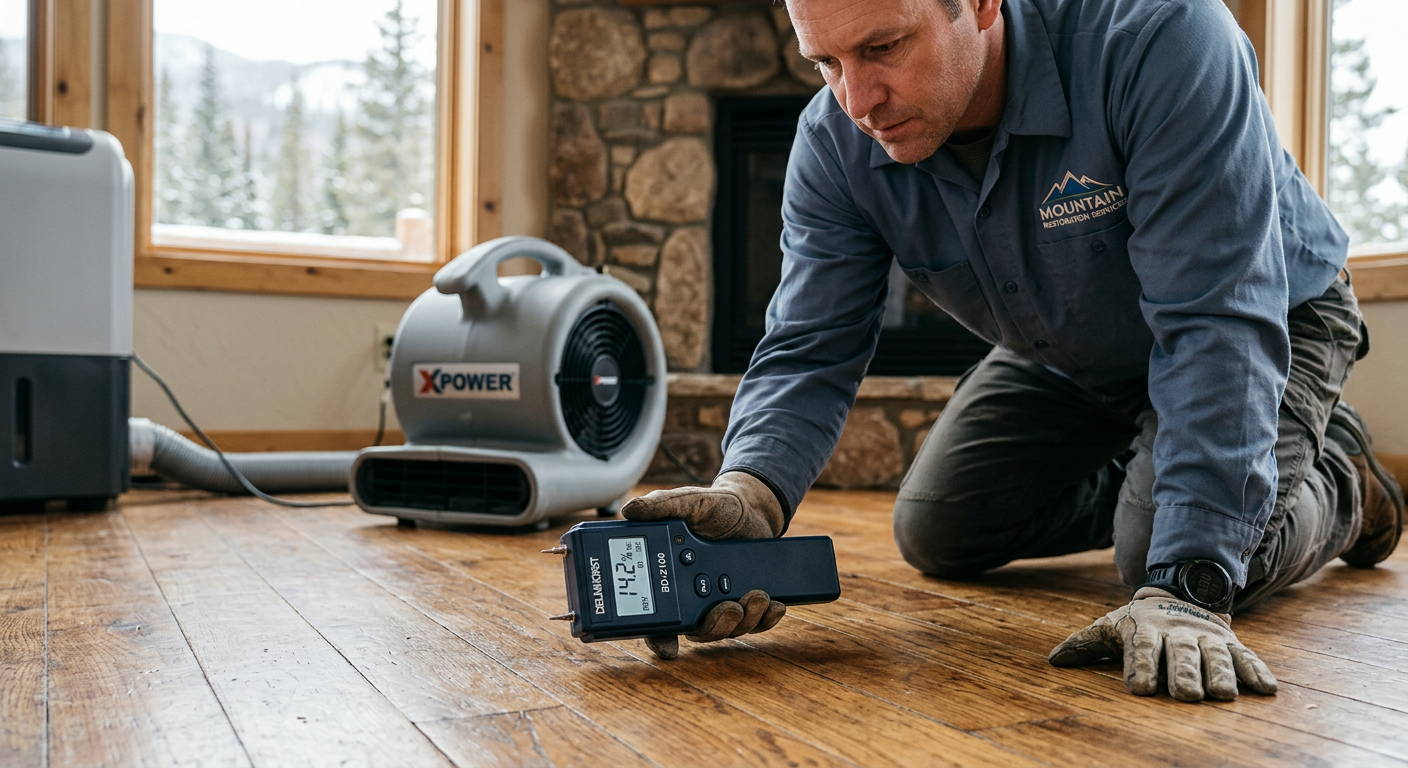
Fans and dehumidifiers are tools, not proof that a structure is dry. Ask how the team will identify hidden moisture, establish drying goals, monitor materials, and document the final readings.
This is especially important in Aspen homes with wood flooring, detailed millwork, finished basements, radiant heat systems, and high-value contents. A visible surface may feel dry while moisture remains below it.
Ask What the Estimate Includes
Restoration pricing depends on the affected materials, the water category, the size of the loss, access conditions, equipment needs, demolition requirements, and the length of the drying process. Be cautious with anyone who quotes a complete price without inspecting the property or who cannot explain separate mitigation, reconstruction, and specialty-cleaning costs.
Ask for a written scope that identifies emergency services, equipment, monitoring, cleaning, demolition if needed, and any work that will require a separate approval. If insurance is involved, remember that the insurer decides coverage under your policy, not the restoration company.
A Local Comparison for Aspen and the Roaring Fork Valley
For water damage Aspen homeowners and property managers should prioritize a provider’s actual ability to arrive, assess, document, and communicate locally. A company located hours away may still be a fit, but you should understand its dispatch plan before authorizing work.
Mountain properties create practical challenges that do not always appear in standard restoration checklists. A vacant home may have a frozen-pipe loss discovered late. A condo may require coordination with an HOA. A property manager may need updates that are detailed enough for an owner who lives out of state. A vacation home may need secure access, contents protection, and a consistent point of contact.
For those situations, ask each company these specific questions:
- Do you have crews serving Aspen, Snowmass Village, Basalt, Carbondale, and Glenwood Springs?
- Who will provide project updates to the homeowner, property manager, or HOA?
- Can you document the water source, affected materials, equipment placement, and drying progress?
- Can you coordinate with plumbers, electricians, roofers, or other specialists when the source needs repair?
- What happens if the loss involves mold, sewage, or suspected hazardous materials?
How Helpers Restoration Compares as a Local Option
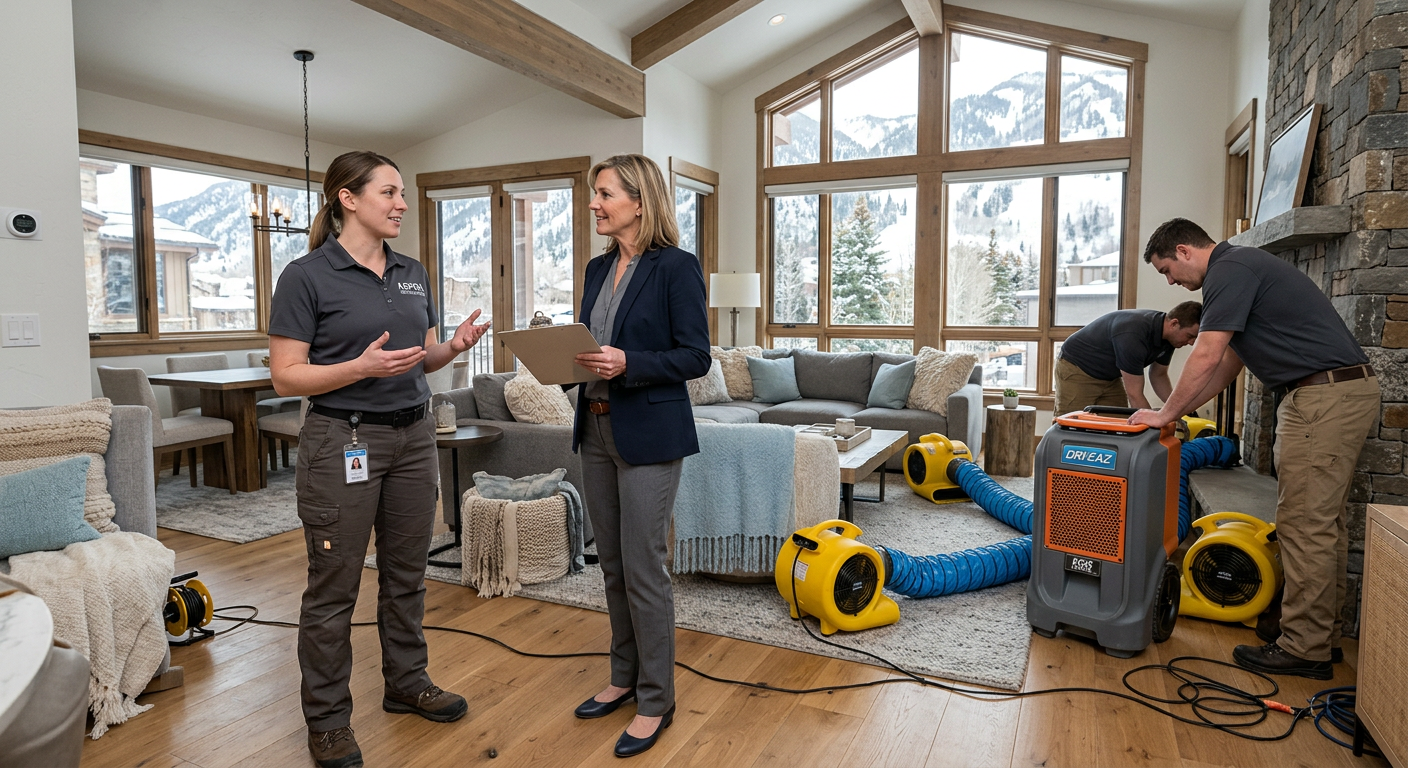
For homeowners seeking a ServiceMaster Restore alternative near Aspen, Helpers Restoration offers a locally based option with 24/7 emergency response, IICRC-certified technicians, water extraction, structural drying, flood cleanup, and insurance documentation support. We focus on explaining the condition of the property and the next steps in plain language, so homeowners and property managers can make decisions with less uncertainty.
We work throughout Aspen, Basalt, Carbondale, Snowmass Village, Glenwood Springs, and the broader Roaring Fork Valley. For a loss involving lingering moisture after a leak, our Aspen water damage cleanup team can assess the situation and outline the appropriate path forward.
Get Clear Answers Before Water Damage Spreads
A water loss is stressful enough without struggling to reach a restoration company or decipher a vague scope of work. Call Helpers Restoration at (970) 927-3600 for 24/7 emergency cleanup in Aspen and the Roaring Fork Valley, or contact our team to request an inspection for non-emergency concerns.
We will listen to what happened, discuss immediate safety considerations, assess the affected areas, and help you understand the water cleanup and drying process. If insurance is involved, we can document the restoration work and help you communicate the details to your carrier.
Frequently Asked Questions
Is ServiceMaster Restore a good choice for water damage?
ServiceMaster Restore can be a good choice when its local franchise has prompt availability, qualified technicians, and a clear process for your type of loss. Compare its local response plan, written scope, communication, and drying verification with at least one nearby provider before deciding.
Is a local restoration company better than a national franchise?
A local company can offer more direct regional knowledge and personal communication, while a national franchise may have broad resources and brand familiarity. The better fit is the company that can respond to your property, explain its plan clearly, and document the work thoroughly.
How soon should I call for water damage cleanup?
Call as soon as you discover water that has affected flooring, walls, ceilings, cabinetry, insulation, or electrical areas. Prompt action is particularly important when the source is unknown, water is spreading, or the property cannot be fully dried within the first 24 to 48 hours.
Can my insurance company choose the restoration company?
Your insurer may recommend vendors, but you can ask questions and evaluate the restoration company that will work in your home. Confirm your policy requirements with the insurer, then choose a provider that gives you a clear scope and appropriate documentation.
Will a restoration company repair the broken pipe?
Most restoration companies focus on water removal, drying, cleaning, and repairs to affected building materials. A licensed plumber may be needed to repair the pipe, appliance connection, or other source of the leak.
How long does structural drying take?
Drying time varies based on material type, how long water was present, the extent of saturation, temperature, humidity, and access behind finishes. A qualified team should use moisture readings and daily monitoring instead of promising a fixed timeline before inspecting the property.
Summary
The best ServiceMaster Restore alternatives are not defined by brand recognition alone. Look for qualified local response, proper moisture assessment, transparent estimates, insurance-ready documentation, and communication that makes the next step clear.
For Aspen water damage, a prompt and carefully managed response can protect both the property and your peace of mind. Compare providers thoughtfully, ask direct questions, and choose the team that demonstrates it can manage your specific loss with care and accountability.