
A burst pipe can overwhelm a home or managed property in minutes, especially when water reaches ceilings, hardwood, insulation, or lower-level rooms. If you are comparing a SERVPRO alternative for burst pipes, focus less on the logo and more on the restoration plan, local availability, moisture documentation, and clear coordination with your plumber and insurer.
For Aspen, Snowmass Village, Basalt, Carbondale, Glenwood Springs, and the Roaring Fork Valley, the right team should understand mountain properties, seasonal vacancies, condo access, and the difference between stopping a plumbing failure and fully drying the building materials it affected.
What Makes a Strong Alternative for Burst-Pipe Cleanup
A strong alternative provides more than water removal. It should create a documented path from the initial loss through extraction, drying, material decisions, and insurance-ready records.
A national restoration franchise can be a reasonable fit for some property owners because of brand familiarity and a broad network. A locally based provider can be a better fit when you need regional knowledge, direct communication, and a crew that understands access realities from Aspen and Snowmass Village to Basalt, Carbondale, and Glenwood Springs.
When comparing providers, ask every company the same questions:
- Who handles the plumbing repair, and who handles water cleanup?
- How will you identify moisture behind walls, under floors, and inside cabinets?
- Will you provide moisture readings and a written scope of work?
- How will you communicate with my insurer or property manager?
- Who is my direct point of contact while drying is underway?
- Can you work around a vacant home, tenant schedule, HOA rules, or limited site access?
The most important distinction is simple: a plumber repairs the failed line, while a restoration company addresses the water damage the line caused. Stopping the flow is essential, but it does not confirm that a floor assembly, wall cavity, or ceiling below is dry.
Why Local Response Matters in Aspen and the Roaring Fork Valley
Local restoration support matters because mountain homes often have unique access, occupancy, and weather challenges. A team that knows the valley can better plan around second homes, caretaker access, icy roads, multilevel layouts, and shared walls in condos or townhomes.
For example, a burst supply line in an unoccupied Aspen home may run unnoticed longer than a leak in a full-time residence. In a Snowmass Village condominium, water can move into a neighboring unit or shared building area. A Carbondale rental may require quick coordination among an owner, tenant, property manager, plumber, and insurance representative.
That is why a restoration company should begin with practical details, including:
- The property address and affected level or unit
- Whether the water source has been shut off
- When the issue was discovered and when the property was last checked
- Whether water reached another room, floor, or neighboring unit
- Who can provide access and approve emergency work
- Whether the water may be contaminated
At Helpers Restoration, we work from a Basalt base and help homeowners and property managers organize water damage cleanup across the Roaring Fork Valley. Our team focuses on extraction, structural drying, moisture checks, and restoration documentation while the licensed plumber addresses the pipe itself.
Compare the Scope, Not Just the Company Name
The best comparison is not national company versus local company. It is a clear, written scope versus a vague promise to dry things out.
| What to Compare | Strong Restoration Plan | Warning Sign |
|---|---|---|
| Water source | Confirms leak is controlled | Begins work without asking |
| Hidden moisture | Uses inspections and readings | Relies only on visible dryness |
| Drying process | Explains equipment and monitoring | Offers no drying plan |
| Documentation | Records affected materials and progress | Provides limited job details |
| Insurance support | Supplies restoration records | Promises claim approval |
Ask for a Clear Explanation of Equipment and Monitoring
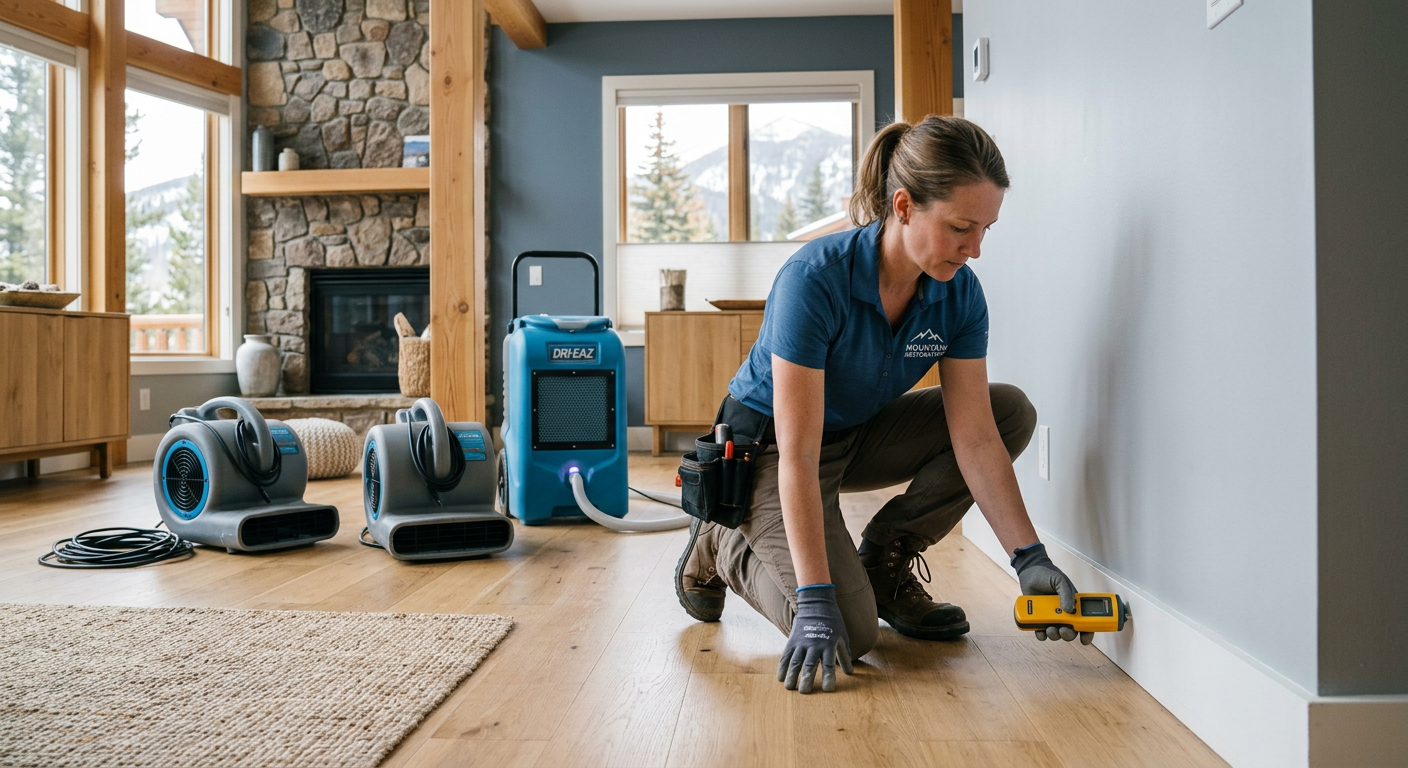
Water extraction is the first stage, not the whole job. After standing water is removed, drying may involve air movement, dehumidification, controlled removal of damaged materials, and repeat moisture checks. The scope depends on the amount of water, how long it was present, the materials affected, and whether the water was clean or contaminated.
A dry-looking surface can still conceal moisture beneath flooring, behind trim, inside cabinets, or within drywall. For a closer look at what a full response includes, review Helpers Restoration’s water damage cleanup and structural drying services.
Compare Written Estimates Carefully
Restoration pricing is not one-size-fits-all, and a phone quote cannot reveal hidden moisture or damaged materials. Ask each provider to explain what is included in the estimate, what conditions could change the scope, whether equipment monitoring is included, and how they document work for your insurer.
A lower initial number is not automatically a lower overall cost if the scope leaves out moisture testing, drying checks, cleaning, or necessary material removal. On the other hand, you should never feel pressured to approve unexplained work. A reliable contractor should walk you through what was found and why each step is recommended.
The First 24 to 48 Hours Shape the Recovery
Fast drying helps limit secondary damage, but safety comes first. Avoid standing water near electrical equipment, do not enter areas with structural concerns, and contact emergency services if there is immediate danger.
The U.S. Environmental Protection Agency advises property owners to dry damp or wet surfaces within 24 to 48 hours and correct the water source. The agency also notes that extensive damage or water that is not clean may require professional help. Read the guidance from the U.S. Environmental Protection Agency.
What We Recommend Before the Crew Arrives
If it is safe to do so, shut off the water supply or have a plumber do it. Move valuables away from wet areas, take photographs and video for your records, and write down when the damage was discovered. Keep children and pets away from wet floors, sagging ceilings, and electrical hazards.
Do not use a household vacuum to remove standing water. Avoid lifting wet carpet or opening walls without professional direction, especially if the source is unknown or contaminated. If sewage, floodwater, or other contaminated water is involved, the cleanup plan needs a higher level of care. See our information about professional sewage backup cleanup if the loss involves a drain or sewer problem.
What a Complete Burst-Pipe Restoration Plan Should Include
A complete plan accounts for the property, the water source, and the materials affected. It should be tailored to your home, condo, business, or managed building rather than built from a generic checklist.
Inspection and Moisture Assessment
The inspection should consider rooms directly affected by the pipe as well as rooms below, beside, or behind the failure. Water can travel farther than expected, particularly through floor systems, cabinetry, insulation, and ceiling cavities.
Extraction, Drying, and Monitoring
Standing water should be removed before drying begins. Then, equipment and follow-up readings help confirm whether moisture is moving out of the affected structure. This is particularly important for hardwood floors, drywall, trim, carpet padding, and insulation.
Material Decisions and Repair Coordination
Some materials can be dried and restored. Others may need removal because of swelling, contamination, or prolonged exposure. A clear plan explains these decisions and coordinates restoration timing with plumbing repair, flooring repair, painting, or other rebuilding needs.
Insurance Documentation
Your insurer decides coverage, but good documentation can make the claims conversation easier. Keep your own photos, receipts, claim information, and notes about conversations. A restoration company can document the affected materials and work performed, but it should not promise a specific insurance outcome.
If moisture remains after a water loss, mold can become an added concern. Our mold assessment and remediation information explains why addressing the moisture source remains central to a proper recovery.
Questions Property Owners Often Ask
Is a local restoration company really a viable SERVPRO alternative for burst pipes?
Yes, provided the company can assess the full water loss, perform extraction and drying, document the work, and communicate clearly about the next steps. Compare the actual scope, local availability, equipment plan, and qualifications instead of choosing only by national name recognition.
Do I need both a plumber and a restoration company?
Usually, yes. A plumber repairs or replaces the failed pipe, while a restoration company handles the water cleanup, drying, affected materials, and recovery plan. These are related but separate jobs.
What if the floor feels dry after a burst pipe?
A dry surface does not prove the material underneath is dry. Water can remain under flooring, behind baseboards, inside walls, and in insulation, so an assessment is still wise after a significant leak.
Can hardwood floors be saved after pipe water damage?
Sometimes they can be saved, depending on the water source, exposure time, amount of moisture, and condition of the flooring. An inspection should guide the decision rather than assumptions based on appearance alone.
How long does burst-pipe drying take?
Drying time varies based on the affected area, materials, water volume, indoor conditions, and moisture readings. A responsible provider should explain the plan after inspecting the property rather than promise a fixed timeline before seeing the damage.
Will insurance cover water damage from a burst pipe?
Coverage depends on your policy and the cause of loss. Contact your insurance carrier promptly, document the damage, and keep records of emergency services and repairs. For more common questions, visit our water damage restoration FAQs.
Get Clear Local Help for a Burst Pipe
If your Aspen-area property has water from a burst or frozen pipe, we are ready to help you organize the next steps. Call Helpers Restoration at (970) 927-3600 for 24/7 emergency cleanup in Aspen, Basalt, Snowmass Village, Carbondale, Glenwood Springs, and the Roaring Fork Valley, or contact our team online for non-emergency follow-up.
We will discuss the water source, property access, affected areas, and current response availability so you can move from uncertainty to a clear recovery plan.
Key Takeaway
Choosing a SERVPRO alternative for burst pipes should come down to the quality of the restoration plan, not a familiar name alone. Look for a team that separates plumbing repair from water restoration, checks for hidden moisture, documents the work, and understands the realities of property care in Aspen and throughout the Roaring Fork Valley.
A burst pipe is disruptive, but the response can be organized. When water removal, structural drying, communication, and documentation are handled carefully, homeowners and property managers can make informed decisions and protect the property from further water damage.