
A water loss can make an otherwise calm Aspen morning feel overwhelming fast. A pipe leaks behind a wall, a dishwasher overflows, or snowmelt finds a weak point, and suddenly you are making decisions that affect your home, furnishings, tenants, and insurance claim.
Finding the best water damage restoration company Aspen property owners can rely on is less about choosing the loudest advertisement and more about knowing what capable, accountable help looks like. The right team should make the next steps clearer, protect the property from further damage, and communicate plainly from the first call through drying and documentation.
What Sets a Strong Restoration Company Apart
The best provider responds with a clear plan, appropriate equipment, honest communication, and careful moisture management. Fast arrival matters, but it only helps when the team also understands how water travels through floors, walls, cabinets, insulation, and adjoining spaces.
Look for these practical indicators when comparing Aspen restoration companies:
- Emergency availability: Water problems do not follow business hours. Ask whether the company takes active-loss calls around the clock and can discuss current availability for your address.
- Qualified technicians: Ask about training, insurance, and restoration certifications. A professional team should be comfortable explaining who will perform the work and what the scope includes.
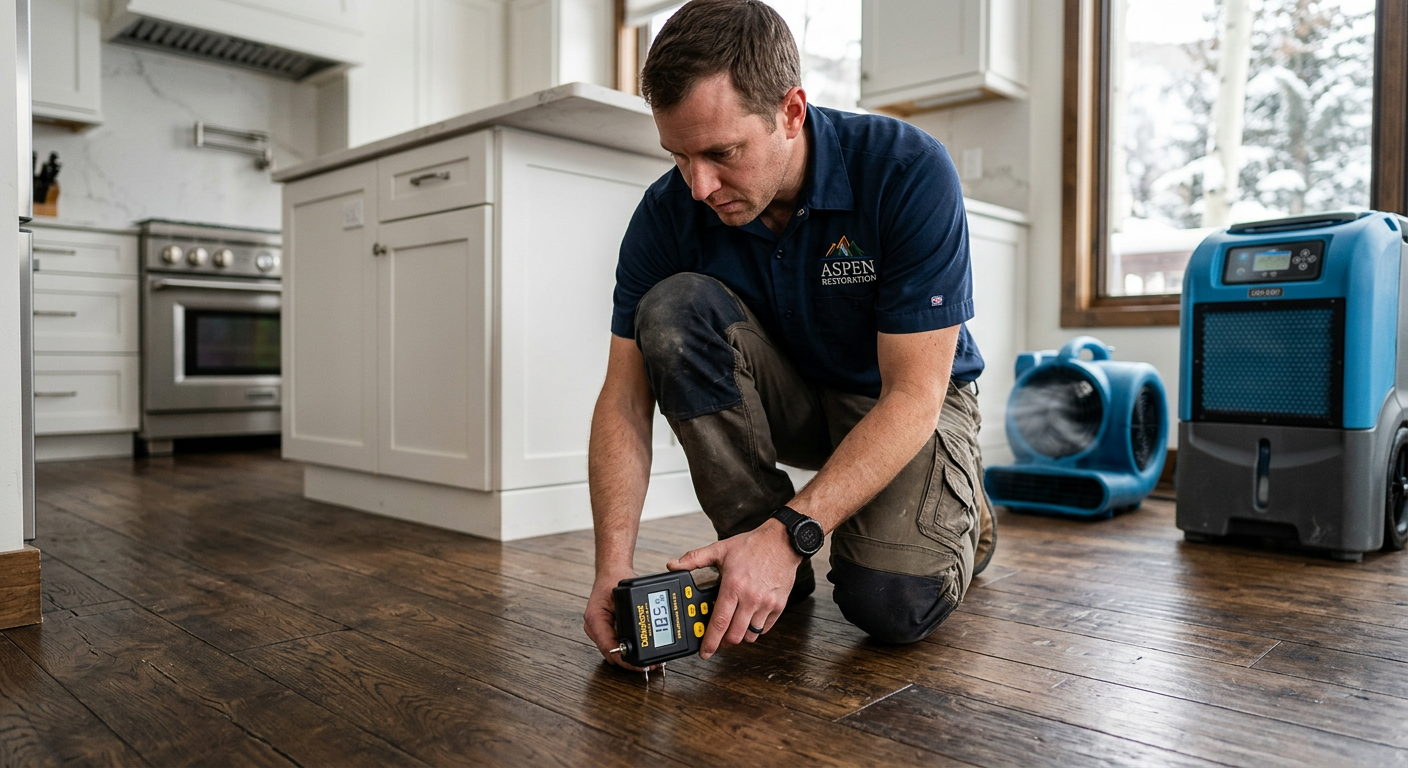
- A process beyond extraction: Removing standing water is only the first phase. Proper work includes inspection, drying, dehumidification, and moisture checks to help confirm materials are progressing toward dry conditions.
- Clear documentation: Photos, notes, moisture records, and a written scope help homeowners and property managers understand the work and support insurance conversations.
- Straight answers about limits: A dependable company does not promise that every hardwood floor, wall, carpet, or cabinet can be saved before inspecting the loss.
The U.S. Environmental Protection Agency advises drying damp or wet surfaces within 24 to 48 hours and fixing the source of the water problem. That narrow window is one reason water damage Aspen homeowners should not treat as a simple cleanup project. EPA moisture-control guidance
Why Aspen Properties Need a Careful Local Response
Aspen homes, vacation properties, condos, and commercial spaces each create different restoration challenges. A vacant second home may have a leak that goes unnoticed longer, while a multi-unit building can involve shared walls, lower-level units, HOA coordination, and access restrictions.
We recommend choosing a company that asks useful questions before dispatching a crew. They should want to know where the water started, whether the source is still active, when it was discovered, which rooms are affected, and who can provide access. If the pipe is still leaking, a plumber may be needed to stop the source while the restoration team manages extraction and drying.
Local coverage also matters when weather, road conditions, and property access affect scheduling. A Basalt-based team serving Aspen, Snowmass Village, Carbondale, and Glenwood Springs understands that a realistic plan includes travel, keys, gate codes, onsite contacts, and communication with homeowners who may be out of town.
For properties farther downvalley, review the available details for water damage cleanup in Basalt before calling. The same principle applies throughout the Roaring Fork Valley: a precise description of the property and conditions helps the restoration team prepare for the right first step.
What Professional Water Damage Restoration Should Include
A quality restoration process begins with stopping further damage and continues until the affected structure has been assessed, dried, documented, and prepared for repair. It should not be reduced to placing fans in a room and hoping the visible surface dries.
Inspection and Source Assessment
The crew should identify the likely water source and inspect the areas water may have reached. Water can move beneath flooring, into wall cavities, under cabinets, and into adjacent rooms, even when the visible puddle seems limited.
Water Extraction and Material Protection
Standing water should be removed as quickly and safely as conditions allow. Furniture, rugs, and contents may need to be moved or protected, while affected materials are evaluated for cleaning, drying, or removal.
Drying, Dehumidification, and Moisture Checks
Professional drying is measured, not guessed. Air movement and dehumidification help reduce moisture, but the team should also recheck conditions to determine whether building materials are responding as expected.
Documentation for the Insurance Process
Insurance coverage depends on the cause of loss and the terms of the policy, so no restoration company can promise claim approval. A helpful provider can document the damage and restoration work, organize records, and communicate clearly so you have useful information for your insurer.
Helpers Disaster Restoration provides water removal, structural drying, cleanup, and restoration support for homes and businesses across the valley. Their water damage restoration services explain the path from extraction through drying, along with what property owners should have ready when they call.
Questions to Ask Before You Hire
A short phone call can reveal a great deal about how a company operates. Ask direct questions, then pay attention to whether the answers are specific, realistic, and focused on your property rather than a generic sales pitch.
Will You Inspect for Hidden Moisture?
The answer should be yes. Dry-looking surfaces do not always mean the materials beneath them are dry, especially around flooring, walls, cabinets, and insulation.
How Will You Track Drying Progress?
Ask how the team checks moisture during the project and how they will explain progress. You deserve more than vague assurances that equipment is running.
Can You Work With My Insurer?
A restoration company can provide documentation and assist with communication, but your insurer determines coverage. Keep your own photos, receipts, and correspondence as well.
Who Handles the Original Plumbing Problem?
Restoration professionals address the resulting moisture and property damage. A licensed plumber typically repairs the failed pipe, appliance connection, fixture, or other source.
What Happens if the Water Is Contaminated?
Floodwater and sewage backups require a different level of care than a clean supply-line leak. Keep people and pets away from affected areas and discuss the source of water honestly before anyone begins cleanup. For more detail, see Helpers’ information about professional sewage backup cleanup.
A Better Plan for Vacation Homes and Managed Properties
Remote ownership does not have to mean a slow response. The best water damage restoration company Aspen property managers can call will help organize access, identify decision-makers, and keep communication moving when the homeowner is elsewhere.
Before an emergency happens, we suggest keeping a simple property-response list with:
- The property address, unit number, and gate or lockbox instructions
- A local contact authorized to provide access
- Your plumber, HOA, building manager, and insurer contact details
- Photos or notes about valuable finishes, flooring, and furnishings
- A clear plan for who receives updates and approves necessary work
This preparation is especially useful for condos in Aspen and Snowmass Village, where water can travel into neighboring units. It is also helpful for rental homes and commercial locations in Carbondale and Glenwood Springs, where a manager may need to coordinate tenant access and operating hours.
Frequently Asked Questions
How quickly should I call after discovering water damage?
Call as soon as you can safely do so, especially if water is still entering the property or standing water is present. Prompt action helps limit the spread of moisture and supports faster assessment of materials that may be affected.
Is a restoration company necessary for a small leak?
Not every small spill requires professional restoration, but a leak behind a wall, under flooring, or inside a cabinet deserves closer attention. If you are unsure whether moisture reached hidden materials, an inspection can help you make an informed decision.
Can wet drywall and hardwood floors be saved?
Sometimes they can, but it depends on the water source, how long materials were wet, their condition, and the extent of moisture migration. A responsible company will inspect first and explain what is realistically recoverable.
Does homeowners insurance pay for water cleanup?
Coverage depends on the cause of the damage and the policy language. Sudden accidental plumbing failures may be treated differently than gradual leaks, exterior flooding, or sewer backups, so contact your insurer for a coverage decision.
How long does water damage restoration take?
Drying and repairs can take different amounts of time depending on the affected materials, size of the area, water source, access, and moisture readings. A trustworthy company will give you a property-specific plan instead of promising a fixed timeline without an inspection.
What should I do if I see mold after a leak?
Avoid disturbing the affected material, especially if the area is large or the water source was not clean. Arrange an assessment that addresses both the visible growth and the moisture condition that allowed it to develop. Helpers offers mold assessment and remediation support for properties throughout the Roaring Fork Valley.
Get Clear Help for an Active Water Loss
If your Aspen home, condo, or business has active water damage, call Helpers Disaster Restoration at (970) 927-3600 for 24/7 emergency cleanup support. You can also contact the Helpers team to request an inspection or discuss a non-emergency restoration need, but active losses are best handled by phone.
We believe you should know what is happening in your property, what the next step is, and who is responsible for each part of recovery. Clear communication, documented work, and local experience make a difficult situation more manageable.
Summary
The best choice is a restoration company that responds responsibly, looks beyond visible water, measures drying progress, documents the job, and communicates clearly with you and your insurer. For Aspen and the wider Roaring Fork Valley, local coordination matters just as much as equipment and emergency availability.
The Bottom Line
Water damage is stressful, but choosing help does not have to be confusing. Focus on evidence of a thoughtful process, qualified people, clear documentation, and honest answers about your property’s needs.
When the right team treats your home or managed property with care, you can move from uncertainty to a practical recovery plan, one well-explained step at a time.