
A flooded room can feel overwhelming, especially when water reaches flooring, drywall, stored belongings, or electrical areas. The safest response is to stop the water source if it is safe, avoid hazards, document visible damage, and begin a professional drying plan as soon as possible.
For homeowners and property managers, flood cleanup Basalt means more than removing standing water. It means identifying where moisture traveled, separating contaminated materials from clean areas, protecting the building, and keeping clear records for insurance conversations. Our team at Helpers Disaster Restoration helps properties across Basalt and the Roaring Fork Valley move from confusion to a practical recovery plan.
What To Do First After Flooding in Basalt
The first priority is personal safety, followed by stopping additional damage. Do not enter standing water near outlets, appliances, electrical panels, or a sagging ceiling, and call emergency services first if there is an immediate threat.
Take These Steps From a Safe Location
- Shut off the active water source if you can do so safely. A plumber may be needed for a broken pipe, failed water heater, or fixture problem.
- Keep people and pets away from wet rooms, especially if the water came from outdoors, a drain, or a sewer backup.
- Photograph the affected rooms, damaged materials, and personal belongings before moving items, when it is safe to do so.
- Contact your insurance carrier to report the loss and ask what documentation it needs.
- Avoid using household fans on areas with visible mold or potentially contaminated water.
The U.S. Environmental Protection Agency advises drying a flooded home and its contents within 24 to 48 hours when possible. Wet materials left longer can support mold growth and may require more extensive removal. Read the EPA’s flood cleanup and indoor air quality guidance for additional safety information.
Why Floodwater Requires a Different Cleanup Plan
Floodwater can carry soil, bacteria, chemicals, and other contaminants into a property. That is why a clean supply-line leak and water entering through a window well, lower wall, or backed-up drain should not be treated as the same type of loss.
Clean Water, Gray Water, and Contaminated Water
A restoration assessment considers the water source, how long materials were wet, and where the water traveled. Clean water from a recently broken supply line may allow more materials to be dried and restored if addressed promptly. Water from outside, an overflowing fixture, or a sewage backup can require more careful cleaning, sanitation, and removal decisions.
Porous materials such as carpet padding, insulation, paper goods, particleboard furniture, and some drywall can retain contamination and moisture. The EPA notes that materials that cannot be thoroughly cleaned and dried within 24 to 48 hours may need to be discarded. That decision should be based on the actual conditions, not just what looks dry on the surface.
For a plumbing leak, overflow, or lower-level water event, our water damage cleanup services explain how extraction, moisture checks, and structural drying work together.
A Clear Recovery Plan for Basalt Homes and Managed Properties
A good flood recovery plan follows the water, not just the visible puddle. In Basalt homes, condos, vacation properties, and commercial spaces, moisture can move below flooring, behind baseboards, into wall cavities, and through lower-level storage areas.
Assess the Full Path of the Water
We begin by documenting the affected areas and looking beyond the most obvious damage. A wet carpet may also mean damp pad, tack strips, baseboards, drywall edges, subflooring, or insulation. A ceiling stain may point to a plumbing issue above the room, while water at a lower level may have entered through a foundation wall, window well, appliance line, or interior overflow.
Extract, Clean, and Stabilize the Space
Removal of standing water is only the beginning. The next steps may include moving salvageable contents, removing unsalvageable materials, cleaning affected surfaces, and placing drying equipment where it can address hidden moisture. We tailor the scope to the property rather than using a one-size-fits-all approach.
Monitor Drying and Keep Records
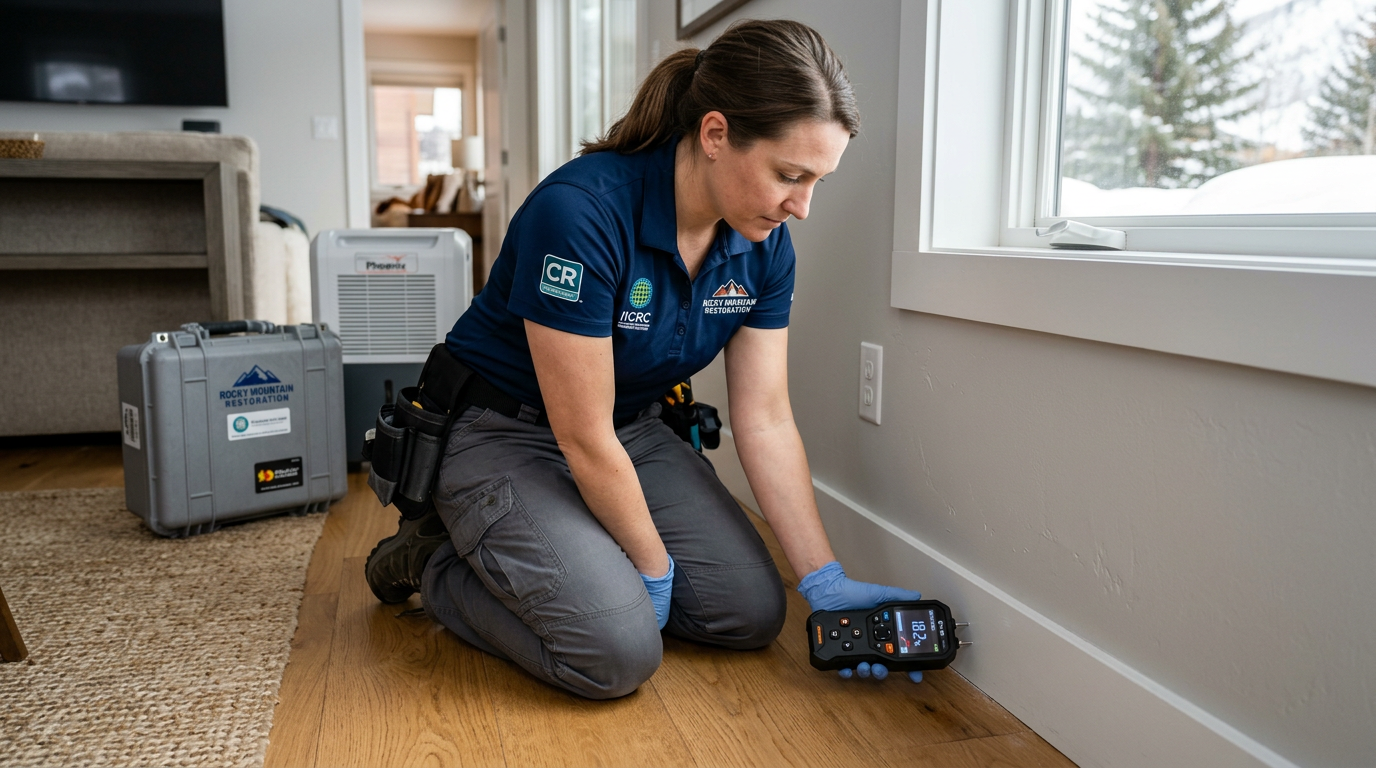
Drying equipment needs follow-up. Moisture readings and progress documentation help confirm whether materials are drying as expected and provide useful information for an insurance claim. Our Basalt water damage service page explains what to prepare before requesting an inspection, including the property address, access details, and the rooms affected.
The 24-to-48-Hour Window Matters
Fast action helps limit secondary damage, but it does not mean making rushed decisions about every item. The goal is to stabilize the property, remove water, and make informed choices about drying, cleaning, and materials that cannot be safely restored.
Basalt’s mountain climate can complicate drying in lower levels, enclosed closets, crawl spaces, and unoccupied properties. Property managers should identify an authorized contact who can provide access, receive updates, and coordinate with ownership or the insurance carrier. This is especially helpful for second homes and rentals across Basalt, Aspen, Snowmass Village, Carbondale, Glenwood Springs, and the wider Roaring Fork Valley.
If moisture or musty odors remain after a flood event, do not cover the problem with paint, carpet, or furniture. Our Basalt mold remediation information outlines why the moisture source must be addressed alongside any mold cleanup plan.
Insurance Documentation That Helps Keep Recovery Moving
Strong documentation does not guarantee coverage, but it can make conversations with your insurer clearer. Keep a simple timeline of when you discovered the water, what you did to prevent further damage, and who you contacted.
What To Save for Your Claim
- Photos and video of the affected spaces before cleanup begins
- Notes on the likely source of water and when it was discovered
- Receipts for emergency mitigation steps or temporary accommodations
- A list of affected contents and damaged building materials
- Communication from your insurance carrier, plumber, property manager, or restoration provider
We document the work completed, including moisture conditions and the restoration scope, so you have a clearer record for your adjuster. Your insurer makes the final determination about coverage, deductibles, and claim approval.
Summary
Flood cleanup in Basalt starts with safety, fast water removal, and a careful look at where moisture and contamination traveled. The most effective recovery plan combines extraction, cleaning, controlled drying, moisture monitoring, and documentation that supports informed decisions.
When water affects a property, do not rely on a dry-looking surface alone. Addressing hidden moisture early can reduce disruption and help protect the building, its contents, and the people who use the space.
Get Help With Flood Cleanup in Basalt
If your home, rental, business, or managed property has standing water, a burst pipe, or flood-related damage, we are ready to help. Call Helpers Disaster Restoration at (970) 927-3600 for 24/7 emergency cleanup in Basalt, Aspen, Snowmass Village, Carbondale, Glenwood Springs, and throughout the Roaring Fork Valley.
You can also contact Helpers Disaster Restoration to request an inspection for a non-emergency concern. For active water loss, call rather than waiting for an online reply.
Frequently Asked Questions
How much does flood cleanup in Basalt cost?
The cost depends on the water source, affected square footage, materials involved, access, contamination level, and drying time. An on-site assessment is the best way to understand the scope, because moisture can extend beyond what is visible.
Can I stay in my home during flood cleanup?
It depends on the affected areas, electrical safety, contamination concerns, and the work needed. If water has reached essential living spaces, sewage is involved, or drying equipment limits safe access, temporary arrangements may be appropriate.
Will my insurance cover flood damage?
Coverage depends on your policy, the cause of the water intrusion, exclusions, and deductible. Sudden plumbing failures and water entering from outside can be handled differently, so contact your carrier promptly and keep thorough records.
Can wet hardwood floors be saved?
Sometimes, especially when moisture is addressed quickly and the flooring has not warped or separated. The condition of the subfloor and moisture beneath the boards are just as important as the top surface.
Do I need a plumber and a restoration company?
In many cases, yes. A plumber repairs the failed pipe, appliance connection, or fixture, while a restoration team handles water removal, drying, cleaning, and damage assessment.
What if the floodwater came from a sewer backup?
Treat a sewer backup as contaminated water and keep people and pets away from the affected area. Cleanup may require removal of porous materials, sanitation, odor control, and controlled drying. Review our restoration FAQs for more details about sewage cleanup and water-damage recovery.
Does water damage Aspen cleanup differ from flood cleanup in Basalt?
The core process is similar, but every property’s water source, construction, access, and affected materials are different. We assess the specific conditions at each home or business and coordinate a recovery plan that fits the property.
Protect Your Property With a Thoughtful Recovery Plan
Flooding does not have to leave you guessing about the next step. Prioritize safety, document what happened, and make decisions based on the water source and hidden moisture conditions, not only what you can see.
For dependable local help, Helpers Disaster Restoration provides water damage, emergency water cleanup, flood recovery, drying, and restoration support across Basalt and the Roaring Fork Valley. We are here to help you move forward with a clear plan and professional care.