Water Damage Repair Basalt vs DIY: What Saves Your Home Fast
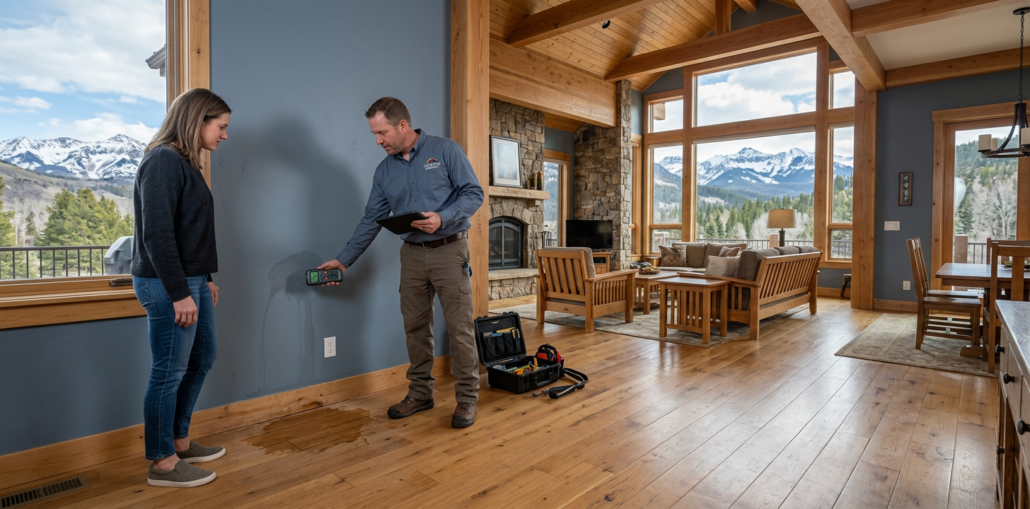
A burst supply line, overflowing appliance, or slow leak can make a calm day in Basalt feel overwhelming in minutes. The right response is not always to handle every part alone, but to quickly understand what is safe to manage and what needs professional drying and repair.
When homeowners compare water damage repair Basalt vs DIY, the deciding factors are usually the water source, how far moisture traveled, and whether the structure can be dried completely. A few towels and fans may be enough for a contained clean-water spill, but hidden moisture in flooring, drywall, insulation, and cabinetry can turn a small event into a larger restoration project.
Water Damage Repair in Basalt vs DIY: The Quick Decision
DIY cleanup can work for small, clean, visible spills that are addressed quickly. Professional restoration is the safer choice when water is contaminated, widespread, hidden, or has reached building materials that cannot be inspected and dried with household equipment.
| Situation | DIY May Be Reasonable | Professional Help Is Smarter | Main Concern |
|---|---|---|---|
| Small clean-water spill | Yes, if contained | If moisture spreads | Wet padding or subfloor |
| Supply-line leak | Only after stopping source | Usually recommended | Moisture behind walls |
| Water heater failure | Rarely | Yes | Large-volume water loss |
| Toilet or drain backup | No | Yes | Contamination risk |
| Floodwater intrusion | No | Yes | Sewage, bacteria, debris |
| Wet drywall or hardwood | Limited cleanup only | Often recommended | Swelling and trapped moisture |
The U.S. Environmental Protection Agency advises drying water-damaged areas and materials within 24 to 48 hours to help prevent mold growth. That timeline is why the first decisions matter so much, particularly after a leak that has been running unnoticed.
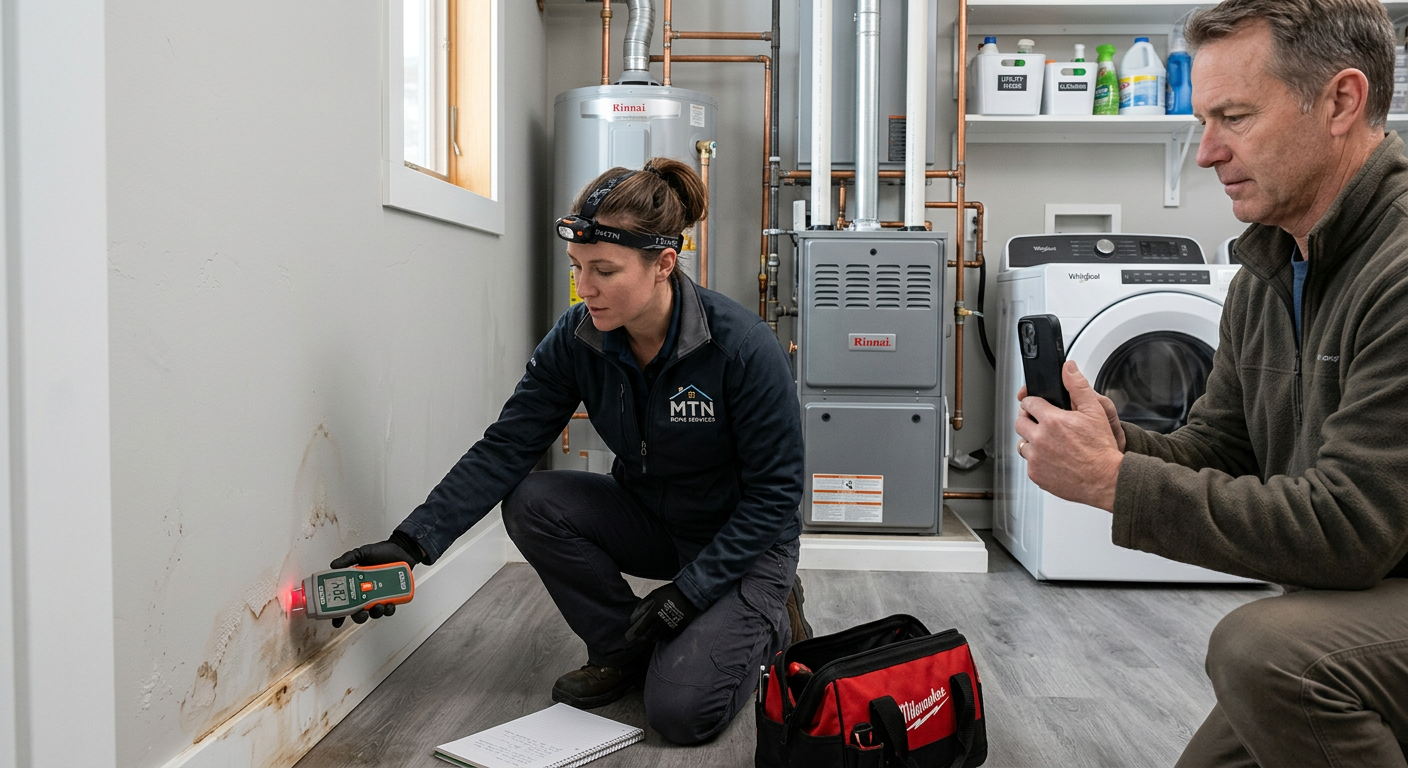
When DIY Cleanup Is a Sensible Choice
We consider DIY appropriate only when the water is clean, the affected area is small, and the moisture has stayed on hard, easy-to-dry surfaces. The goal is not simply to make the floor look dry, but to confirm that water has not traveled under materials or into cavities.
A Small, Clean Spill You Can Fully See
A recently spilled sink bucket, a minor refrigerator drip, or a small amount of water on sealed tile may be manageable without a restoration crew. Shut off the source, remove standing water, dry the surface thoroughly, and keep watching for changes such as lifting flooring, soft drywall, staining, or a musty odor.
For a narrow, visible clean-water event, simple steps can help:
- Protect yourself from slip and electrical hazards.
- Stop the water source before cleaning anything else.
- Move rugs, boxes, and furniture away from the wet area.
- Blot or wet-vac standing water if it is safe to do so.
- Use ventilation and dehumidification, not heat alone.
- Photograph the source and affected materials for your records.
DIY is about containment, not guesswork. If you cannot see beneath the surface, you cannot confidently know that the structure is dry.
The Water Was Clean and Contained
Water from a fresh broken supply line is generally less concerning than water from a drain or toilet, but it can still become more problematic as it sits and contacts building materials. That distinction matters because a clean-water loss can soak insulation, wood framing, carpet pad, or engineered flooring even when the room looks nearly dry.
If the source was a drain backup, toilet overflow involving waste, groundwater, or outdoor flooding, do not treat it as a DIY cleaning project. The EPA notes that sewage- or chemically contaminated water requires additional protective measures and recommends experienced professional help when cleanup involves contaminated water.
Signs the Damage Has Moved Beyond DIY
Water damage needs professional assessment when moisture may be hidden, contaminated, or difficult to dry quickly. These conditions often cause the expensive part of the repair, even after the visible water has been removed.
Water Reached Drywall, Insulation, or Cabinets
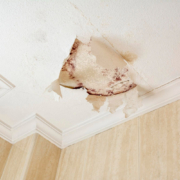
Drywall, insulation, trim, and cabinet toe-kicks can hold moisture out of view. Swollen drywall seams, bubbling paint, soft baseboards, warped cabinetry, or a floor that feels different underfoot all suggest that moisture has moved into materials rather than remaining on the surface.
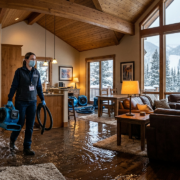
A professional water restoration team uses moisture detection and drying equipment to map the affected area, extract water, and monitor drying progress. That is especially useful when a pipe leak occurred inside a wall, beneath a sink, or behind a finished ceiling.
Flooring Is Buckling, Cupping, or Separating
Wood and laminate floors can absorb water from below as well as above. Running household fans across the room may improve the surface, but it does not confirm that the underlayment or subfloor is dry.
For wet carpet, padding, and porous flooring, the EPA specifically notes that the subfloor must also be cleaned and dried. If flooring starts to cup, lift, stain, or develop gaps, professional evaluation can help determine what can be saved and what needs replacement.
There Is Any Question About Mold or Indoor Air
A damp, earthy odor, visible spotting, persistent staining, or peeling paint deserves attention. The EPA states that homeowners can often handle a moldy area under about 10 square feet, but larger growth, extensive water damage, sewage exposure, or HVAC involvement calls for experienced assistance.
If drying was delayed or you suspect growth behind finishes, review the options for professional mold recovery and prevention. Addressing the moisture source is the foundation of every successful mold solution.
Why Basalt Homes Need a Careful Drying Plan
Basalt properties face distinct water-loss scenarios, including frozen pipes, seasonal runoff, roof leaks, appliance failures, and drainage problems. Mountain weather and changing occupancy patterns can also allow a leak to run longer before someone notices it.
Second Homes and Vacant Properties
A leak in an occupied home is often discovered quickly. In a second home, rental property, or vacant unit, water may travel across multiple rooms, soak finishes, and reach lower levels before anyone arrives.
Property managers should keep shutoff locations documented, maintain reliable leak alerts where possible, and have a response plan that includes photography, occupant communication, and a restoration contact. Fast coordination protects both the building and the claim documentation.
Cold-Weather Pipe Failures
Frozen and burst pipes can release a surprising volume of water quickly. Once the water supply is safely shut off, avoid using electrical equipment in wet areas and avoid opening walls unless you know there are no electrical hazards.
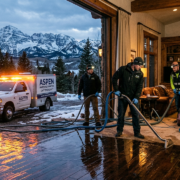
For widespread leaks, our Basalt water damage services include assessment, extraction, structural drying, cleaning, and repair planning. Helpers Restoration also coordinates directly with insurance carriers, which can make the documentation process more manageable for homeowners and property managers.
Flooding and Drainage Events
Outdoor floodwater and backed-up drains require a different response from a clean pipe break. Floodwater may carry contaminants, and water that has traveled through a sewer line should be treated as a health concern rather than a simple wet-floor problem.
For these conditions, use a qualified sewage backup cleanup service instead of attempting to disinfect affected porous materials yourself. Keep people and pets out of the area until it has been assessed and cleaned safely.
What Professional Restoration Adds Beyond Cleanup
Professional restoration is designed to document, dry, clean, and repair the full affected area, including moisture you cannot see. It is not simply a larger fan setup.
Moisture Mapping and Drying Verification
A restoration plan begins by identifying the source, category of water, and likely migration path. Moisture readings and thermal imaging can help locate wet materials behind walls, beneath flooring, and inside cabinetry.
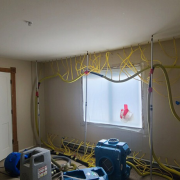
From there, the work may include water extraction, controlled air movement, dehumidification, removal of materials that cannot be safely dried, cleaning, odor control, and repairs. Regular monitoring helps verify that materials are returning to an appropriate dry condition instead of only feeling dry on the surface.
Better Records for an Insurance Claim
Insurance coverage depends on the policy and the cause of loss, so homeowners should review their specific coverage. Still, detailed photos, notes about when the loss was discovered, repair invoices, and a record of mitigation steps can make the claim process clearer.
For additional questions about cleanup timing, insurance coordination, and what restoration involves, see the water damage restoration FAQ. Keep damaged materials, if safe to do so, until your insurer or restoration professional advises otherwise.
Protect Your Basalt Property With a Prompt Response
If water has reached walls, flooring, cabinets, or multiple rooms, fast professional help can limit secondary damage and reduce uncertainty. Call Helpers Restoration at (970) 927-3600 for 24/7 emergency cleanup in Basalt, Aspen, Carbondale, Snowmass Village, Glenwood Springs, and across the Roaring Fork Valley.
For emergency support or a free inspection request, contact Helpers Restoration online. We respond with a clear plan, careful documentation, and practical guidance from the first assessment through repair.
Frequently Asked Questions
Can I use household fans to dry water damage?
Household fans may help with a small clean-water spill on a hard surface, but they cannot confirm that walls, flooring layers, padding, or insulation are dry. Fans should not be used on sewage-contaminated water or unknown water sources.
Should I remove wet carpet myself?
You can move small loose rugs from a safe, clean-water area, but wall-to-wall carpet can trap moisture in the pad and subfloor. If the carpet is soaked, contaminated, or has been wet for an unknown period, professional inspection is safer.
Will homeowners insurance pay for a burst pipe in Basalt?
Many policies may cover sudden and accidental pipe damage, but exclusions, maintenance history, deductibles, and the cause of the break can affect coverage. Document the damage promptly and ask your insurer about your specific policy.
How long does professional water damage drying take?
Many drying projects take several days, but the timeline depends on the amount of water, material types, temperature, humidity, and how long the area was wet before mitigation began. Repairs may take longer if drywall, flooring, insulation, or cabinets need replacement.
Can I stay in my home during water damage restoration?
Often, yes, when the affected area can be isolated and the water is clean. Temporary relocation may be recommended for sewage contamination, widespread damage, major demolition, or conditions that affect safe access to the home.
Is a musty smell after a leak always mold?
Not always, but it is a reason to investigate. A musty odor can indicate lingering moisture, wet materials, or microbial growth, especially if it continues after visible surfaces have dried.
Summary
DIY cleanup has a place after a small, clean, visible spill that can be fully dried right away. For a burst pipe, floodwater, wet drywall, soaked flooring, sewage backup, or a leak that may have traveled out of sight, professional water damage repair in Basalt provides the testing, drying, documentation, and repair coordination that help protect the property.
The most important step is to stop the source safely and avoid assuming that a dry-looking surface means the structure is dry. Quick, informed action gives your home the best chance of a smooth recovery.