
A burst supply line, overflowing appliance, or roof leak can make any Aspen homeowner ask the same question: can we clean this up ourselves, or do we need professional help? The answer depends less on how much water you can see and more on where the moisture traveled, what type of water is involved, and how quickly the area can be completely dried.
Water damage restoration vs DIY cleanup is not simply a choice between renting fans and making a phone call. Small, clean-water spills on hard, nonporous surfaces may be manageable in-house. Water that reaches carpet padding, drywall, cabinetry, insulation, crawl spaces, or electrical areas requires a much more careful response.
For Aspen, Snowmass Village, Basalt, Carbondale, Glenwood Springs, and the wider Roaring Fork Valley, fast action matters. Cold weather, second homes left unattended, mountain runoff, and frozen-pipe risks can allow a minor issue to become a larger repair if hidden moisture remains behind.
The Short Answer: DIY Works Only for Small, Clean, Contained Spills
DIY cleanup can be appropriate when the affected area is small, the water is clean, and every wet material can be dried thoroughly. Professional restoration is the safer choice when water has spread beyond the surface, may be contaminated, or has been present long enough to soak into building materials.
| Situation | DIY May Be Reasonable | Professional Restoration Is Recommended |
|---|---|---|
| Source of water | Clean sink overflow | Sewage, flooding, unknown source |
| Affected materials | Tile, sealed vinyl, small hard surface | Carpet, drywall, wood flooring, insulation |
| Size and spread | Small, visible, contained area | Multiple rooms or hidden moisture |
| Safety concerns | No electrical or structural issues | Electrical, ceiling, or contamination risks |
| Drying result | Fully dry within a day or two | Moisture remains or materials are swelling |
The U.S. Environmental Protection Agency advises drying water-damaged areas and materials within 24 to 48 hours to help prevent mold growth. That window is one reason professional drying is often worth considering when a leak reaches porous materials or concealed spaces. EPA mold and moisture guidance
What DIY Cleanup Can Handle Safely
DIY cleanup is best reserved for small incidents where you can identify the source, stop the water, and verify that the affected materials are dry. The goal is not to make the room look dry. It is to remove moisture before it can affect flooring, wall cavities, or indoor air quality.
A Small Appliance or Sink Overflow
If a clean-water overflow is limited to a tile floor or another nonporous surface, we recommend shutting off the source, removing water with towels or a wet vacuum, and drying the area with ventilation. Pull items away from the wet area and check cabinet bases, toe kicks, and nearby baseboards for swelling or dampness.
If moisture has reached particleboard cabinetry, laminate flooring seams, carpet edges, or drywall, the job may have moved beyond a simple household cleanup. These materials can hold moisture where ordinary fans cannot confirm dryness.
A Fresh, Minor Leak With No Material Damage
A tiny plumbing drip caught early can sometimes be handled by repairing the source and drying the surrounding surface. Take clear photographs before cleanup, especially if there is any chance you will need to speak with your insurance carrier later.
Continue checking the area over the next several days. Musty odors, bubbling paint, warped trim, staining, or soft drywall are signs that water traveled farther than expected.
When Water Damage Restoration Is the Better Decision
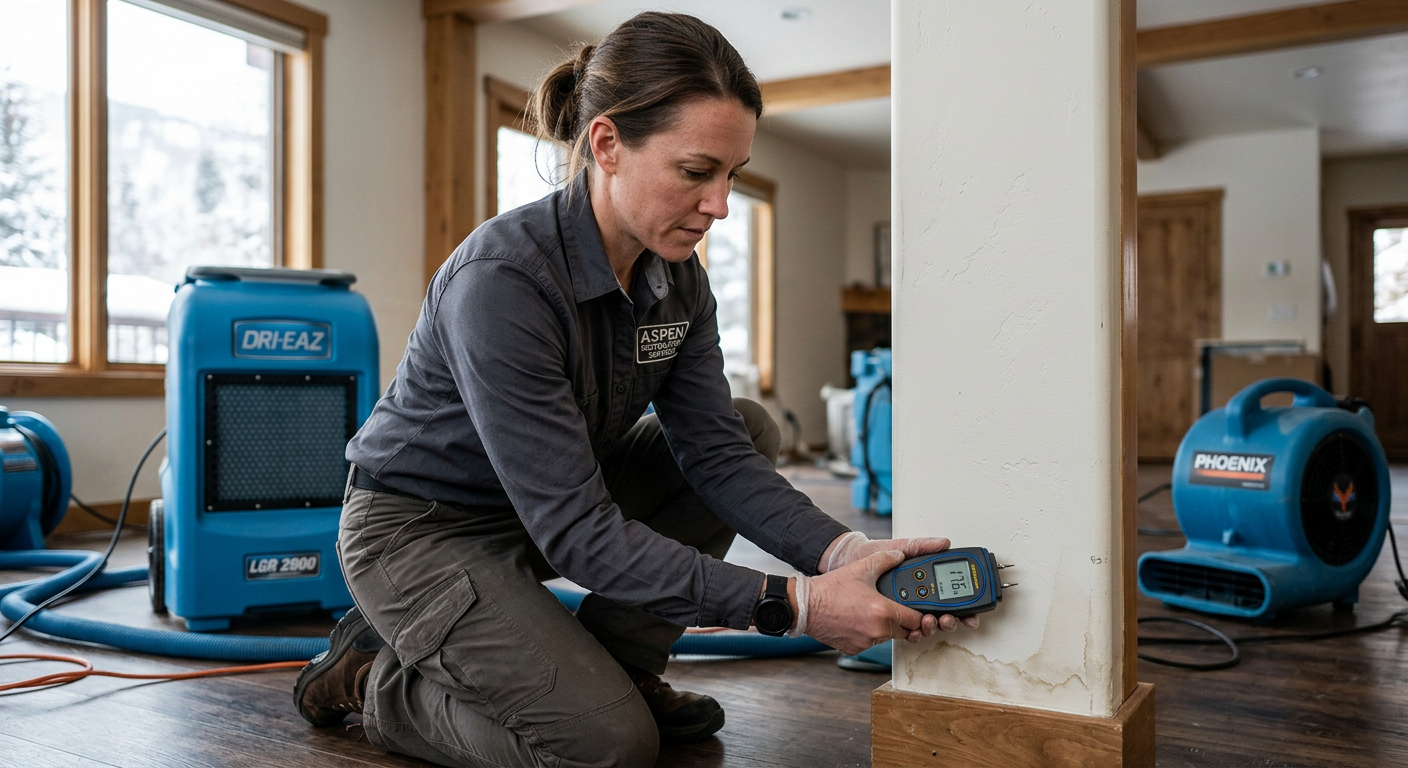
Professional help is appropriate when drying requires more than surface-level cleanup. Restoration teams use moisture detection, controlled air movement, dehumidification, and documented monitoring to identify and dry areas that are not visible from the room.
Water Has Reached Drywall, Carpet, Flooring, or Cabinets
Porous materials absorb water quickly. Carpet padding can hold significant moisture, drywall can wick water upward, and wood flooring may cup, buckle, or separate as moisture moves through it. A room can feel dry underfoot while moisture remains beneath flooring or behind walls.
For a deeper explanation of response options, review our water damage restoration services. We help property owners determine what can be dried, what needs to be removed, and how to protect the rest of the structure.
The Water Is Contaminated or the Source Is Unknown
Do not treat sewage backups, toilet overflows involving waste, floodwater, or unknown water sources as ordinary cleanup projects. These situations can introduce bacteria, chemicals, and other contaminants into flooring and belongings.
The EPA notes that floodwater can contain bacteria, chemicals, and other hazards. Contaminated-water events need appropriate protective measures and cleaning methods, not just extraction and fans. EPA flood cleanup safety information
If wastewater is involved, our sewage backup cleanup service is designed for the added safety and sanitation demands of those losses.
There Is a Ceiling, Electrical, or Structural Concern
A sagging ceiling, water near outlets, wet light fixtures, or water entering from above should be treated as a safety issue first. Avoid entering areas with potential electrical hazards, and do not attempt to open ceilings or walls until the area is safe.
This is especially important in homes with complex finishes, radiant heating, older construction, or valuable furnishings. A careful assessment can prevent a rushed cleanup from causing more damage.
Why Aspen Homes Need a Careful Drying Plan
Mountain properties often have conditions that make hidden moisture more likely. Homes may sit vacant between visits, experience frozen pipes during cold periods, or have water migration through multi-level layouts, utility rooms, and lower-level storage areas.
A Dry Surface Does Not Prove a Dry Structure
This is the most common DIY mistake we see. Homeowners do the right thing by removing standing water quickly, but they cannot always see what has reached the subfloor, insulation, cabinet backing, wall framing, or adjacent rooms.
Effective drying is measured, not guessed. Professional equipment is useful because it supports a drying plan based on actual moisture conditions rather than the appearance of a room.
Mold Prevention Depends on Moisture Control
Mold is not inevitable after a leak, but moisture must be addressed completely. The EPA states that controlling moisture is the key to controlling mold, and it recommends prompt drying of water-damaged areas.
If you notice a musty odor, visible growth, recurring stains, or unexplained dampness after cleanup, it may be time to explore mold damage assessment and remediation. Early attention can help limit the scope of repairs.
A Practical First-Hour Checklist for Homeowners
The first hour after a water event should focus on safety, documentation, and limiting spread. You do not need to diagnose every hidden issue before taking these basic steps.
Stop the Water and Protect People
Turn off the fixture, appliance valve, or main water supply if it is safe to do so. If water is near electricity, leave the area and contact a qualified professional before touching appliances, outlets, or electrical panels.
Photograph Before Moving Belongings
Capture the source, standing water, affected rooms, and damaged items. Save photos and notes about when you discovered the problem, which can make insurance conversations more straightforward.
Remove What You Can Without Spreading Damage
Move dry belongings away from wet areas and place aluminum foil or plastic blocks under furniture legs if it is safe. Avoid walking contaminated water through clean rooms, and do not use a household vacuum on standing water.
Get Help When the Scope Is Unclear
If the leak has reached more than one material or one room, uncertainty is a good reason to ask for an assessment. In water damage cleanup, missing hidden moisture is usually more costly than confirming that a small loss is truly dry.
Get Local Help With Water Damage in Aspen
When water has traveled beyond a simple surface spill, we can help you make a clear next decision. Helpers Restoration provides 24/7 emergency cleanup for homeowners and property managers across Aspen and the Roaring Fork Valley, with support for extraction, drying, repairs, and insurance documentation.
Call (970) 927-3600 for emergency water cleanup in Aspen, or contact Helpers Restoration to request help. For location-specific service details, visit our Aspen water damage response page.
Frequently Asked Questions
Can I use fans to dry water damage myself?
Fans can help with a small, clean spill on a hard surface after the water is removed. They are not a reliable solution for wet drywall, carpet padding, insulation, or hidden cavities, and fans should not be used to spread an area where mold is already growing.
How long do I have before mold becomes a concern?
The EPA recommends drying water-damaged materials within 24 to 48 hours to help prevent mold growth. The exact risk depends on materials, temperature, humidity, and how far water traveled, so prompt assessment is wise after anything more than a minor spill.
Will homeowners insurance cover water damage restoration?
Coverage depends on your policy and the cause of loss. Sudden, accidental events such as a burst pipe may be covered, while gradual leaks, maintenance issues, or some types of flooding may be excluded. Document the damage and contact your insurer promptly.
Is a wet carpet always salvageable?
Not always. Clean-water exposure caught quickly may allow some carpet to be dried, but padding often requires closer evaluation. Carpet affected by sewage, floodwater, or long-term saturation may need to be removed for health and safety reasons.
Can I stay in my home during restoration?
Often, yes, if the affected space can be isolated and there are no electrical, structural, contamination, or air-quality hazards. If a large portion of the home is wet or damaged, temporary relocation may be safer and more comfortable.
What should I do if a pipe bursts at a vacant Aspen property?
Shut off the water supply if possible, arrange for someone to check the property safely, and document conditions as soon as access is available. Because vacant homes can have prolonged exposure before discovery, professional moisture assessment and drying are usually the prudent choice.
The Right Choice Depends on What You Cannot See
DIY cleanup has a place for small, clean, contained spills that can be fully dried without affecting the building. Once water reaches absorbent materials, comes from a contaminated source, creates a safety concern, or leaves you unsure about hidden moisture, professional water damage restoration offers a more dependable path forward.
For Aspen-area homes, the goal is not only to remove visible water. It is to restore a dry, safe space and reduce the chance that a manageable incident becomes a larger repair later.