Water Damage Snowmass Village: Handling a Burst Pipe Securely
Water Damage Snowmass Village: Handling a Burst Pipe Securely
A burst pipe can change a quiet Snowmass Village morning into a stressful property emergency in minutes. The best response is calm and organized: protect people from electrical hazards, stop the water source if it is safe, document the damage, and begin proper drying before moisture moves deeper into walls, floors, or ceilings.
For homeowners, second-home owners, condo associations, and property managers, water damage Snowmass Village properties face can be more extensive than the puddle you see. Pressurized water can travel under flooring, through insulation, behind baseboards, and into lower levels, especially when a pipe fails while a property is vacant.
Make the Area Safe Before You Start Cleanup
Your first priority is safety, not saving every item in the room. Keep people away from standing water near outlets, appliances, electrical panels, sagging ceilings, or damaged light fixtures.
If water is close to electricity, do not enter the affected area or attempt to unplug equipment. Contact an electrician or emergency professional if there is any uncertainty about electrical safety. Avoid walking beneath a ceiling that is bulging or dripping heavily, since soaked drywall can lose strength and fall.
Move children, pets, and anyone without protective footwear away from the area. If the water appears dirty, smells unusual, or may involve a drain or sewer line, do not attempt household cleanup. That situation needs specialized sewage backup cleanup service rather than ordinary water removal.
Stop the Water Flow and Call a Plumber
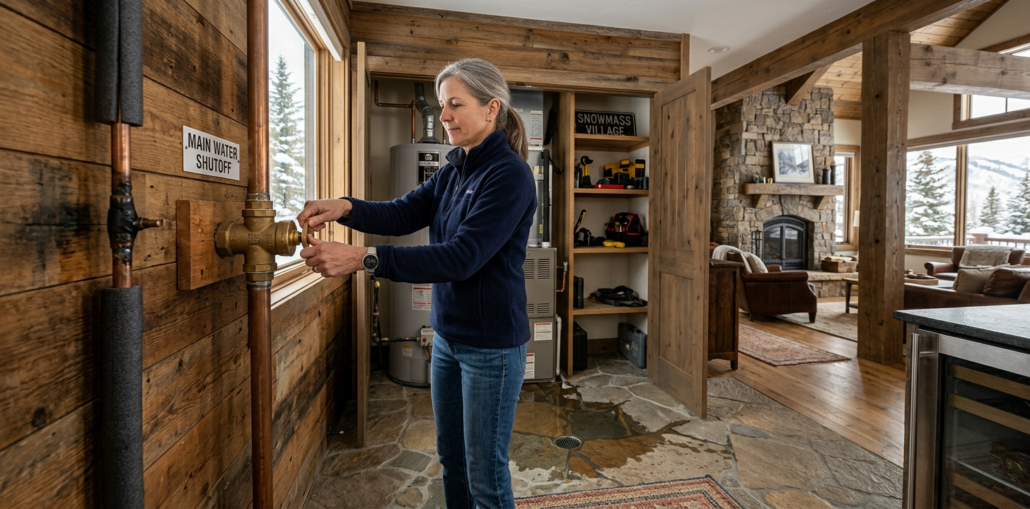
Stopping the active leak limits the scale of the loss. If you can safely reach the local fixture valve or the home’s main water shutoff, close it and confirm the water flow has stopped.
Know the Difference Between Plumbing Repair and Restoration
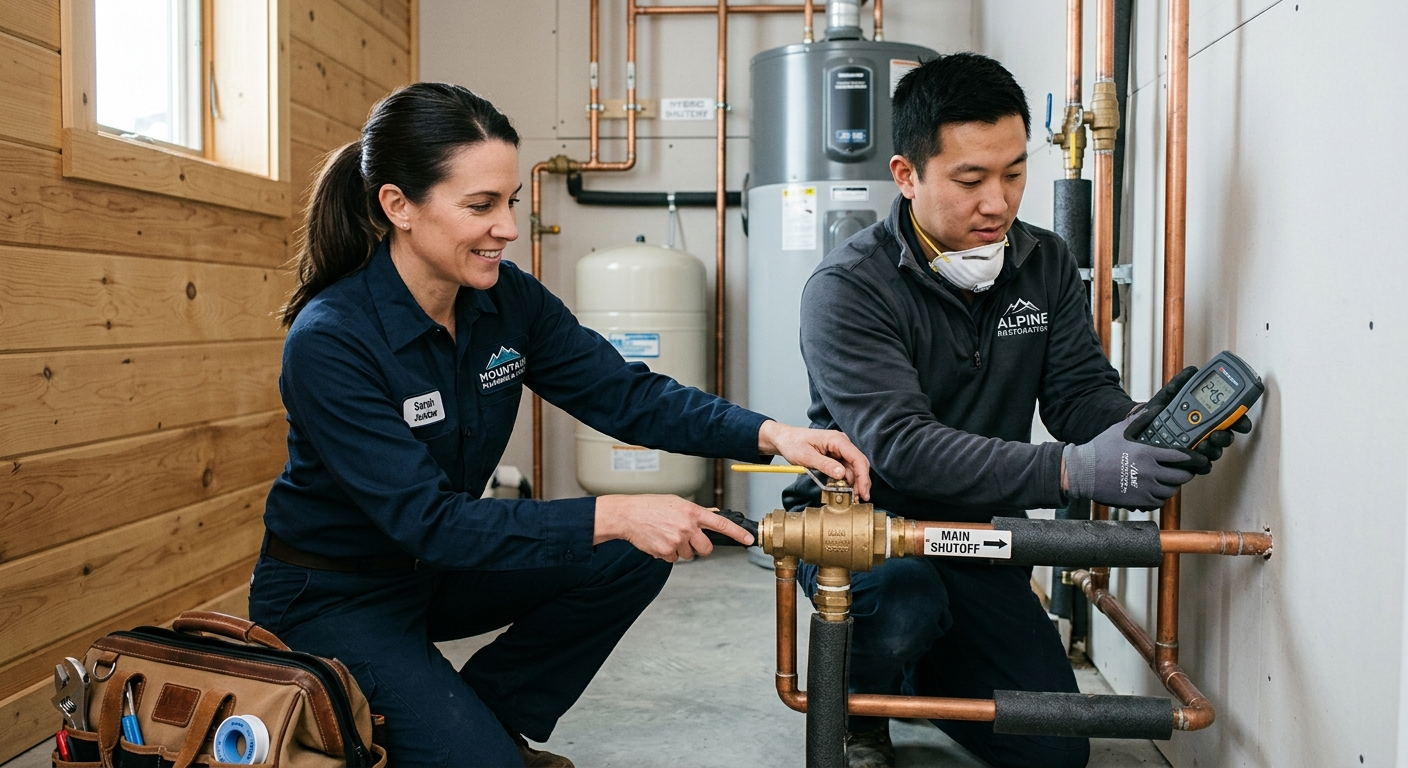
A plumber repairs or replaces the failed pipe, fitting, valve, or appliance connection. A restoration team handles the effects of the leak, including extraction, moisture checks, drying, cleaning, and documentation.
This distinction matters after a burst pipe. A repaired line does not mean the surrounding drywall, subfloor, insulation, cabinets, or flooring are dry. For substantial water intrusion, arrange both services so the plumbing issue and the moisture problem are addressed together.
Avoid Unsafe Freeze-Thaw Shortcuts
If a pipe is frozen but has not visibly broken, do not use an open flame, torch, or improvised high-heat device. These methods can create a fire risk and may damage plumbing components. A licensed plumber can identify the affected line and recommend a safe repair approach.
Protect Belongings and Document the Loss
Once the water source is controlled and the area is safe, protect dry belongings and create a clear record for your insurer. Photos taken early can show the original water path and support a more organized claim.
Take wide photos of each affected room, then close photos of the broken pipe, wet finishes, damaged belongings, and any visible water lines on walls or furniture. Record the date, approximate discovery time, and actions taken to stop the water. Keep receipts for emergency plumbing, temporary lodging, and reasonable steps taken to prevent additional damage.
Move lightweight valuables, documents, artwork, electronics, and soft goods to a dry location if doing so does not create a safety risk. Do not drag soaked rugs or furniture across dry flooring, because that can spread moisture into unaffected areas.
For owners managing a rental, condominium, or seasonal home, notify the appropriate property manager, association representative, or tenant promptly. Clear communication helps establish access, coordinate repairs, and protect shared building areas from additional water damage.
Remove Water, Then Verify Hidden Moisture
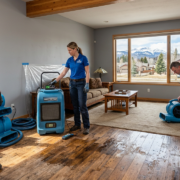
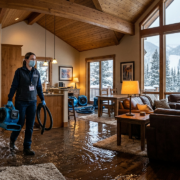
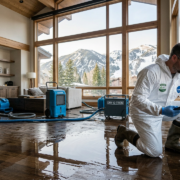
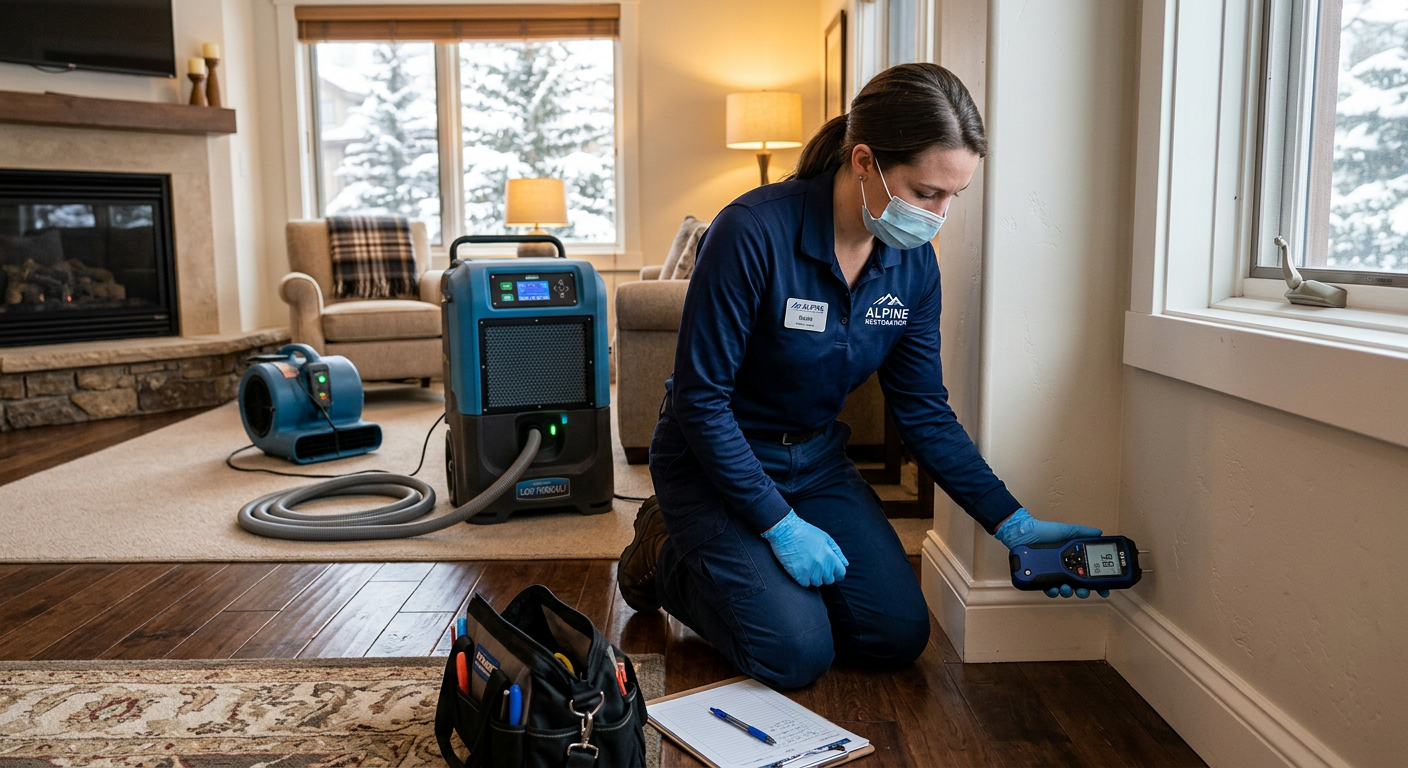
Visible water should be removed quickly, but a dry-looking surface is not proof that the structure is dry. Professional water damage restoration uses extraction equipment, controlled air movement, dehumidification, and moisture measurements to evaluate materials you cannot see behind.
The U.S. Environmental Protection Agency reported in 2026 that the average household’s leaks can waste more than 9,300 gallons of water each year. A burst pipe is far more sudden than a typical slow leak, which is why fast containment and thorough drying are so important.
When a Small Cleanup May Be Reasonable
A very small amount of clean water on a sealed hard surface may be manageable with towels and ventilation after the source is stopped. Even then, inspect nearby baseboards, cabinets, and flooring edges for swelling, staining, or dampness.
When to Arrange Professional Drying
Professional help is the safer choice when water has reached any of the following:
- Drywall, insulation, ceilings, or wall cavities
- Hardwood, engineered wood, carpet, padding, or subflooring
- Cabinets, built-ins, baseboards, or trim
- More than one room or floor of the property
- A mechanical room, electrical area, elevator area, or shared condo space
- A vacant property where the leak may have continued for hours or days
Our water damage restoration services include moisture evaluation and structural drying for homes and managed properties across the Roaring Fork Valley. For properties with damp materials that may support microbial growth, it is also wise to understand when mold damage services may be needed after the drying assessment.
Why Snowmass Village Properties Need a Specific Plan
Snowmass Village homes often face risks that differ from year-round primary residences. Cold weather, ski-season occupancy changes, remote ownership, and multi-level mountain construction can make a pipe break harder to discover and more complicated to dry.
Vacant Homes and Seasonal Rentals
If the property is vacant, do not assume the leak started shortly before it was found. Water may have moved down through framing, insulation, and ceilings before becoming visible. Ask for moisture mapping in adjacent rooms and on the level below the original pipe break.
Property managers can reduce disruption by keeping a current shutoff map, emergency vendor list, owner contact list, and access instructions. A monitored leak detection system can also alert owners to unusual water flow or moisture. The EPA notes that flow-monitoring and leak-detection devices can help identify irregular water use and reduce damage from undetected leaks.
Condos, Lodges, and Shared Buildings
In a condo or lodging property, water can cross unit boundaries quickly. Notify building management as soon as possible, especially if water is entering a hallway, lower unit, utility space, or shared ceiling cavity. Keep documentation focused on facts, including where the pipe failed, when it was discovered, and which areas are visibly affected.
Work With Your Insurance Carrier Without Delaying Mitigation
You should report a burst pipe claim promptly, but you do not need to wait for an adjuster before taking reasonable steps to prevent additional damage. Saving photos, preserving damaged materials when practical, and keeping invoices creates a better record of the event.
Ask your insurer about the claim number, preferred documentation, coverage questions, and whether they need an estimate before repairs begin. Avoid authorizing cosmetic reconstruction until drying is complete and moisture conditions have been checked. Replacing drywall or flooring too early can trap moisture and create another repair cycle.
For property owners comparing local options, the goal is not simply to find a company with extraction equipment. Look for clear communication, documented moisture checks, insurance-ready records, and a team that understands mountain homes, second residences, and the wider Roaring Fork Valley from Aspen to Basalt, Carbondale, and Glenwood Springs.
Get Calm Help for a Burst Pipe
A burst pipe needs more than a quick patch when water has reached walls, floors, or ceilings. At Helpers Restoration, we provide 24/7 emergency cleanup, structural drying, and insurance-focused documentation for Snowmass Village and nearby Roaring Fork Valley communities.
Call (970) 927-3600 for emergency water cleanup, or contact Helpers Restoration online to request help. You can also visit Helpers Restoration for local service information and emergency support.
Frequently Asked Questions
Should I leave my Snowmass Village home after a pipe bursts?
Leave the affected area if water is near electrical equipment, if a ceiling is sagging, or if the structure feels unsafe. For a contained leak with no electrical or structural concern, you may be able to remain in an unaffected part of the property while professionals assess the damage.
Can I use fans to dry a room after a burst pipe?
Fans can help with a very small clean-water spill on a hard surface, but they cannot confirm that moisture is gone from walls, insulation, flooring layers, or cabinets. Do not use household fans if the water may be contaminated or if electrical safety is uncertain.
Will hardwood floors recover after water damage?
Some wood flooring can be dried and stabilized when mitigation begins quickly, but buckling, cupping, staining, and moisture beneath the boards may affect the outcome. A moisture assessment provides a more reliable answer than appearance alone.
How long does drying after a burst pipe take?
Many residential drying projects require several days of equipment operation and monitoring. The timeline can be longer when water reached dense flooring, insulation, multiple levels, or concealed structural areas.
Is burst pipe damage usually covered by homeowners insurance?
Many policies may cover sudden and accidental pipe failures, but coverage depends on the policy language, maintenance history, cause of loss, and applicable exclusions. Contact your insurer for a coverage decision and keep detailed records of the damage and emergency actions.
What should a property manager keep on file for winter emergencies?
Keep main shutoff locations, unit access details, vendor contacts, owner and tenant phone numbers, building plans, and insurance information in one accessible place. A seasonal walkthrough schedule and leak-alert system can also reduce the time between a pipe failure and discovery.
Summary
A secure response to a burst pipe starts with safety and water control, then moves to documentation, water extraction, hidden-moisture checks, and carefully timed repairs. Snowmass Village homes, rentals, and condos benefit from an organized plan because cold weather and vacant periods can allow water to travel farther than expected.
A Dry, Documented Recovery Protects Your Property
The most important step after a burst pipe is not rushing into cosmetic repairs. We recommend making the area safe, stopping the source, recording what happened, and confirming that affected materials are dry before rebuilding begins.
A calm response protects finishes, belongings, and the long-term condition of the property. With the right steps in place, homeowners and property managers can move from a stressful plumbing failure to a well-documented recovery plan.