
A burst supply line, overflowing appliance, or water intrusion in a lower level can disrupt a Carbondale property much faster than most people expect. The visible puddle is only part of the concern, since moisture can move under flooring, into wall cavities, and through crawl spaces before it is noticed.
When you need a water restoration company Carbondale property owners can rely on, the right response starts with safety, source control, and a clear drying plan. We help homeowners, landlords, and property managers across Carbondale and the Roaring Fork Valley understand what happened, protect the property, and move forward without unnecessary confusion.
Water Damage Needs More Than Surface Cleanup
Effective water restoration addresses both the water you can see and the moisture that may remain behind building materials. Extracting standing water is important, but verified drying and documentation are what help guide the full recovery.
A wet floor can look normal within hours while moisture stays trapped beneath flooring, behind baseboards, or in insulation. That is why a professional assessment considers the water source, how long materials were wet, where water traveled, and whether the affected materials can be dried safely.
The U.S. Environmental Protection Agency advises drying water-damaged areas and items within 24 to 48 hours to help prevent mold growth. That window makes prompt action valuable after a plumbing leak, roof leak, ice dam, appliance failure, or flooded crawl space.
What To Do Before Help Arrives
Start by protecting people and limiting additional damage. If it is safe to do so, shut off the water source, move valuables away from the wet area, and photograph the damage before cleanup begins. Do not enter standing water near electrical equipment, sagging ceilings, or contaminated sewage.
For a clean-water leak, towels or a wet vacuum may help with a small amount of surface water, but avoid pulling up flooring or opening walls without an assessment. Those decisions can affect what can be dried, what must be removed, and the documentation your insurer may request.
How We Handle Water Restoration in Carbondale
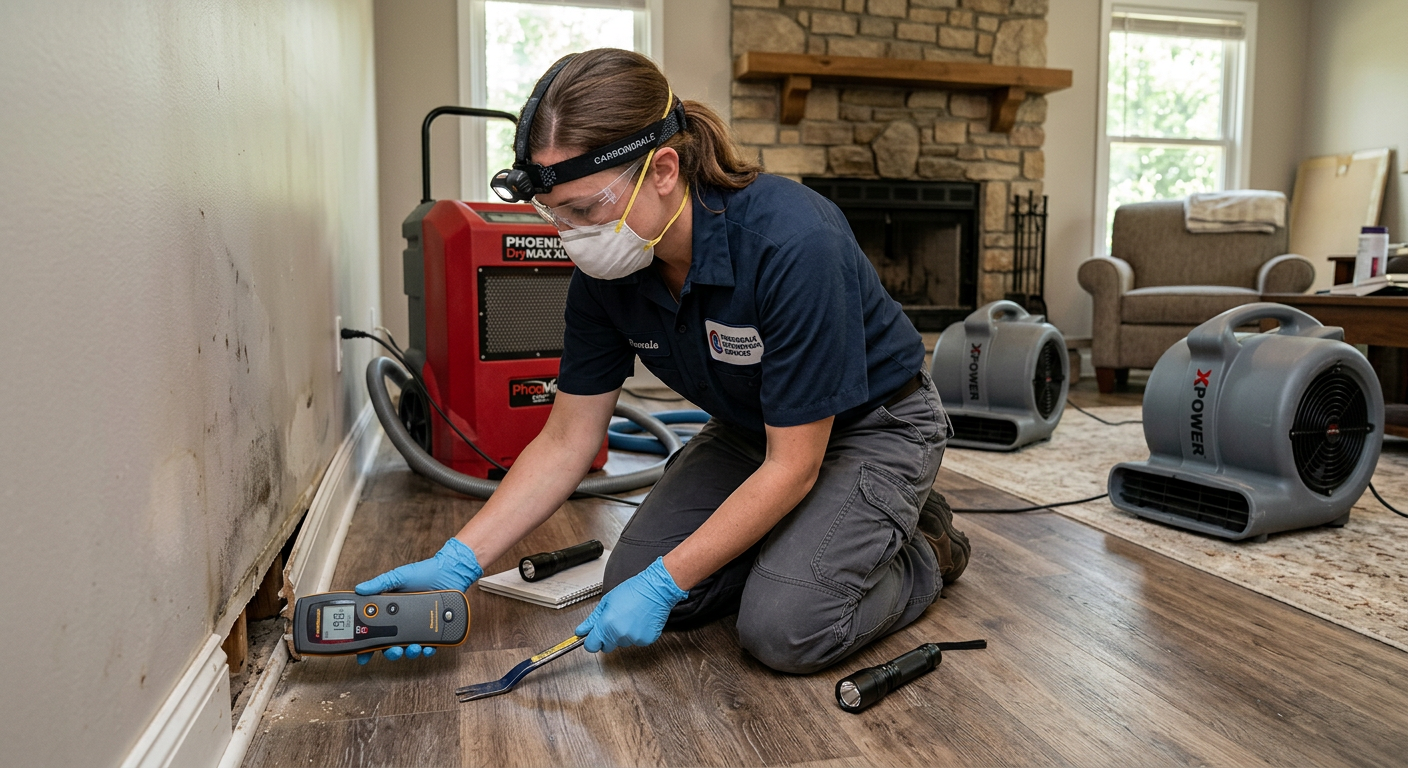
A dependable recovery plan follows the path of the water, not just the spot where damage first appeared. Our team at Helpers Disaster Restoration begins by learning what occurred, assessing affected materials, and explaining the next appropriate steps.
Assessment and Moisture Mapping
The first task is to identify the source and the full extent of the loss. A leaking refrigerator line might wet cabinetry and subflooring. A bathroom overflow can affect the ceiling and walls in the room below. Water in a crawl space may need an access plan before drying equipment can be placed effectively.
We use moisture readings and visual inspection to evaluate nearby rooms, wall surfaces, floors, and lower areas. This helps create a practical scope of work rather than relying on appearance alone.
Water Extraction and Material Protection
Once the conditions are assessed, the recovery process may include water removal, targeted cleaning, and protection of salvageable contents. The source of the leak often requires a plumber, roofer, or appliance professional, while our role is to address the water damage and restoration needs left behind.
For property managers, quick coordination also matters. We can work with the authorized contact to discuss access, affected units, operating limitations, and documentation for the restoration work.
Drying, Monitoring, and Documentation
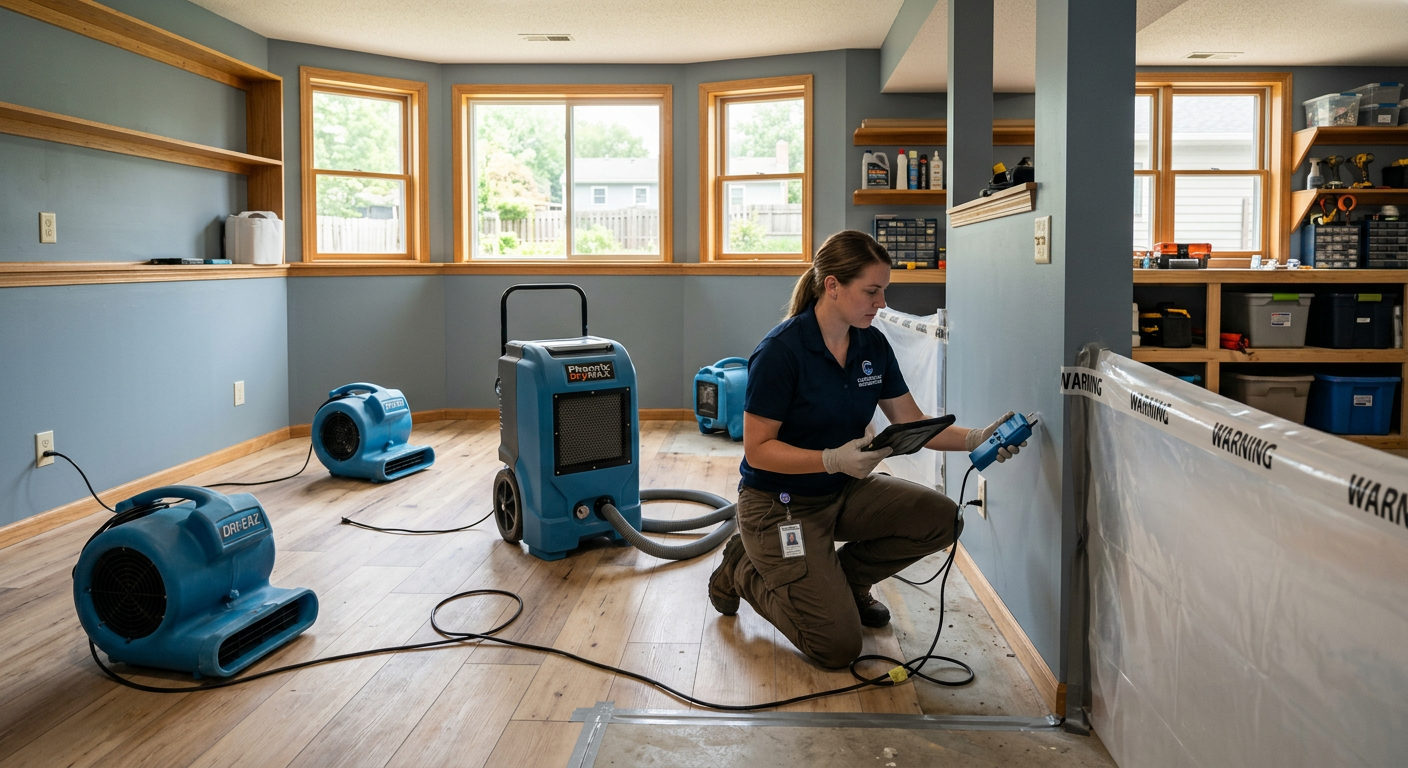
Structural drying involves more than placing fans in a room. Equipment placement, dehumidification, and follow-up moisture checks should be matched to the materials and conditions in the property. A dry-looking surface does not always mean the layers beneath it are dry.
We also document the affected areas and restoration work to give you a clearer record for discussions with your insurance carrier. Coverage, deductibles, and final payment decisions remain with the insurer, but good documentation can make the claim conversation more organized.
For questions that come up during a loss, our water damage restoration FAQ explains common concerns about dry time, insurance, burst pipes, and hidden moisture.
Carbondale Water Problems Often Have Hidden Paths
Carbondale homes and managed properties can have water concerns that extend beyond a single room. Crawl spaces, finished lower levels, older plumbing connections, and multi-level layouts can give water several paths to travel.
Plumbing Leaks and Appliance Failures
A dishwasher, washing machine, water heater, refrigerator line, or toilet supply line can cause substantial damage even when the leak seems minor at first. Water may flow beneath cabinets, into flooring layers, and toward adjacent rooms before the appliance is pulled out.
Tell the restoration team what fixture failed, when you first saw the issue, and where water was visible. If you have already stopped the source, that information helps clarify the condition of the property at the time of inspection.
Wet Crawl Spaces and Lower Levels
Crawl-space moisture deserves attention because it can affect framing, insulation, stored belongings, and indoor conditions above. Standing water below a home also creates access and drying challenges that differ from a simple spill on finished flooring.
If the water came from ground intrusion or a plumbing issue, describe the access point and whether belongings, insulation, or wood framing were exposed. Homeowners near Basalt can also review our information about structural drying and water damage help in Basalt when comparing recovery needs across the valley.
Contaminated Water and Sewage Backups
Not all water losses are the same. Water from a sewer backup, floor drain, or toilet overflow can create a contamination concern in addition to moisture damage. Keep people and pets out of the affected area, avoid disturbing materials, and arrange an assessment instead of treating it like a clean plumbing leak.
Our Carbondale sewage cleanup service explains how contamination, removal decisions, cleaning, drying, and source repairs can involve different professionals. A plumber or sewer specialist repairs the failed line, while restoration work focuses on the affected materials and recovery plan.
What To Look For in a Water Restoration Company
The best restoration partner explains the process clearly, identifies limits honestly, and treats your property with care. Fast availability matters, but so do sound assessment practices, communication, and follow-through.
Look for a company that can discuss these points before work begins:
- How the team will assess visible and hidden moisture
- What safety steps are needed before entering or cleaning the area
- Whether the water source needs a plumber, roofer, or sewer specialist
- How drying progress will be checked and documented
- Which materials may be salvageable and which may need removal
- How records can support communication with your insurance carrier
- Who will provide property access and approvals for a rental or commercial space
Helpers Disaster Restoration is locally operated from Basalt and serves Carbondale, Aspen, Snowmass Village, Glenwood Springs, and nearby Roaring Fork Valley communities. We provide 24/7 emergency response for water damage, extraction, drying, mold concerns, sewage cleanup, and related property restoration needs.
Get Clear Help for a Carbondale Water Emergency
If water is actively spreading, do not wait for an online form response. Call Helpers Disaster Restoration at (970) 927-3600 for 24/7 emergency cleanup in Carbondale, and tell us the property location, water source, affected rooms, and any safety concerns.
For a non-emergency inspection request, use our contact page to share the property details. We will help you understand the next step and organize a recovery plan that fits the conditions at your home, rental, or business.
Frequently Asked Questions
How quickly should I call after discovering water damage?
Call as soon as you know there is more than a small, contained spill or when water may have reached building materials. Early assessment can help limit how far moisture travels and supports drying within the EPA's recommended 24-to-48-hour window.
Can hardwood floors be saved after a leak?
Sometimes, but the answer depends on the water source, how long the flooring was wet, and whether moisture reached the subfloor. An inspection and moisture readings provide a more reliable answer than the surface appearance alone.
Will my insurance cover water restoration work?
Coverage depends on your policy, deductible, cause of loss, and your insurer's decision. We document the restoration work and can help you understand the scope, while your carrier determines what is covered.
What is the difference between water mitigation and water restoration?
Mitigation focuses on limiting ongoing damage through extraction, cleaning, and drying. Restoration refers to the work needed to bring affected areas back to a usable condition after the mitigation phase is complete.
Can I stay in my home while drying equipment is running?
Often you can, but it depends on the affected area, electrical safety, contamination, equipment placement, and whether access is needed for monitoring. We explain practical occupancy considerations after assessing the property.
Do I need professional help for a small leak?
A small leak may still need professional evaluation if it reached flooring, drywall, cabinetry, insulation, or an area you cannot fully inspect. Hidden moisture can remain after the visible surface feels dry.
Summary
A water loss in Carbondale can involve far more than a wet room. The most effective response includes stopping the source when safe, documenting the damage, assessing moisture beyond visible surfaces, and following a structured extraction and drying plan.
For homeowners and property managers, choosing a water restoration company that communicates clearly and documents its work helps make a stressful situation more manageable. Fast, careful action protects the property and gives you a clearer path toward recovery.
A Steady Recovery Starts With the Right Plan
Water damage is easier to manage when the response is organized from the beginning. Prioritize safety, address the source, and make decisions based on the actual condition of the materials rather than what looks dry on the surface.
With a thorough assessment, verified drying, and clear records, you can move from an unexpected water problem toward a safer, more stable property recovery.