Fire and Smoke Restoration Aspen: Steps for Safe Home Recovery
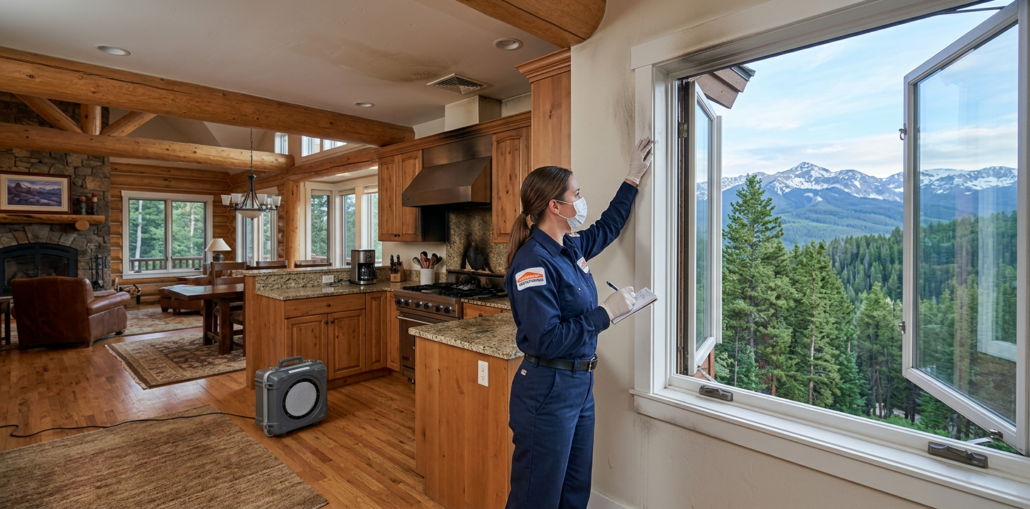
Fire and Smoke Restoration Aspen: Steps for Safe Home Recovery
A small fire can leave a much larger recovery job than most property owners expect. Even when flames are limited to one room, smoke, soot, odor, and firefighting water can travel through walls, vents, flooring, and belongings.
For Aspen homeowners and property managers, fire and smoke restoration Aspen services should focus on safety first, then a documented plan for cleaning, drying, odor control, and repairs. At Helpers Restoration, we understand how disruptive a fire can feel, especially when you are trying to protect a family home, rental property, or business in the Roaring Fork Valley.
The need for a careful response is not unusual. In 2024, local fire departments responded to an estimated 1.38 million fires across the United States, according to the National Fire Protection Association. After the fire department leaves, the work of protecting your property from secondary damage begins.
What Fire and Smoke Damage Can Affect
Fire damage is rarely limited to burned materials. Smoke residue, acidic soot, moisture, and odor can affect rooms far beyond the point where the fire began.
A fire recovery plan should account for the full property, not only the most visibly damaged area. Smoke follows air pathways, so a nearby bedroom, hallway, HVAC register, or storage area may need inspection even if it looks untouched at first.
Common types of damage after a fire
- Soot residue: Fine particles can settle on walls, ceilings, cabinets, flooring, electronics, and personal belongings.
- Smoke odor: Odor can absorb into porous materials such as drywall, insulation, carpet, upholstery, wood, and clothing.
- Water damage: Fire suppression can introduce substantial moisture. Fast extraction and structural drying help reduce the risk of warped materials and mold growth.
- Corrosion and staining: Soot residue can damage finishes and metals if it is left in place.
- Air quality concerns: Ash and smoke particles can become airborne again when cleanup methods are not controlled.
The U.S. Environmental Protection Agency advises against dry sweeping ash because it can stir particles into the air. The agency also recommends damp cleaning methods or a HEPA-type vacuum for dusty surfaces. That is one reason a professional assessment is a safer choice after a property fire.
The First Steps We Recommend After a Fire
The safest first move is to wait for clearance from emergency officials, then protect the property from additional damage without disturbing soot or wet materials. Simple, careful actions can support both health and insurance documentation.
Prioritize safety before cleanup
Do not re-enter a fire-affected building until the fire department or another qualified authority says it is safe. Avoid touching charred materials, using electrical systems that may be compromised, or running HVAC equipment until it has been evaluated.
If ash or residue is present, keep children, older adults, and people with respiratory conditions away from the affected spaces. Avoid using household vacuums, fans, or fragranced sprays, which can spread fine particles or mask odor without removing its source.
Document the condition of the property
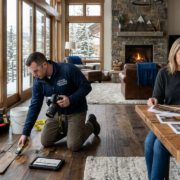
Take clear photos and video of every affected room before moving items or beginning cleanup. Include visible soot, water, damaged building materials, appliances, furniture, and personal contents.
Keep a simple written record of what happened, when the fire occurred, and what emergency work was completed. This information can help your insurer understand the loss and give restoration professionals a clearer scope of work.
Limit additional damage
If it is safe to do so, remove dry, unaffected valuables from the area. Do not attempt to wash soot-covered walls or textiles without guidance, because incorrect cleaning can drive residue deeper into surfaces.
When firefighting water is present, water damage Aspen property owners face after a fire needs fast attention. Moisture can remain under flooring, behind drywall, and inside insulation even after visible puddles are gone.
How Professional Fire and Smoke Restoration Works
A professional restoration plan combines cleaning, drying, odor control, documentation, and repairs in the right order. Skipping one stage can leave behind odor, hidden moisture, or residue that later affects finishes and indoor comfort.
Inspection and moisture mapping
We begin by identifying where fire, smoke, soot, and water reached. This includes examining adjacent rooms, contents, building materials, and areas where moisture may have moved behind walls or below floors.
A visual inspection alone is not enough when water was used to put out the fire. Targeted moisture readings guide drying decisions and help prevent a water damage problem from becoming a mold problem.
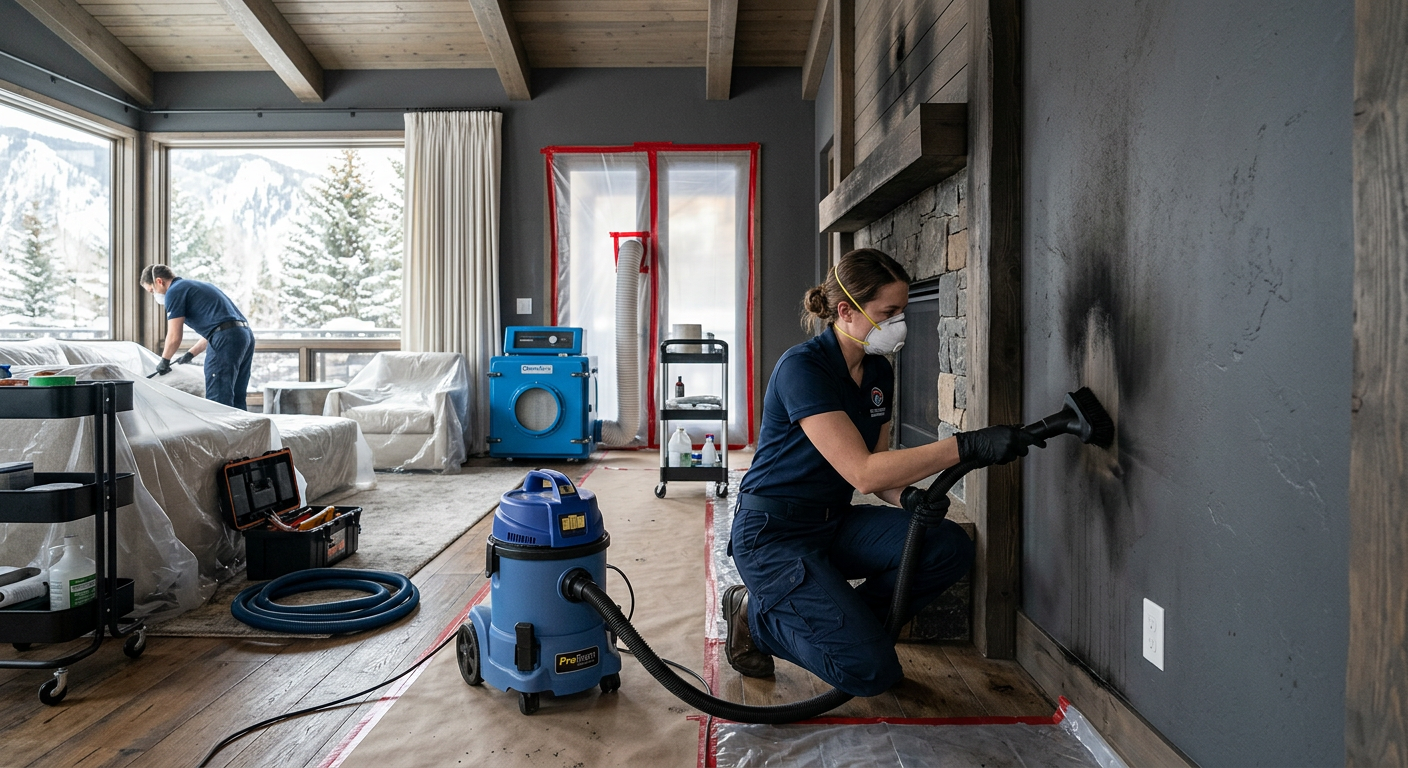
Controlled soot and residue removal
Different surfaces require different cleaning methods. Hard surfaces, delicate finishes, electronics, textiles, and artwork should not be treated the same way.
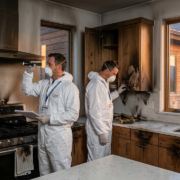
Professional crews use containment and specialized equipment to capture residue rather than spread it through the home. Materials that cannot be safely cleaned may need removal so the property can be properly restored.
Drying and dehumidification
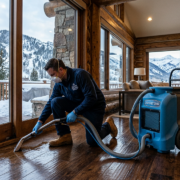
Firefighting water can affect floors, wall cavities, framing, insulation, and contents. We use extraction, air movement, dehumidification, and monitoring to dry the structure in a controlled way before repair work begins.
This part of the process is especially important for Aspen-area properties that may have wood finishes, plaster, radiant-floor systems, or seasonal occupancy. A property can look dry while hidden materials still hold moisture.
Odor treatment and air cleaning
Smoke odor is not solved by perfume, candles, or surface wiping. Effective deodorization addresses the source of odor in building materials and contents, while air filtration helps reduce remaining particles in the work area.
The right approach depends on what burned, how long smoke remained in the property, and which materials were affected. A careful plan protects salvageable belongings while identifying items that need replacement.
Why Aspen Properties Need a Local Recovery Plan
Aspen homes, vacation rentals, condominiums, and commercial properties often have complex finishes and tight scheduling needs. A local restoration plan can help protect distinctive materials while coordinating around guests, owners, insurers, and repair crews.
Mountain properties may also have periods of vacancy, limited access during weather events, and specialized surfaces such as natural wood, stone, custom cabinetry, or high-value furnishings. We recommend a detailed scope of work before demolition or reconstruction begins, so everyone understands which materials can be cleaned, dried, restored, or replaced.
Helpers Restoration serves Aspen, Snowmass Village, Basalt, Carbondale, Glenwood Springs, and the wider Roaring Fork Valley. Our fire damage recovery services include assessment, cleanup, deodorization, drying, and support for the next stage of repairs.

Insurance Records Matter After Fire and Water Damage
Clear records make it easier to explain the full scope of a fire loss. Good documentation should show not only burned materials, but also smoke migration, soot residue, water intrusion, contents damage, and the emergency work needed to stabilize the property.
We recommend notifying your insurance carrier promptly and retaining receipts for approved emergency expenses. Avoid throwing away damaged items until your insurer or restoration team has documented them, unless they create an immediate health or safety risk.
For questions about emergency mitigation, drying, or insurance coordination, review the Helpers Restoration FAQ. If the fire response also involved water intrusion, our Aspen water damage service explains how extraction, drying, and moisture verification protect the building before repairs move forward.
Questions Aspen Property Owners Often Ask
How long does fire and smoke restoration take?
The timeline depends on the size of the fire, the spread of smoke, the amount of water used during suppression, and the repairs required. A limited smoke cleanup may take several days, while a larger loss involving structural repairs can take weeks or longer.
Can smoke odor be removed from a home completely?
Often, yes, when the source materials are properly cleaned, treated, sealed, or removed as needed. The outcome depends on how deeply smoke entered porous materials and whether hidden areas, including insulation and HVAC components, were affected.
Is it safe to stay in the house after a small fire?
It may be safe in some limited situations, but only after fire officials and qualified restoration professionals assess the property. Smoke residue, electrical concerns, compromised materials, and hidden moisture can make occupancy unsafe even when the fire itself was contained.
Will homeowners insurance cover smoke and soot cleanup?
Many policies cover sudden and accidental fire losses, including necessary smoke cleanup and mitigation. Coverage varies by policy, cause of loss, limits, and exclusions, so prompt documentation and communication with your insurer are important.
What should we do with smoke-damaged clothing and furniture?
Do not wash or discard items until they have been documented and evaluated. Many textiles, furnishings, and personal belongings can be cleaned by qualified content restoration specialists, while heavily damaged porous items may need replacement.
Can firefighting water lead to mold after a fire?
Yes, it can if wet materials are not dried thoroughly. Fast extraction, dehumidification, and moisture monitoring are important after a fire, particularly when water reached wall cavities, carpet padding, hardwood, insulation, or subflooring.
Get a Clear Recovery Plan for Your Aspen Property
When fire, smoke, soot, or suppression water affects your property, a fast and organized response can protect what is salvageable and reduce disruption. Call Helpers Restoration at (970) 927-3600 for 24/7 emergency cleanup in Aspen, or contact our local restoration team to request help.
We provide respectful support for homeowners and property managers across Aspen and the Roaring Fork Valley, with clear communication, documented restoration steps, and coordination for fire, smoke, and water-related damage.
Summary
Fire recovery involves more than removing burned debris. The strongest plan addresses safety, soot, smoke odor, firefighting water, hidden moisture, contents, and insurance documentation as connected parts of one property loss.
For Aspen homes and properties throughout Basalt, Carbondale, Snowmass Village, and Glenwood Springs, careful inspection and controlled restoration work help protect the building, its contents, and the people who rely on it. With the right support, a difficult event can move from uncertainty to a clear path for recovery.