Fire and Smoke Restoration Carbondale: Complete Home Recovery
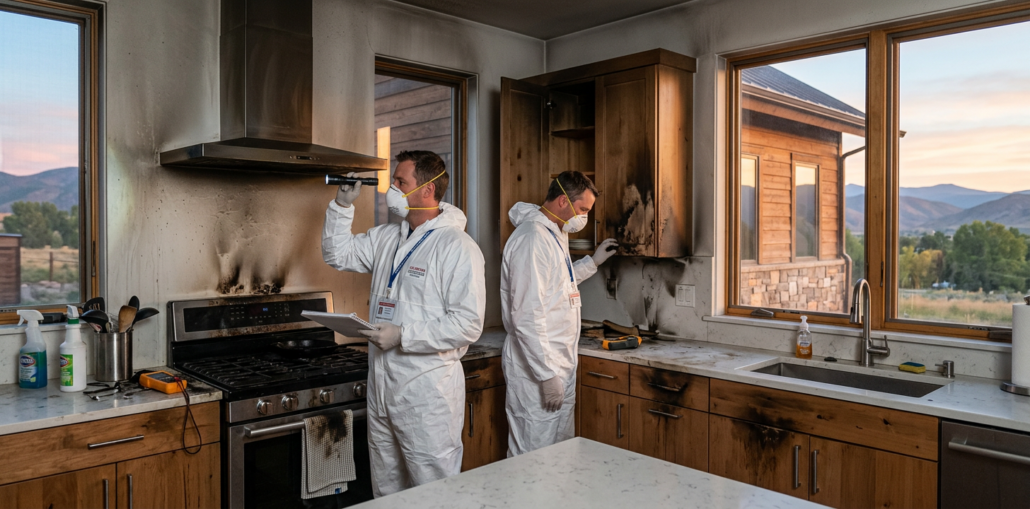
A fire can be contained in minutes, but the effects inside a home can linger long after the fire department leaves. Soot settles into corners, smoke odors cling to porous materials, and water used to control the fire can create a second layer of damage that needs prompt attention.
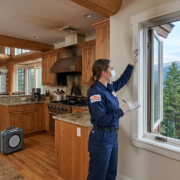
That is why fire and smoke restoration Carbondale homeowners can rely on is about much more than surface cleaning. We assess the full scope of damage, protect the structure and belongings, remove soot safely, address moisture, and help create a clear path toward repairs and recovery.
The National Fire Protection Association reports that home fires caused an average of $8.9 billion in direct property damage each year from 2019 through 2023. Even a small, contained incident deserves a careful response because smoke can travel well beyond the room where the fire started. NFPA Home Structure Fires Report
What Fire And Smoke Damage Can Affect
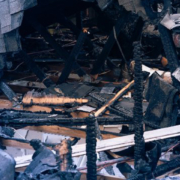
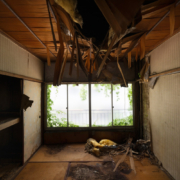
Fire damage is rarely limited to what you can see. Flames may harm framing, cabinets, drywall, flooring, and electrical components, while smoke deposits can reach adjacent rooms through doorways, gaps, and HVAC pathways. The longer residue remains in place, the harder it can be to remove without damaging finishes.
Soot Residue On Surfaces
Soot is a fine, dark residue that can smear easily. It may be dry and powdery, oily, or sticky depending on what burned. Scrubbing with the wrong product or a household rag can push particles deeper into paint, upholstery, carpeting, and wood grain.
Smoke Odor In Hidden Spaces
Smoke odor often becomes trapped in insulation, fabrics, cabinets, wall cavities, and ductwork. Opening windows may help freshen a room, but it will not remove odor-causing particles embedded in materials. A complete plan needs to identify where smoke traveled, not simply mask the smell.
Water Damage After Firefighting
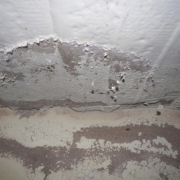
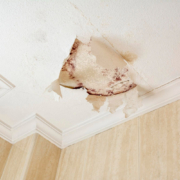
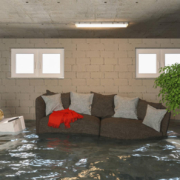
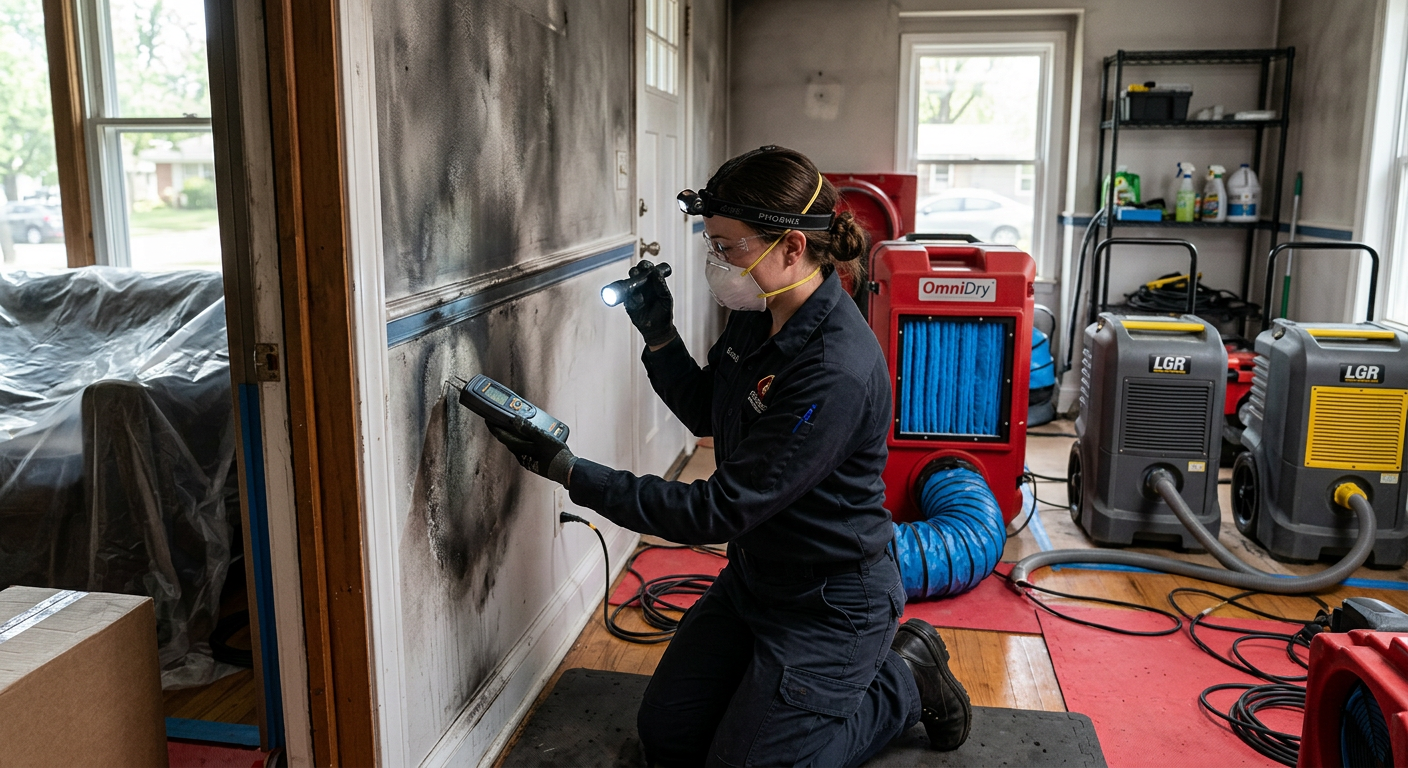
Water used to put out a fire can soak floors, wall systems, and contents. This is where fire recovery can overlap with water damage cleanup in Carbondale, including extraction, controlled drying, moisture checks, and removal of materials that cannot be safely restored.
A Practical Fire Restoration Plan For Carbondale Properties
Every loss is different, but a professional restoration process should follow a logical sequence. Rushing into cleanup without documenting damage or checking for hidden moisture can make insurance work and repairs more difficult later.
Protect The Property And Document The Loss
First, make sure the property is safe to enter. If fire officials, your insurer, or a qualified contractor advises against entry, wait for clearance. Once it is safe, take broad photos and videos of affected rooms, visible soot, damaged belongings, and standing water before moving items whenever possible.
Keep a simple record of conversations, temporary expenses, and emergency work completed. This information can help support an insurance claim and give the restoration team a clearer picture of what happened.
Separate What Can Be Restored From What Cannot
Not every smoke-affected item must be discarded, but not every item can be saved either. Restoration professionals evaluate materials, the type of residue, heat exposure, and whether cleaning will return an item to a safe, acceptable condition.
Examples that may need special handling include:
- Upholstered furniture and textiles
- Electronics and appliances
- Photographs, documents, and artwork
- Food, medicine, and cosmetics exposed to soot or heat
- Flooring, drywall, insulation, and cabinetry
The U.S. Environmental Protection Agency advises against dry sweeping or using a typical household vacuum for ash cleanup because it can send fine particles back into the air. HEPA-equipped equipment and appropriate cleaning methods help reduce that risk. EPA Wildfire Smoke Cleanup Guidance
Remove Soot Without Spreading It
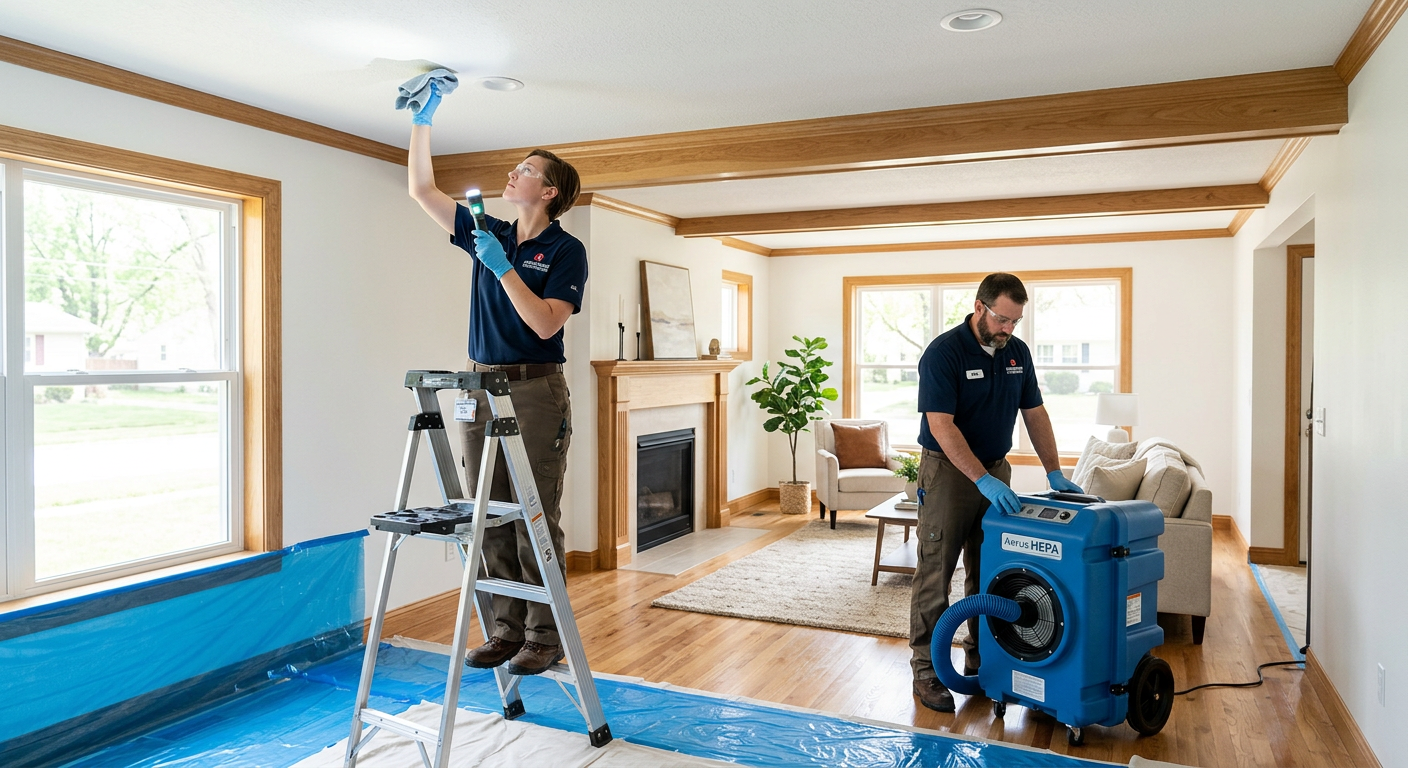
Soot removal starts with containment and careful dry cleaning methods where appropriate. We use specialized equipment and techniques designed for affected surfaces, then follow with detailed cleaning for walls, ceilings, fixtures, cabinets, and contents.
This step requires patience. A shiny countertop may look clean while residue remains in cabinet seams, vents, or textured surfaces. Thorough work protects the appearance of the space and helps prevent persistent odors.
Dry, Dehumidify, And Check Moisture Levels
If suppression water entered the home or business, drying needs to happen alongside smoke cleanup. Air movement, dehumidification, extraction, and moisture monitoring help reduce the chance of warped materials, hidden moisture, and later mold concerns.
For more serious water intrusion, our water damage restoration services can be integrated into the same recovery plan. Coordinating these steps prevents one problem from being overlooked while another receives attention.
Deodorize The Structure And Restore Indoor Comfort
Smoke odor removal is a source-control process. After residues are cleaned, technicians may use air filtration, thermal fogging, hydroxyl treatment, or other professional deodorization methods selected for the affected materials and conditions.
HVAC systems also deserve a careful evaluation after a smoke event. The EPA notes that air ducts should be cleaned when needed, rather than automatically. If smoke residue entered the system, a qualified assessment can determine whether cleaning or additional work is appropriate. EPA Guidance On Air Duct Cleaning
What To Avoid After A Fire Or Smoke Event
The urge to clean right away is understandable. Still, a few well-meaning actions can make recovery tougher.
- Do not wipe soot with a wet towel before assessing the residue type.
- Do not use a standard vacuum or dry broom on soot and ash.
- Do not turn on HVAC equipment if you suspect smoke or soot entered the system.
- Do not discard major damaged items until they have been documented for your insurer.
- Do not enter areas with structural instability, exposed wiring, or lingering safety concerns.
- Do not delay drying if firefighting water affected floors, walls, or belongings.
Here is the thing, professional restoration is not about making a space look better for a day. It is about returning the property to a clean, stable, comfortable condition with a documented scope of work.
How Insurance Support Fits Into Recovery
Most property owners have enough on their minds after a fire. Clear documentation can make the claim process less confusing, especially when fire, smoke, and water damage overlap.
We recommend notifying your insurer promptly, saving receipts for approved emergency expenses, and keeping damaged items available for review when practical. A restoration company can provide photos, moisture readings, content documentation, estimates, and work records that help explain the scope of the loss.
At Helpers Restoration, we provide fire damage recovery services for homeowners and property managers across Carbondale, Aspen, Basalt, Snowmass Village, Glenwood Springs, and the Roaring Fork Valley. We coordinate cleanup, deodorization, drying, repairs, and insurance documentation with a respectful, local approach.
Questions Carbondale Property Owners Often Ask
How Soon Should Smoke Damage Cleanup Begin?
After the property is declared safe to enter, it is best to begin professional assessment and stabilization as soon as practical. Prompt action limits the time soot, smoke odor, and moisture have to settle into building materials and belongings.
Can Smoke Odor Be Fully Removed From A Home?
In many cases, yes. Successful odor removal depends on cleaning the smoke source from surfaces and materials, addressing hidden areas where residue traveled, and using the right deodorization process. Covering odors with fragrances is not a complete solution.
Is It Safe To Clean Soot Myself?
Small, limited residue may be manageable with proper protective equipment and methods, but broad soot contamination, residue near HVAC systems, or damage after a structural fire is best handled by trained professionals. Children, older adults, and people with heart or lung conditions should avoid ash cleanup work.
Does Firefighting Water Create A Mold Risk?
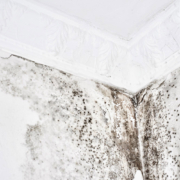
It can. Wet drywall, flooring, insulation, and framing need timely drying and moisture checks. If materials remain wet, a separate mold remediation plan may be necessary.
Will Homeowners Insurance Cover Fire And Smoke Restoration?
Many policies cover sudden, accidental fire losses, though coverage depends on the policy, cause of loss, exclusions, deductibles, and limits. Contact your insurance carrier for claim-specific guidance, then keep detailed records of emergency services and damage.
How Long Does Fire Restoration Take?
Minor smoke cleanup may take days, while extensive structural repairs can take weeks or longer. The timeline depends on safety approvals, the amount of residue and water damage, material availability, insurer coordination, and the repairs required.
Get Calm, Capable Help After Fire Damage
If your Carbondale home, rental, or commercial property has fire, smoke, soot, or firefighting water damage, call Helpers Restoration at (970) 927-3600 for 24/7 support. You can also contact our local restoration team to request an inspection and discuss the next best step for your property.
Summary
Fire recovery requires more than a quick cleanup. A careful process addresses soot, smoke odor, water from suppression efforts, hidden moisture, affected belongings, and the documentation needed for repairs and insurance coordination.
When you work with an experienced local team, you can move from uncertainty to a practical recovery plan. We are here to help Carbondale property owners protect what can be saved, make informed decisions, and restore a safe, comfortable space.