
Water Cleanup Glenwood Springs: A Safe Property Recovery Plan
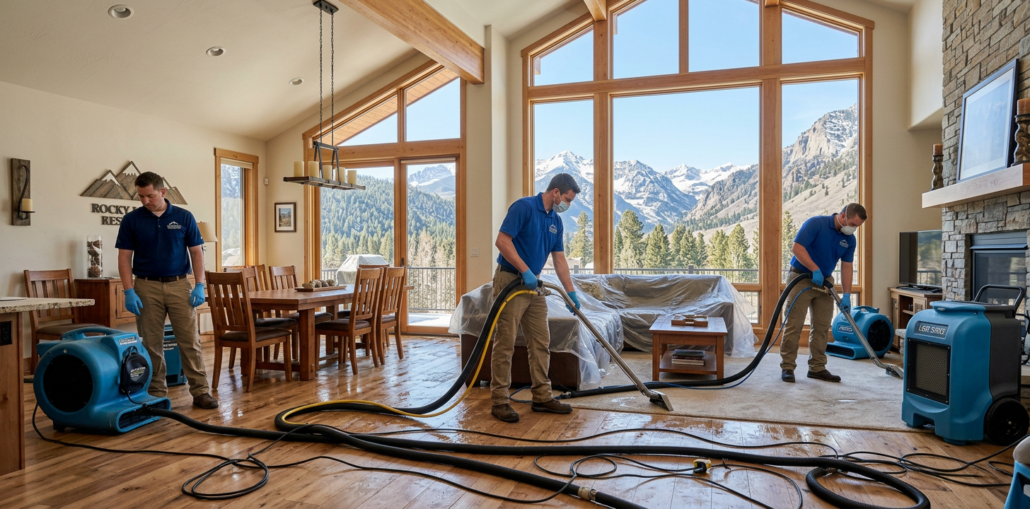
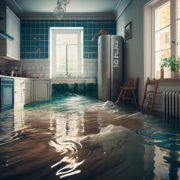
A burst pipe, leaking water heater, or storm-related intrusion can change a quiet day at home into a stressful property emergency. The visible puddle is only part of the problem. Water can travel beneath flooring, behind baseboards, into insulation, and through wall cavities long after the surface appears dry.
For homeowners and property managers, water cleanup Glenwood Springs service is about more than removing water. It means protecting the building, documenting the loss, managing contamination risks, and making thoughtful decisions about what can be dried, cleaned, restored, or replaced.
The first priority is always safety. If water is near electrical outlets, appliances, or the breaker panel, stay out of the affected area until it is safe to enter. If the source is a sewer backup, outside floodwater, or an unknown leak, treat it as contaminated and avoid attempting a full cleanup yourself.
What Water Cleanup In Glenwood Springs Should Include
A complete cleanup plan addresses the source, the water, and the moisture left behind. Simply mopping the floor may improve appearances, but it will not confirm whether drywall, subflooring, cabinetry, or insulation is dry.
| Cleanup Step | Why It Matters | Typical Tools | Best Fit |
|---|---|---|---|
| Stop the source | Limits spread | Shutoff valve, plumber | Active plumbing leak |
| Extract standing water | Reduces saturation | Pumps, extractors | Flooded rooms |
| Find hidden moisture | Prevents missed damage | Meters, thermal imaging | Walls and flooring |
| Dry and dehumidify | Stabilizes materials | Air movers, dehumidifiers | Most water losses |
| Clean and document | Supports recovery | Sanitizers, photos, reports | Insurance claims |
The U.S. Environmental Protection Agency recommends drying water-damaged areas and belongings within 24-48 hours when possible to help prevent mold growth. That window is a practical reason to begin extraction and structural drying promptly, especially when carpet, drywall, wood trim, or insulation has been affected. Read the guidance from the U.S. Environmental Protection Agency.
Start With Safety And Source Control
If you can safely identify a broken supply line or overflowing fixture, shut off the water at the nearest valve or main shutoff. Do not walk through standing water if electricity could be involved, and do not use a household vacuum to remove water.
For a sewer backup, toilet overflow with contaminated water, or floodwater that entered from outdoors, keep children, pets, and occupants away from the affected space. The EPA advises professional help for water damage involving sewage or other contaminated water because cleaning and drying alone may not make those materials safe. See its mold cleanup guidance for homes.
Remove Water, Then Look Beyond The Surface
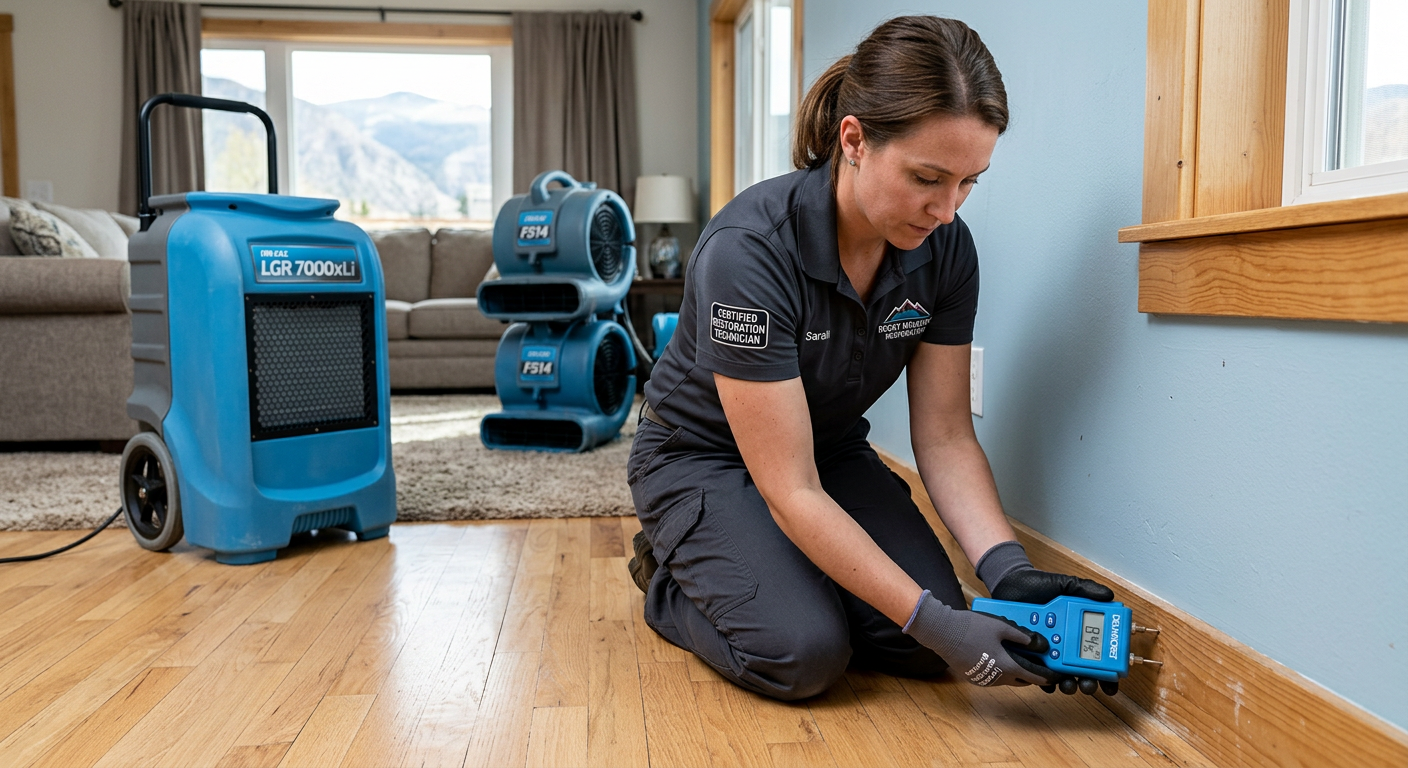
Extraction is the first physical step, but it is not the finish line. We look for moisture migration under floating floors, along drywall seams, behind cabinetry, and in lower wall cavities. This matters because water follows gravity and porous building materials can wick moisture well beyond the original leak.
A small appliance leak may only require targeted extraction and drying. A burst pipe affecting several rooms may require controlled removal of wet materials, detailed moisture mapping, and a larger drying setup. The scope should be based on measured conditions, not guesswork.
Drying And Dehumidification Protect The Structure
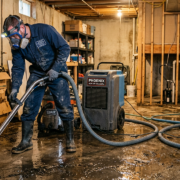
Professional drying uses moving air, humidity control, and ongoing moisture checks. Air movers help evaporate moisture from surfaces, while dehumidifiers pull that moisture from the air so it does not settle back into materials.
We recommend leaving equipment in place until readings show that affected materials are returning to appropriate dry conditions. Turning equipment off early because a room feels comfortable can leave damp padding, framing, or subflooring behind.
Common Water Damage Scenarios In Glenwood Springs
Glenwood Springs properties face a mix of seasonal, plumbing, and building-envelope risks. Whether you manage a rental, oversee a commercial property, or care for a primary residence, knowing the likely causes can help you respond with less confusion.
Frozen Or Burst Pipes
Cold temperatures can put stress on plumbing lines, particularly in exterior walls, crawl spaces, garages, and vacant homes. A pipe break can release a large volume of clean water quickly, soaking flooring and traveling into adjacent rooms.
After shutting off the water, photograph visible damage, move dry belongings away from the wet area if it is safe, and begin extraction. For more detail on local response options, review our Glenwood Springs water damage services.
Appliance And Water Heater Leaks
Washing machine hoses, dishwasher connections, refrigerator lines, and water heaters can create slow leaks or sudden flooding. The most damaging part is often what you cannot see, such as damp flooring behind an appliance or moisture beneath cabinets.
If the leak has been occurring for an unknown period, ask for a moisture inspection rather than assuming the damage is limited to the visible area. This is particularly important in condos, rentals, and properties with shared walls.
Roof Leaks, Snowmelt, And Stormwater
Roof penetrations, ice-related issues, damaged flashing, and drainage problems can allow water to reach ceilings, attics, and exterior walls. Staining on a ceiling is a warning sign, but the wet area may extend beyond the stain itself.
When stormwater or exterior floodwater enters a property, it may contain soil, bacteria, or other contaminants. Avoid using fans before determining whether the water is clean, and keep records of the source and affected rooms for the insurance process.
What To Do Before Professional Help Arrives
A few careful actions can limit additional damage without putting you at risk.
- Shut off the water source if it is safe and accessible.
- Turn off electricity to the affected area only if you can do so without standing in water.
- Take wide and close-up photos before moving damaged belongings.
- Move dry furniture, artwork, electronics, and documents away from the affected space when safe.
- Lift curtains and place foil or blocks beneath furniture legs to reduce staining and transfer.
- Avoid opening ceilings or walls unless a qualified professional has determined it is safe.
- Do not use bleach, mix cleaning chemicals, or run HVAC equipment if contamination or mold is suspected.
Here is the key distinction: a small, clean-water spill caught quickly may be manageable with basic cleanup and thorough drying. A loss involving multiple rooms, soaked building materials, unknown duration, contamination, or visible mold deserves a professional assessment.
How We Support Cleanup And Insurance Documentation
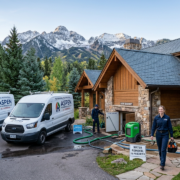
During a disruptive event, homeowners and managers need a clear process as much as they need equipment. Helpers Disaster Restoration provides local emergency water extraction, structural drying, cleanup, and restoration support for Glenwood Springs and the broader Roaring Fork Valley.
We document affected areas, track drying progress, identify materials that may need removal, and provide information that can help you communicate with your insurer. Our broader water damage restoration service explains how extraction, drying, repairs, and insurance coordination can fit into one recovery plan.
Insurance coverage depends on the policy, cause of loss, maintenance history, and exclusions. Keep photos, videos, receipts, and a written log of conversations. Prompt documentation does not guarantee coverage, but it gives you a clearer record of what happened and what steps were taken to protect the property.
Preventing The Next Water Emergency
Prevention is rarely glamorous, but it is often the most cost-effective part of property care. A quick seasonal check can identify vulnerabilities before a small issue becomes a flooded room.
Create A Simple Property Checklist
Inspect appliance supply lines, water heater connections, caulking around windows, roof flashing, and visible plumbing under sinks. Know where the main water shutoff is located, and make sure tenants, caretakers, or staff know how to use it.
For second homes and rental properties, consider routine walkthroughs during cold weather and after major storms. Smart leak sensors can also provide an early alert near water heaters, washing machines, utility sinks, and mechanical rooms.
Address Lingering Odors Or Damp Areas
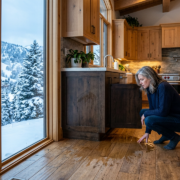
A musty smell, bubbling paint, warped trim, loose flooring, or recurring stains can all point to a moisture issue that has not been resolved. Ignoring those signs can turn a contained repair into a larger mold remediation project.
If you suspect mold after a leak, it is worth reading about our mold damage restoration services. Moisture control and source repair should always be part of the plan, because surface cleaning alone will not resolve an active water problem.
Frequently Asked Questions
How Fast Should Water Cleanup Begin After A Leak?
Begin safety measures and source control as soon as possible. The EPA recommends drying wet areas and materials within 24-48 hours when possible, so early extraction and drying can reduce the risk of secondary damage and mold growth.
Can I Stay In My Home During Water Damage Cleanup?
It depends on the location, water category, electrical safety, and extent of damage. You may be able to stay in unaffected rooms during a clean-water loss, but sewage contamination, large-scale drying equipment, structural concerns, or mold may make temporary relocation the safer choice.
Is A Wet Carpet Always Replaceable?
Not always. A carpet affected by a small amount of clean water and dried quickly may be salvageable, depending on the padding, subfloor, and material condition. Floodwater, sewage, prolonged saturation, or mold growth usually changes the decision.
What If The Water Is From A Sewer Backup?
Stay out of the affected area and avoid handling contaminated items without proper protection. Sewer backups require specialized cleaning, disinfection, and disposal practices. Learn more about our sewage backup cleanup service.
Will My Homeowners Insurance Cover Water Damage?
Many policies may cover sudden and accidental water damage, such as certain burst pipes or appliance failures. Coverage can vary significantly, and flooding from external sources often requires separate flood insurance, so review your policy and contact your insurer promptly.
How Do You Know When A Structure Is Truly Dry?
Professional teams use moisture readings and compare affected materials with appropriate dry standards for the property. Drying is complete when the structure has reached acceptable moisture conditions, not simply when the floor or wall feels dry to the touch.
Get Local Help With Water Cleanup In Glenwood Springs
When water affects your home, rental, or commercial space, a measured response can make the recovery process far less overwhelming. Call Helpers Disaster Restoration at (970) 927-3600 for 24/7 emergency assistance, or contact our team online to request help with cleanup, drying, and restoration.
Summary
Effective water cleanup starts with safety, source control, extraction, and a plan to locate hidden moisture. For Glenwood Springs property owners, fast and careful drying can protect materials, reduce mold risk, and create better documentation for repairs and insurance communication.
The practical takeaway is simple: do not judge water damage by the puddle alone. A thorough recovery looks below the surface, confirms drying with measurements, and resolves the cause so the same problem does not return.





Trackbacks & Pingbacks
[…] related property recovery guidance, our Glenwood Springs water cleanup plan explains why surface drying alone may not resolve water damage behind floors, trim, and […]
Comments are closed.