water damage Aspen: How to Dry a Flooded Basement Fast Today
When a basement floods, you feel that sinking urgency, a need to act fast to protect structure, belongings, and your family. Within the first few hours you make the biggest difference, and that is why homeowners across Aspen and the Roaring Fork Valley rely on fast, certified pros. In this guide you will learn practical, safe steps to dry a flooded basement, how restoration pros approach drying and dehumidification, and when to call specialists like Helpers Restoration.
Helpers Restoration is a local, certified water damage restoration company serving Aspen, Basalt, Carbondale, Snowmass Village, Glenwood Springs, and the Roaring Fork Valley, and we provide 24/7 emergency water extraction. If you need immediate help, call (970) 927-3600 or visit https://helpersrestoration.com/.
Quick summary
Drying a flooded basement is a race against time, mold, and structural damage. Start with safety and emergency extraction, remove wet materials that are unsalvageable, set up professional drying and dehumidification, and document everything for insurance. Local conditions in Aspen and the Roaring Fork Valley mean cold weather and narrow access can complicate drying, so plan for rapid, certified response.
Why immediate action matters
- Mold can begin growing within 24 to 48 hours on wet materials, increasing health risks and repair costs. Acting quickly reduces long-term damage.
- Standing water soaks framing, insulation, drywall, and flooring. The longer it sits, the more likely you will need major repairs.
- Insurance companies often expect prompt mitigation to approve claims, and good documentation speeds the process.
First steps you must take, safely
1. Prioritize safety and utilities
- Turn off electricity to the flooded area, but only from the main panel and only if you are certain the panel is above water and safe. If you have any doubt, wait for a pro.
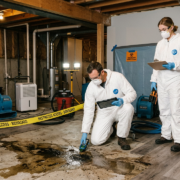
- If the water is from sewage or contains contaminants, avoid contact and call a professional for sewage cleanup.
2. Stop the water source
- If flooding is from a burst pipe, shut off the main water supply. If the cause is external stormwater, you may need sandbags, temporary barriers, or professional pumping to prevent more water entry.
3. Call for emergency extraction when needed
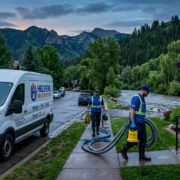
- For more than a few inches of standing water, or if you suspect contamination, call 24/7 emergency water extraction. Helpers Restoration provides rapid response and the equipment to extract water quickly, minimizing secondary damage.
Professional drying and dehumidification process
1. Water extraction and moisture mapping
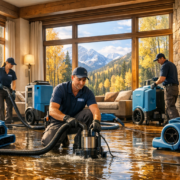
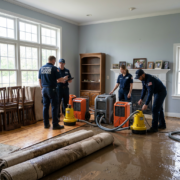
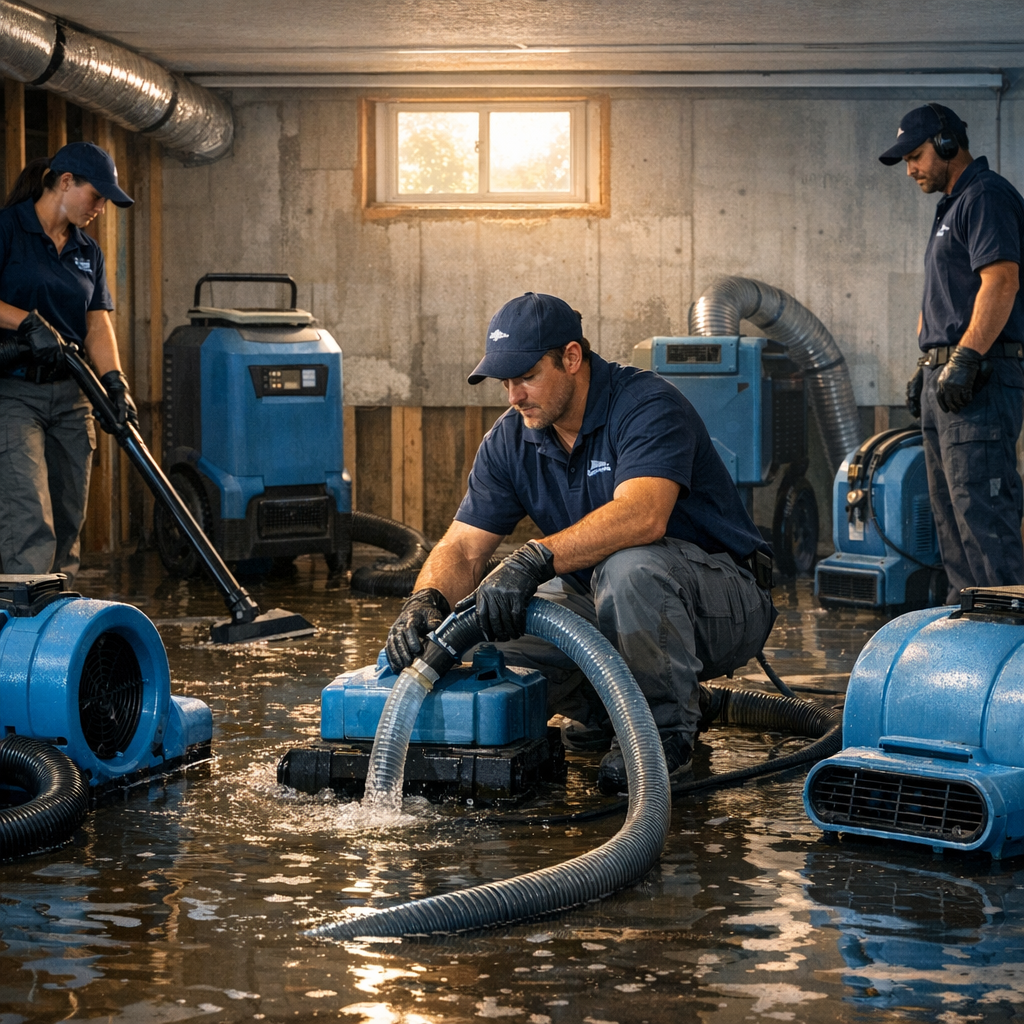
Technicians start with high-power pumps and truck-mounted extractors for large volumes, then move to portable extractors. Moisture meters and thermal imaging map trapped moisture inside walls and floors so drying targets the real problem areas.
2. Remove unsalvageable materials
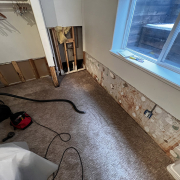
Carpet padding, baseboards, insulation, and drywall with heavy saturation are often removed to prevent mold and to allow airflow behind wall cavities.
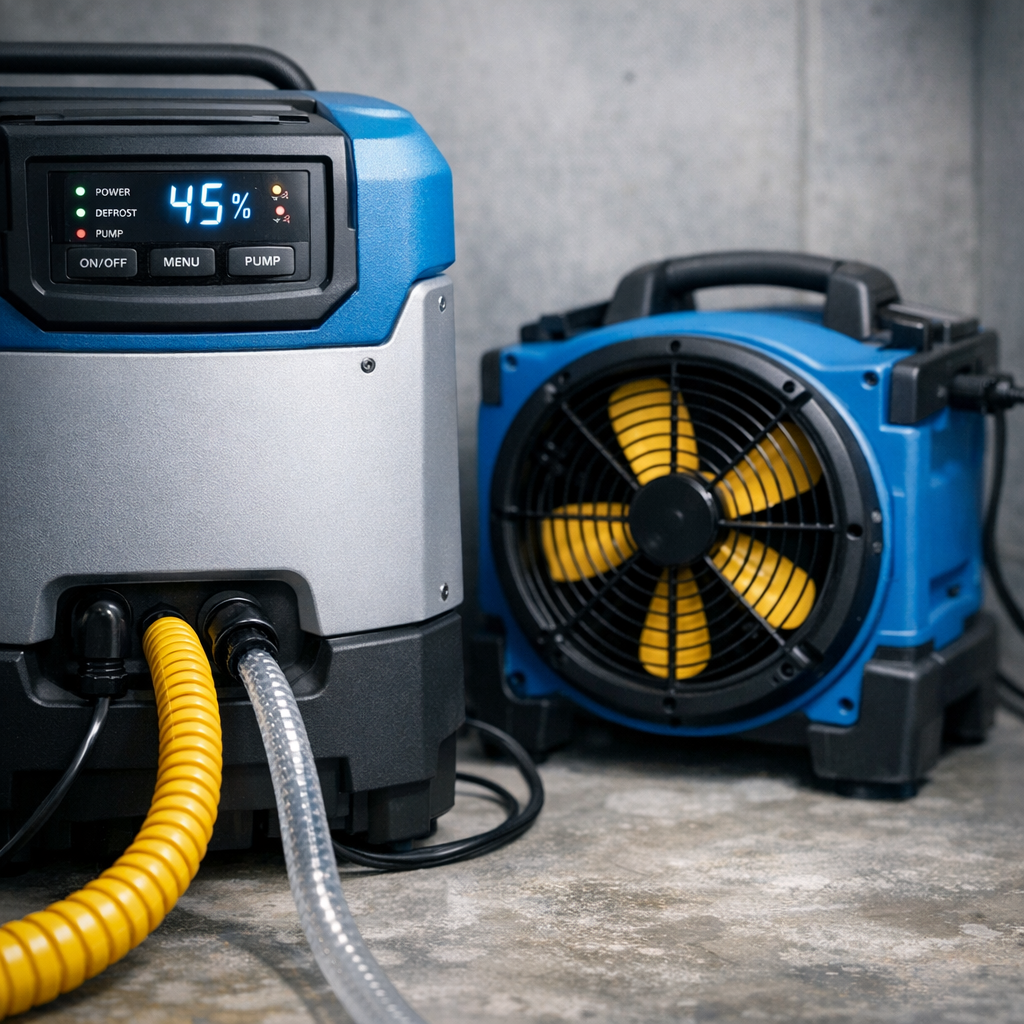
3. Air movers and dehumidifiers
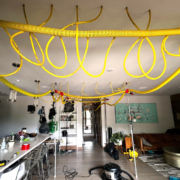
- High-volume axial air movers create controlled airflow across wet surfaces.
- Industrial dehumidifiers remove humidity from the air, speeding evaporation. Both tools work together until moisture readings return to safe levels.
4. Structural drying and monitoring
Certified crews monitor moisture levels daily, reposition equipment as needed, and document progress for insurance. In cold-weather scenarios common around Aspen, crews must manage temperature and humidity to avoid freeze-related complications.
DIY steps while waiting for pros (what you can do now)
- Remove valuables, furniture, and photo albums from the affected area if it is safe to do so.
- Open doors between affected rooms to promote airflow, only if the outdoors will not push more water inside.
- Use wet/dry vacuums for shallow water if the water is clean and you have safe power.
- Place fans and household dehumidifiers, but know these are far less effective than professional equipment for major floods.
Dealing with contaminated water and sewage
If the flood involves sewage, floodwater mixed with runoff, or unknown contaminants, do not attempt to clean it yourself. This requires professionals trained in sewage backup cleanup and biohazard removal. Helpers Restoration handles sewage cleanup and sanitization to return your space to safe condition.
Insurance and documentation tips
- Photograph and video the damage before you move things, then again after mitigation starts.
- Keep receipts for any emergency purchases like pumps, tarps, or motel rooms.
- Work with licensed, certified restoration contractors who provide detailed estimates and moisture logs to support your claim.
- If you need help with claim coordination, restoration companies often assist with documentation and communication with your insurer.
Local considerations for the Roaring Fork Valley
- Cold weather, deep snow, and limited access can slow response time. Early detection and fast extraction are critical.
- Mountain homes often have slab foundations, basements with stone or block walls, or historic materials that require specialized drying techniques.
- For flood restoration in Basalt or emergency water cleanup in Aspen, choose a local provider familiar with regional building practices and insurance carriers.
Summary of action timeline
- 0 to 6 hours: Ensure safety, stop the water source, remove people and valuables, call emergency restoration.
- 6 to 24 hours: Extraction and initial drying begin, unsalvageable materials assessed, contamination evaluated.
- 24 to 72 hours: Dehumidification and monitored structural drying, mold prevention measures in place.
- 3 days and beyond: Continued monitoring until moisture levels meet industry standards, repairs and restoration proceed.
FAQ
How quickly can mold grow after a basement floods?
Mold can start to grow within 24 to 48 hours on damp organic materials like wood, drywall, and carpet, so rapid drying and remediation are essential.
Can I dry the basement myself with household fans?
Household fans and dehumidifiers help for small, clean-water incidents, but they are not enough for major flooding. Professional air movers and commercial dehumidifiers dry faster and reduce the risk of mold.
Is it safe to stay in the house during basement flooding?
If there is any electrical risk, contaminated water, or structural concern, leave and wait for professionals. Always prioritize safety and call a certified restoration company if you are unsure.
What should I do about my insurance claim?
Document damage thoroughly with photos and receipts, call your insurer promptly, and hire a licensed restoration company to provide estimates and moisture documentation to support your claim.
How long does professional drying usually take?
Drying time varies with the amount of water, materials affected, and environmental conditions, typically from 2 to 7 days for many residential floods, longer for severe or hidden moisture.
When is demolition necessary?
Demolition of drywall, insulation, or flooring is necessary when materials are heavily saturated, contaminated, or cannot be dried to safe moisture levels. Certified technicians make this call during the assessment.
Who should I call for sewage or contaminated floodwater?
Call a specialist experienced in sewage backup cleanup and biohazard remediation. Helpers Restoration handles contaminated water removal and sanitization for homes in Aspen and the Roaring Fork Valley.
Get 24/7 emergency help now
If your basement is flooded, call Helpers Restoration at (970) 927-3600 for immediate, certified water extraction and drying in Aspen, Basalt, Carbondale, Snowmass Village, Glenwood Springs, and throughout the Roaring Fork Valley. Visit our water damage services page to learn more and request emergency service: https://helpersrestoration.com/water-damage/
Helpful local resources and services
- Water damage services in Aspen, tailored to local needs: https://helpersrestoration.com/water-damage/aspen/
- Flood restoration and water cleanup in Glenwood Springs: https://helpersrestoration.com/water-damage/glenwood-springs/
- Snowmass property water restoration: https://helpersrestoration.com/water-damage/snowmass/
- Basalt flood cleanup and restoration: https://helpersrestoration.com/water-damage/basalt/
- Carbondale water damage services: https://helpersrestoration.com/water-damage/carbondale/
- Sewage backup cleanup and biohazard remediation: https://helpersrestoration.com/sewage-backup-cleanup-service/
- For related fire or mold concerns, see fire damage and mold remediation pages: https://helpersrestoration.com/fire-damage/ and https://helpersrestoration.com/mold-damage/
Conclusion
A flooded basement in the Roaring Fork Valley is stressful, but timely, professional action protects your home and your health. Start with safety, stop the source, extract standing water, and bring in certified restoration specialists to manage drying, dehumidification, and insurance documentation. For fast, local response and proven expertise, contact Helpers Restoration at (970) 927-3600 or visit https://helpersrestoration.com/ — we are available 24/7 to help you recover and rebuild.