Flood Damage Cleanup Roaring Fork Valley: Fast Emergency Steps
A flooded basement, burst pipe, or overflowing appliance can make a normal day feel overwhelming in minutes. The first goal is not to make everything look normal right away. It is to stop the source, protect people and property, and begin a safe, documented recovery.
For flood damage cleanup Roaring Fork Valley homeowners and property managers can trust, speed matters because moisture can move beneath flooring, behind walls, and into insulation long before it is visible. The U.S. Environmental Protection Agency advises drying water-damaged areas and belongings within 24 to 48 hours when possible to help prevent mold growth. Read the agency’s flood cleanup guidance for practical safety information.
The First Hours After a Flood Matter Most
Whether water came from spring runoff, a roof leak, a frozen pipe, or a failed supply line, take a breath and focus on the next safe step. Do not walk through standing water when electricity may be involved, and do not attempt to enter an area with a sagging ceiling or damaged structure.
| Priority | What We Recommend | Why It Helps |
|---|---|---|
| Stay safe | Avoid electrical and structural hazards | Prevents injuries |
| Stop water | Shut off the supply if safe | Limits spread |
| Document loss | Take photos and video | Supports insurance claims |
| Remove moisture | Begin extraction and drying | Reduces secondary damage |
| Assess contamination | Identify clean, gray, or sewage water | Guides safe cleanup |
Protect People Before Property
If water is close to outlets, electrical panels, appliances, or heating equipment, keep clear until a qualified professional says the area is safe. Floodwater can also carry contamination, especially when a sewer line has backed up or outside water has entered the building.
Move children, pets, and anyone with respiratory concerns away from the affected area. If the water appears dirty, smells unusual, or includes sewage, do not use household fans to push air through the space.
Stop the Source, If You Can Do It Safely
A broken supply line may require shutting off the home’s main water valve. For an appliance leak, turn off the appliance and its water connection if it is safe to reach. When the source is stormwater, focus on keeping people safe and preventing water from moving into unaffected rooms.
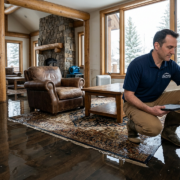
Then take clear photos and short videos before moving major belongings. Capture the water line on walls, wet floors, damaged furniture, and the likely source of the loss. This simple documentation can make later conversations with an insurer much easier.
What Professional Flood Cleanup Should Include
A mop, shop vacuum, and open windows may help with a tiny clean-water spill. They are rarely enough for a significant flood because water can remain trapped in subfloors, wall cavities, padding, cabinetry, and insulation.
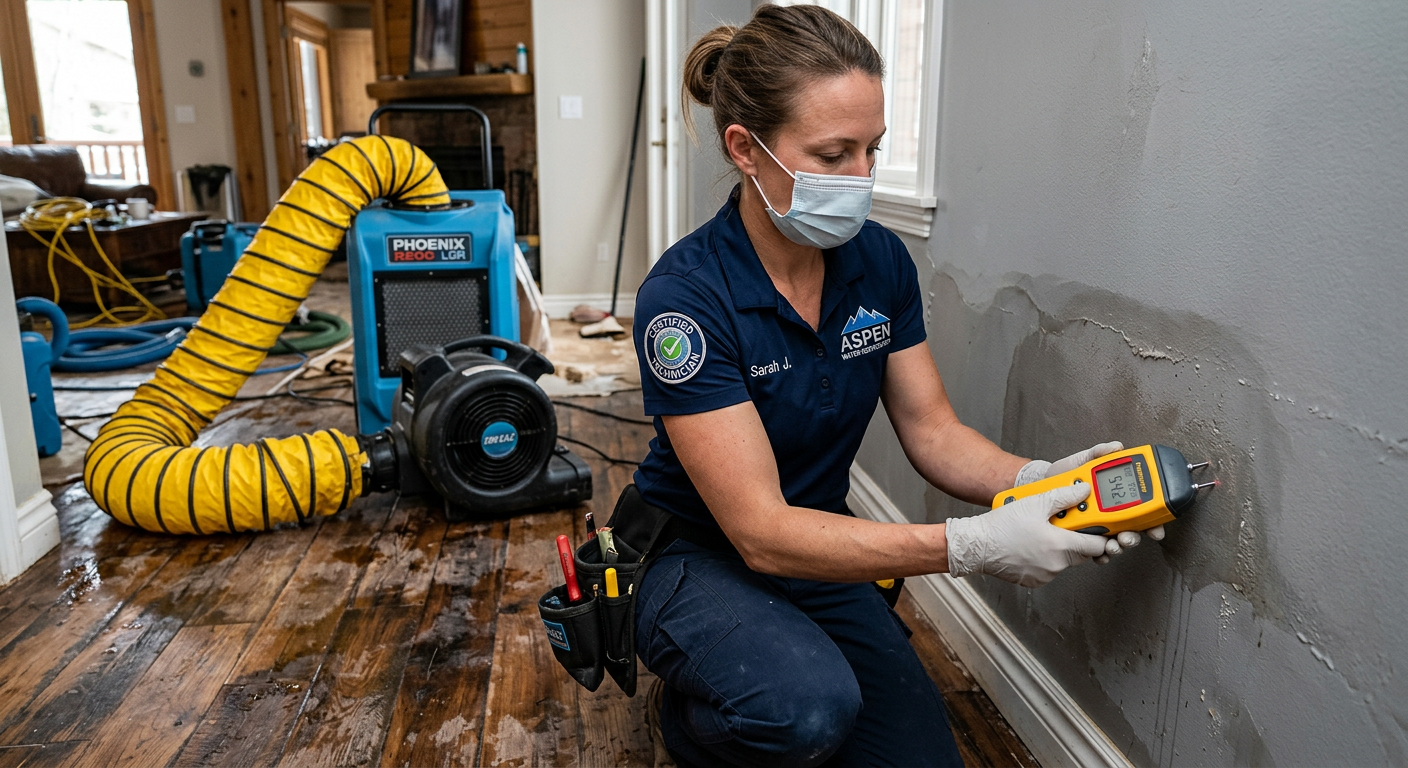
A complete water restoration plan should be based on the source of the water, the materials affected, how long water was present, and moisture readings during the drying process. The job is not complete simply because surfaces feel dry to the touch.
Water Extraction and Detailed Inspection
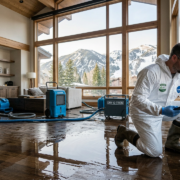
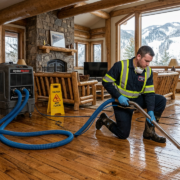
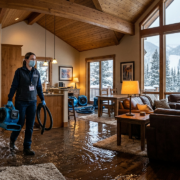
First, we remove standing water using commercial extraction equipment. Then we inspect the visible and hidden areas that commonly hold moisture, including baseboards, flooring edges, crawlspaces, lower cabinets, and walls.
For local help after a pipe burst or appliance failure, review our water damage restoration services. Aspen homeowners can also find location-specific information through our water damage Aspen service page.
Drying and Dehumidification
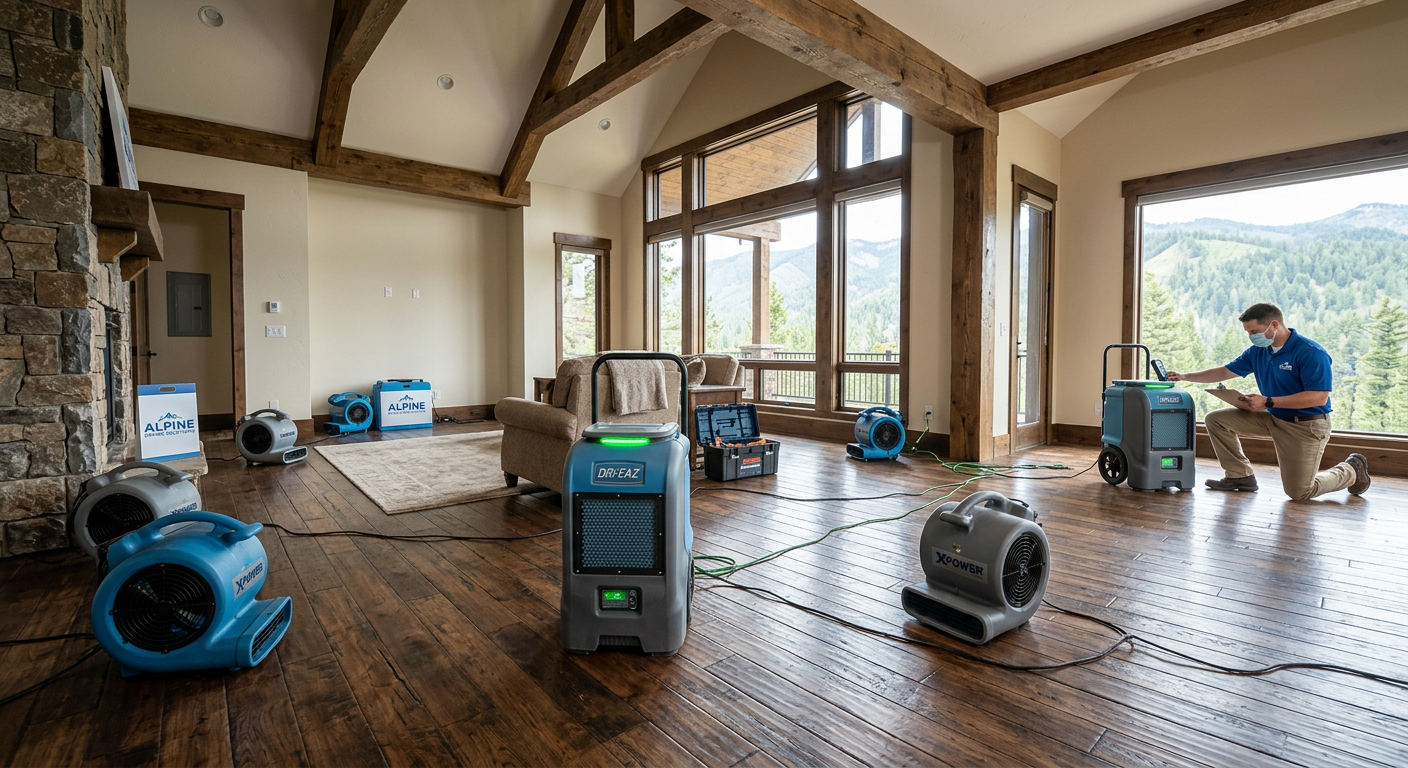
Professional drying is controlled, measured work. Air movement, dehumidification, temperature, and moisture checks work together to dry building materials without creating avoidable secondary damage.
The EPA’s guidance emphasizes the same practical point: wet materials that cannot be thoroughly cleaned and dried within 24 to 48 hours may need to be removed. Acting promptly can help preserve more of the structure and contents while reducing the chance of microbial growth.
Cleaning, Sanitizing, and Material Removal
Not all water losses are alike. A clean supply-line leak is handled differently from stormwater or a toilet overflow, and contaminated water may require removal of affected porous materials.
Wet carpet padding, swollen particleboard, damaged drywall, insulation, and unsalvageable contents may need to come out. When sewage is involved, it is especially important to use a trained team with the right protective measures and cleaning process. Learn more about our sewage backup cleanup service.
Common Flood Damage Problems in the Roaring Fork Valley
Mountain weather, seasonal temperature swings, older plumbing, vacation properties, and complex building layouts can all make water damage more complicated. A small leak in an unoccupied home can become a major loss by the time someone notices it.
Burst or Frozen Pipes
Cold-weather plumbing failures can release a surprising amount of water quickly. Even after the line is repaired, flooring, drywall, insulation, and contents may still need extraction, drying, and careful monitoring.
Roof Leaks and Snowmelt Intrusion
Water entering from above often travels farther than expected. It can stain ceilings in one room while collecting in walls or lower-level spaces somewhere else. We recommend documenting every visible clue, including ceiling staining, peeling paint, warped trim, and musty odors.
Basement and Crawlspace Flooding
These spaces are easy to overlook, especially in second homes and multifamily properties. Yet they can hold moisture for days, affecting framing, insulation, stored belongings, and indoor air quality.
For nearby properties, we also provide focused support for water damage in Basalt, water damage in Carbondale, water damage in Snowmass, and water damage in Glenwood Springs.
How to Work With Your Insurance Company
Insurance claims can feel intimidating when you are already dealing with a wet home or building. Good records help keep the process clearer, so save photos, videos, emergency invoices, repair estimates, damaged-item lists, and communications with your adjuster.
Do not discard major damaged items until your insurer has documented them, unless they create a health or safety issue. If emergency removal is necessary, photograph the items first and keep a basic record of what was removed.
When you contact your carrier, describe the cause of loss plainly and accurately. A restoration team can provide damage documentation and explain the work needed, but your policy coverage and claim decision ultimately remain with the insurer.
When to Call for Flood Damage Cleanup Roaring Fork Valley
Call for professional help immediately when water covers a large area, entered through a contaminated source, affected walls or flooring, has been present for more than a few hours, or may have reached electrical equipment. You should also call if you notice swelling, buckling, a persistent odor, or water returning after surface cleanup.
Helpers Disaster Restoration provides 24/7 emergency response for homeowners and property managers across Aspen, Basalt, Carbondale, Snowmass Village, Glenwood Springs, and the surrounding valley. Our team can assess the loss, remove water, set up drying equipment, document damage, and help you understand the next steps.
Questions Homeowners and Property Managers Often Ask
Can I clean up a small flood myself?
You may be able to handle a minor clean-water spill if it is limited, electricity is safe, and all affected materials can be fully dried quickly. Larger losses, hidden moisture, contaminated water, and soaked building materials need professional assessment.
How quickly can mold develop after water damage?
Mold can begin growing when moisture remains in place, which is why the 24-to-48-hour drying window is so important. If you see discoloration, smell a musty odor, or suspect moisture behind a wall, arrange an inspection instead of covering the problem.
Should I use fans after a flood?
Fans can help dry a clean-water loss when used appropriately, but they are not a substitute for extraction and dehumidification. Avoid using fans if sewage or visible mold is present, since they can spread contaminants or spores.
Does floodwater always require material removal?
Not always, but porous materials that are contaminated or cannot be thoroughly cleaned and dried may need to be removed. The right decision depends on the water source, the duration of exposure, and the type of materials affected.
Will my insurance cover water damage?
Coverage depends on the cause of loss and the details of your policy. Sudden plumbing failures may be handled differently from groundwater or outside flooding, so contact your carrier promptly and keep thorough documentation.
What should I do with wet carpet and furniture?
Do not assume they are salvageable or unsalvageable based on appearance alone. A restoration professional can evaluate the water category, materials, time wet, and whether safe drying and cleaning are realistic.
Get Fast, Local Help When Water Won’t Wait
If your property has standing water, damp walls, soaked flooring, or a sewage backup, call Helpers Disaster Restoration at (970) 927-3600 for 24/7 emergency cleanup in Aspen and the Roaring Fork Valley. Visit Helpers Disaster Restoration to request prompt help and start protecting your property today.
A Faster Response Can Protect More Than Your Floors
Flood damage is stressful, but you do not have to solve every part of it at once. Prioritize safety, stop the water when possible, document the damage, and begin proper extraction and drying without delay.
The right response to flood damage cleanup Roaring Fork Valley is practical and measured: address the source, remove moisture, evaluate hidden damage, and make decisions based on the type of water and the materials involved. That approach gives your property the best chance of a clean, safe recovery.