Water Damage Insurance Claim Help Aspen Homeowners Can Rely On
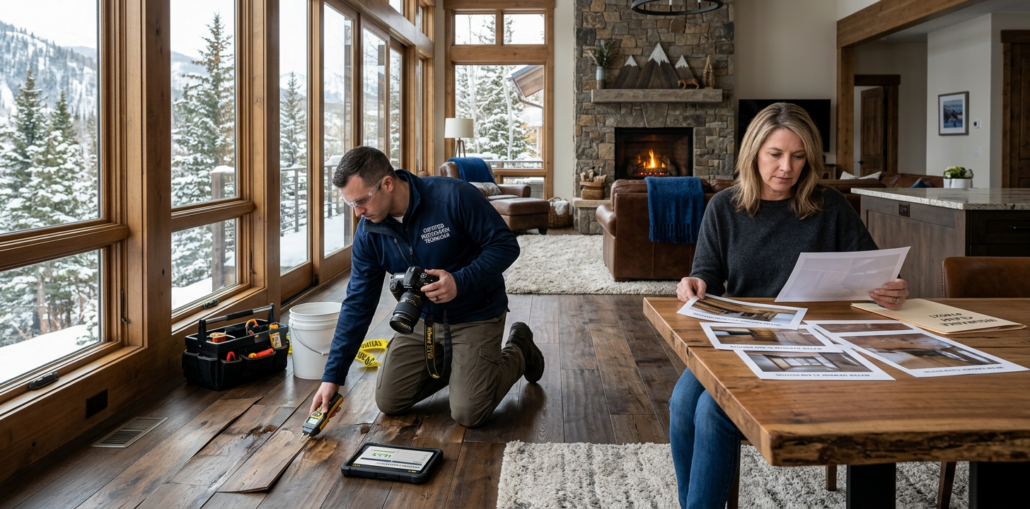
A burst pipe, appliance leak, or snowmelt intrusion can leave Aspen homeowners dealing with two urgent problems at once, protecting the property and organizing an insurance claim. The best first step is to make the space safe, stop additional water from spreading when possible, and create a clear record of what happened.
For water damage insurance claim help Aspen property owners can use, we recommend a simple approach: document first, report the loss promptly, and begin reasonable mitigation. At Helpers Restoration, we support homeowners and property managers across Aspen, Basalt, Carbondale, Snowmass Village, Glenwood Springs, and the Roaring Fork Valley with emergency cleanup documentation that helps keep the restoration process organized.
What To Do in the First Few Hours
The first hours after a water loss should focus on safety, preventing additional damage, and preserving evidence for the insurer. You do not need to solve every claim question before taking reasonable steps to protect the home.
Make safety the priority
If water is near outlets, appliances, or the electrical panel, do not enter standing water or attempt repairs you are not qualified to make. Shut off the water supply only if you can do so safely, move dry valuables away from the affected area, and avoid using electrical equipment in wet spaces.
If sewage, visible mold, or contaminated water is involved, keep people and pets away from the area. These losses require different cleaning methods than a clean supply-line leak, so it is important to identify the source as accurately as possible.
Capture the scene before major cleanup begins
Take wide photos and short videos of every affected room, then add close-ups of the failed pipe, water lines, wet flooring, damaged ceilings, cabinets, and personal property. Include photos of appliance model and serial numbers when relevant.
The National Flood Insurance Program advises policyholders to photograph water levels, structural damage, and serial numbers before cleanup or disposal. Even if your loss is handled under a homeowners policy rather than flood insurance, that same documentation habit can make the facts easier to explain.
Open a claim and keep a simple log
Call your carrier, provide the date and approximate time of loss, explain the suspected source, and ask for a claim number. Keep notes of each conversation, including the representative's name, date, time, and any requested next steps.
Avoid guessing at causes or agreeing to a final scope before the property is fully inspected. Stick to what you know, describe visible damage, and provide documents as they become available.
The Documents That Strengthen a Water Damage Claim
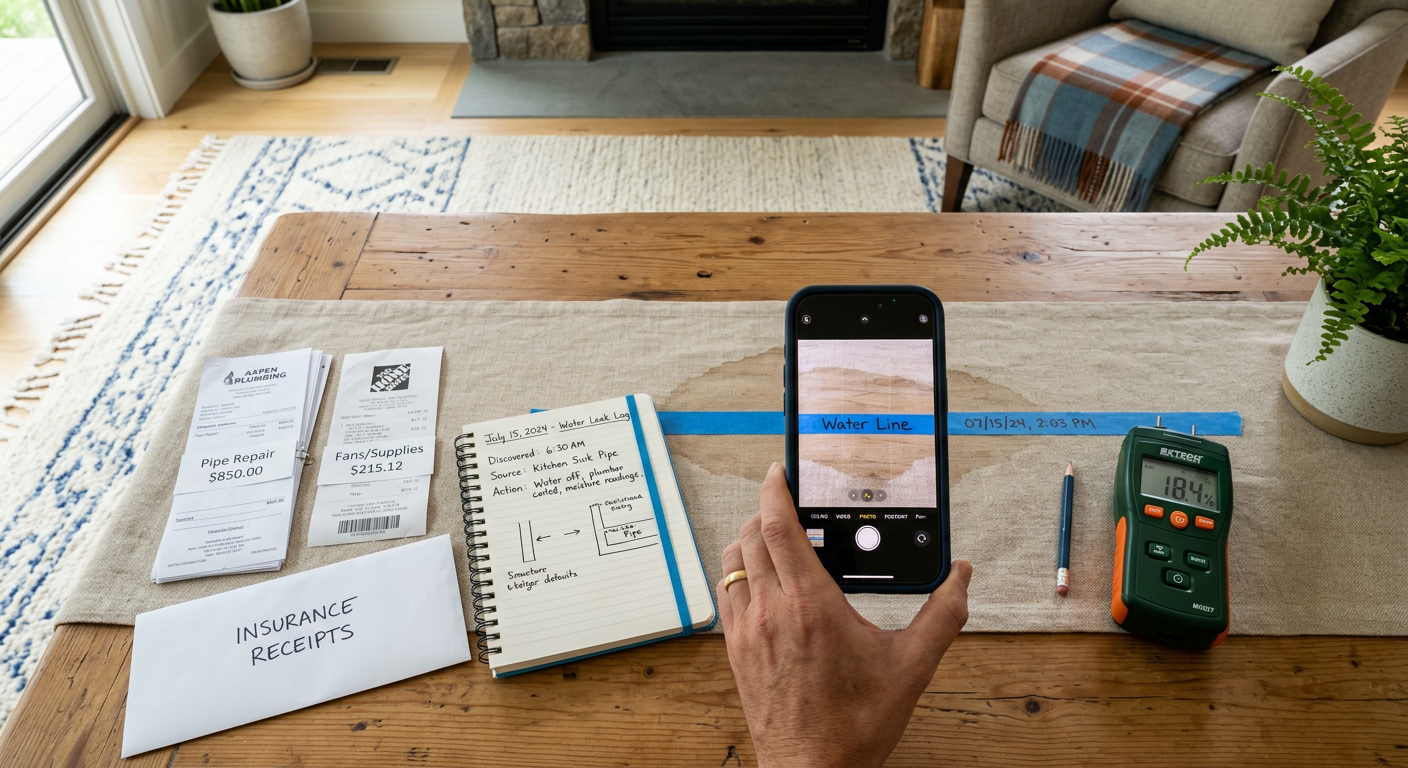
A well-supported claim tells a consistent story from the source of the water through the final repair estimate. Photos matter, but a complete file also includes records that show why emergency work was necessary.
Build a practical claim folder
Keep digital copies in one folder and retain paper originals when possible. Your folder should include:
- The claim number and policy information
- Photos and video from before cleanup, during mitigation, and after drying
- A room-by-room list of damaged contents
- Receipts for emergency purchases and reasonable temporary repairs
- Invoices, moisture readings, work authorizations, and drying records
- Emails and notes from conversations with the insurer, adjuster, plumber, and restoration team
For flood policies issued through the NFIP, the NFIP claims checklist says supporting documentation should generally be submitted within 60 days of the flood, unless the insurer or adjuster provides a different timeframe. Homeowners insurance policies can have different deadlines, which is why checking your policy and communicating with your carrier matters.
Separate mitigation from reconstruction
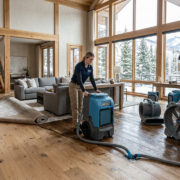
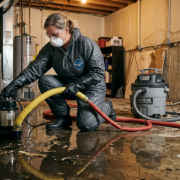
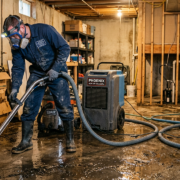
Emergency mitigation means stopping the spread of loss, extracting water, drying materials, and protecting the structure from further damage. Reconstruction involves repairs such as drywall replacement, flooring installation, cabinetry, paint, and finish work.
Keeping these phases clear helps everyone understand what was done urgently to limit damage and what remains to restore the home. Our emergency water damage restoration services explain how extraction, drying, cleaning, and repair work fit together after a loss.
What Insurance May Cover, and What Needs a Closer Look
Most policies depend on the cause of the water, the wording of the policy, maintenance history, deductibles, and applicable endorsements. A sudden pipe break is different from a long-term leak, and water entering from an outside flood event is often handled differently from an interior plumbing failure.
| Water Loss Scenario | Typical Claim Question | Helpful Documentation |
|---|---|---|
| Burst supply pipe | Was the damage sudden and accidental? | Photos of pipe, water path, plumber report |
| Appliance hose failure | What failed and what areas were affected? | Model details, photos, repair invoice |
| Slow leak behind a wall | Was there a maintenance or wear issue? | Timeline, prior observations, inspection notes |
| Snowmelt or exterior flooding | Is flood coverage needed? | Exterior photos, weather records, water entry path |
| Sewer backup | Is backup coverage included? | Photos, plumber findings, sanitation records |
Coverage decisions belong to the insurer, not the restoration contractor. Still, detailed mitigation records and a clear estimate can help the adjuster evaluate the condition of the property and the work required.
Aspen properties have local complications
Aspen homes often face unique conditions, including freeze-thaw cycles, vacant periods, mountain weather, older plumbing, and second-home occupancy. A small leak can travel through wood framing, insulation, and finished spaces before it becomes obvious.
That is why local water damage documentation should include the affected levels of the home, moisture findings, the suspected source, and the steps taken to prevent additional damage. If hidden moisture remains, it can complicate repairs and create conditions that call for professional mold damage recovery.
How We Help Keep the Restoration Side Organized
The most useful restoration partner brings order to a stressful situation without promising claim outcomes they cannot control. We focus on documenting conditions, reducing additional loss, and communicating the scope of emergency work clearly.
Helpers Restoration provides water extraction, structural drying, moisture documentation, cleaning, and repair planning for Aspen-area properties. For local service details, visit our Aspen water cleanup and restoration page.
For property managers, the process should also include notifying the owner, protecting neighboring units when applicable, recording tenant communications, and maintaining a timeline of access and work performed. These simple records reduce confusion when several parties are involved.
Mistakes That Can Create Claim Delays
Most claim problems are not caused by one wrong photo or one missed phone call. They usually develop when water damage goes undocumented, emergency decisions are not recorded, or important details change from one account to another.
Throwing items away too early
Do not discard damaged belongings until they have been photographed and inventoried, unless they are unsafe or required to be removed for health reasons. When disposal is necessary, retain a small sample of materials such as carpet, padding, drywall, or flooring if it is safe to do so.
Waiting for approval before mitigating
You should always follow your carrier's instructions, but reasonable emergency steps to limit further damage are often necessary. Document the condition first, save every invoice, and communicate what work is being performed and why.
Accepting an estimate without reviewing it
Read the estimate line by line and compare it to the damaged rooms, materials, and personal property you documented. If additional damage appears during drying or demolition, report it to the adjuster promptly and submit the new documentation.
Questions Aspen Homeowners Often Ask
Does homeowners insurance cover a burst pipe in Aspen?
It often may cover resulting water damage from a sudden and accidental pipe failure, but every policy has exclusions, deductibles, and conditions. The insurer will review the cause of loss, maintenance factors, and the specific coverage in force.
Is a roof leak covered by insurance?
Coverage depends on why the roof leaked and what your policy says. Sudden storm-related damage may be treated differently from deterioration, deferred maintenance, or a long-term issue.
Should we wait for the insurance adjuster before water cleanup?
Usually, you should document visible damage first and contact the carrier promptly, then take reasonable steps to prevent additional damage. Ask your carrier about its process, keep all invoices, and avoid major reconstruction until the scope is reviewed.
What if more damage is found after the initial inspection?
Notify the adjuster and provide the new photos, moisture findings, or repair information. Hidden moisture and damage behind walls or beneath flooring can become visible only after mitigation begins.
Can we choose our own restoration company?
In many situations, yes, but you should review your policy and speak with your insurer about any requirements. Choose a qualified company that can explain its scope, provide documentation, and communicate professionally with all involved parties.
How should we handle a sewage backup claim?
Treat it as a contamination event, not ordinary water cleanup. Keep people away from the affected area, photograph the damage safely, contact the insurer, and arrange qualified sewage backup cleanup services to address sanitation and restoration needs.
Get Calm, Local Help for a Water Loss
If you need water damage insurance claim help in Aspen, call Helpers Restoration at (970) 927-3600 for 24/7 emergency cleanup support. We can help document the affected areas, begin appropriate mitigation, and provide clear restoration records for your claim file.
For service in Aspen, Snowmass Village, Basalt, Carbondale, Glenwood Springs, or elsewhere in the Roaring Fork Valley, contact Helpers Restoration to request assistance. You can also review our water damage FAQs for more answers before an emergency happens.
Summary
A water loss becomes more manageable when you focus on safety, early documentation, prompt communication, and organized records. Photograph the damage before major cleanup, keep receipts and a communication log, and review estimates carefully as the scope develops.
For Aspen homeowners and property managers, the key takeaway is simple: protect the property without losing the details that support the claim. Clear records and appropriate drying help create a stronger foundation for the repairs ahead.