How To Clean Up Sewage Spill Basement: 8 Safer Cleanup Steps
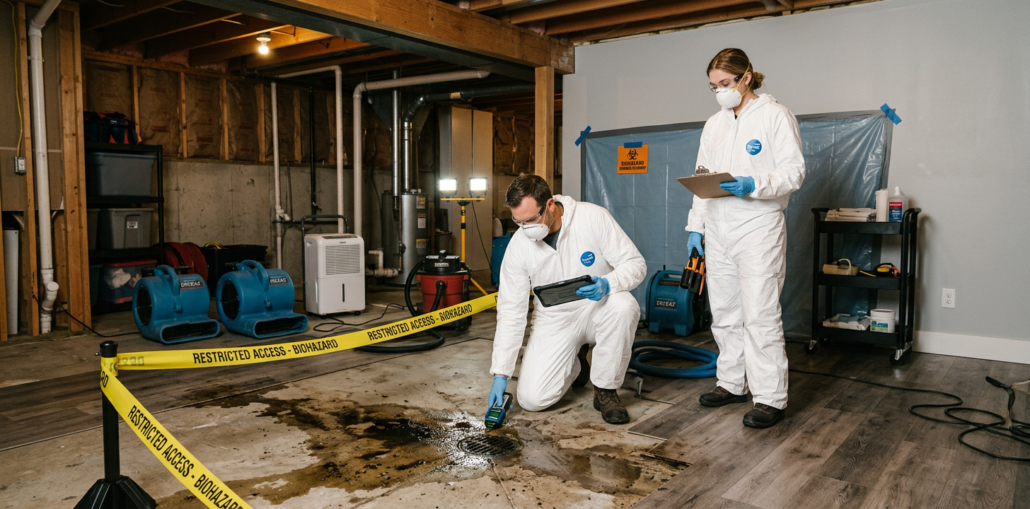
A sewage spill in a basement can go from upsetting to unsafe fast. The odor, standing water, and contaminated belongings are stressful enough, but the bigger concern is protecting everyone in the property from harmful exposure.
Knowing how to clean up sewage spill basement conditions safely starts with recognizing when not to attempt a do-it-yourself cleanup. Raw sewage and wastewater from a backed-up drain can contain harmful contaminants, and it can soak quickly into carpet, drywall, insulation, wood, and stored belongings.
The Environmental Protection Agency estimates that the United States experiences at least 23,000 to 75,000 sanitary sewer overflows each year, excluding backups inside buildings. That is a helpful reminder that this is a serious property emergency, not an ordinary water cleanup task. Read the EPA guidance.
First, Decide Whether It Is Safe To Enter
If there is more than a small amount of wastewater, visible solid waste, a strong sewer odor, or water near electrical equipment, keep out of the basement. Keep children, pets, tenants, and visitors away from the affected area until it has been professionally assessed.
We recommend calling a plumber to stop the source and a qualified restoration company to manage contamination. Sewage is generally treated as highly contaminated water, especially if it came from a toilet, main sewer line, drain backup, septic system, or outdoor flooding event.
| Situation | Best Immediate Response | Do Not Do This |
|---|---|---|
| Water near outlets or appliances | Shut off power only if safe | Walk through water to reach switches |
| Toilet or main-line backup | Stop water use and call for help | Flush toilets or run sinks |
| Wet carpet, drywall, or insulation | Plan for removal and disposal | Assume disinfectant makes it safe |
| Small spill on sealed concrete | Use PPE and disinfect carefully | Use a household vacuum |
| Widespread contamination | Hire a restoration crew | Use fans to spread air and odors |
1. Stop The Source Before Cleaning
Do not use toilets, showers, washing machines, dishwashers, or sinks if wastewater is backing up through a basement drain. Added water can make the spill larger and force contamination into additional rooms.
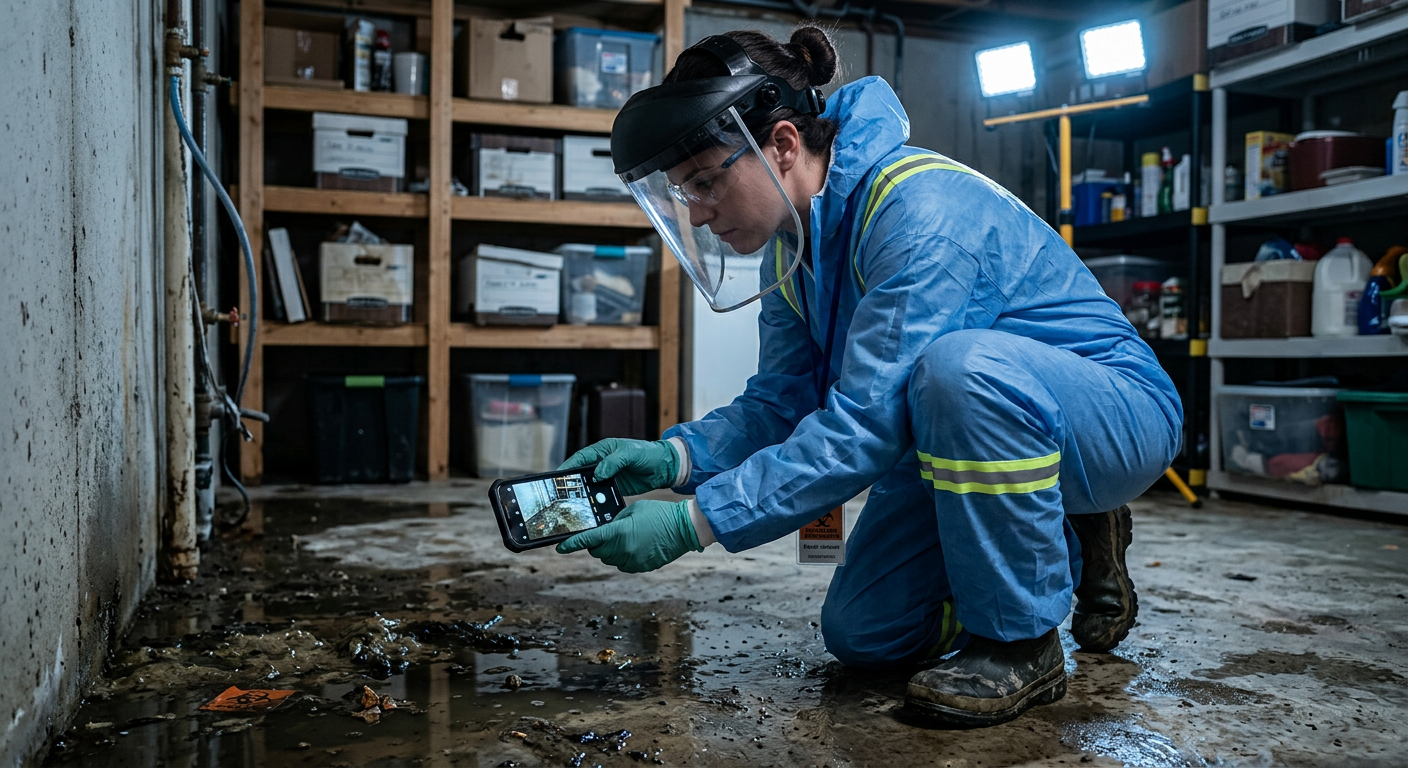
If you suspect a clogged main line, call a licensed plumber. If the problem follows heavy rain, a municipal sewer issue, or a septic-system failure, report it to the appropriate local utility or health authority as well. Take clear photos and videos from a safe location before anything is moved, since this documentation can help with an insurance claim.
2. Protect Yourself With Proper Gear
For a very limited spill on a nonporous surface, wear waterproof gloves, rubber boots, protective eyewear, and disposable coveralls. Avoid eating, drinking, touching your face, or carrying contaminated items through clean parts of the home.
If the sewage has reached carpet, drywall, fabric furniture, boxes, insulation, or unfinished framing, it is time to step back. These materials can absorb contaminants beyond the visible waterline, and professional equipment is usually the safer option.
3. Remove Standing Wastewater Without Spreading It
Never use a standard household vacuum, wet-dry vacuum, or rented carpet machine for sewage-contaminated water. Those tools can expose you to contaminants and may contaminate the equipment for future use.
A professional crew uses contained extraction methods, protective equipment, and disposal practices designed for contaminated water. We also inspect adjoining rooms, floor cavities, baseboards, and lower wall areas because sewage can travel farther than it first appears.
For an Aspen home or vacation property, our sewage backup cleanup service can help manage extraction, disinfection, odor control, drying, and documentation in one coordinated process.
4. Remove Porous Materials That Cannot Be Safely Saved
Here is the hard part: some belongings and building materials need to be discarded after sewage exposure. Carpet and pad, upholstered furniture, mattresses, cardboard boxes, paper goods, insulation, and many unfinished wood materials can retain contamination even after surface cleaning.
The EPA notes that rugs, flooring, wallboard, curtains, and upholstered furnishings exposed to sewage often need replacement. Review the EPA's sewer overflow guidance for more detail.
Nonporous materials, such as glass, metal, hard plastic, and sealed concrete, may be cleaned and disinfected when the contamination is limited and the item is intact. Do not make keep-or-dispose decisions based only on appearance. Moisture can remain behind walls, under flooring, and inside stored items.
5. Clean, Disinfect, And Dry the Right Surfaces
After contaminated materials are removed, hard surfaces need thorough cleaning before disinfection. Removing visible soil first helps the disinfectant work as intended.
For a limited sewage event involving sealed, nonporous surfaces, the EPA advises disinfection with a bleach solution of one-half cup of chlorine bleach per gallon of water. Never mix bleach with ammonia, acids, or other cleaners. Ventilate only when doing so will not spread contaminated air into clean areas, and follow all product-label safety instructions. See the EPA's post-flood septic cleanup advice.
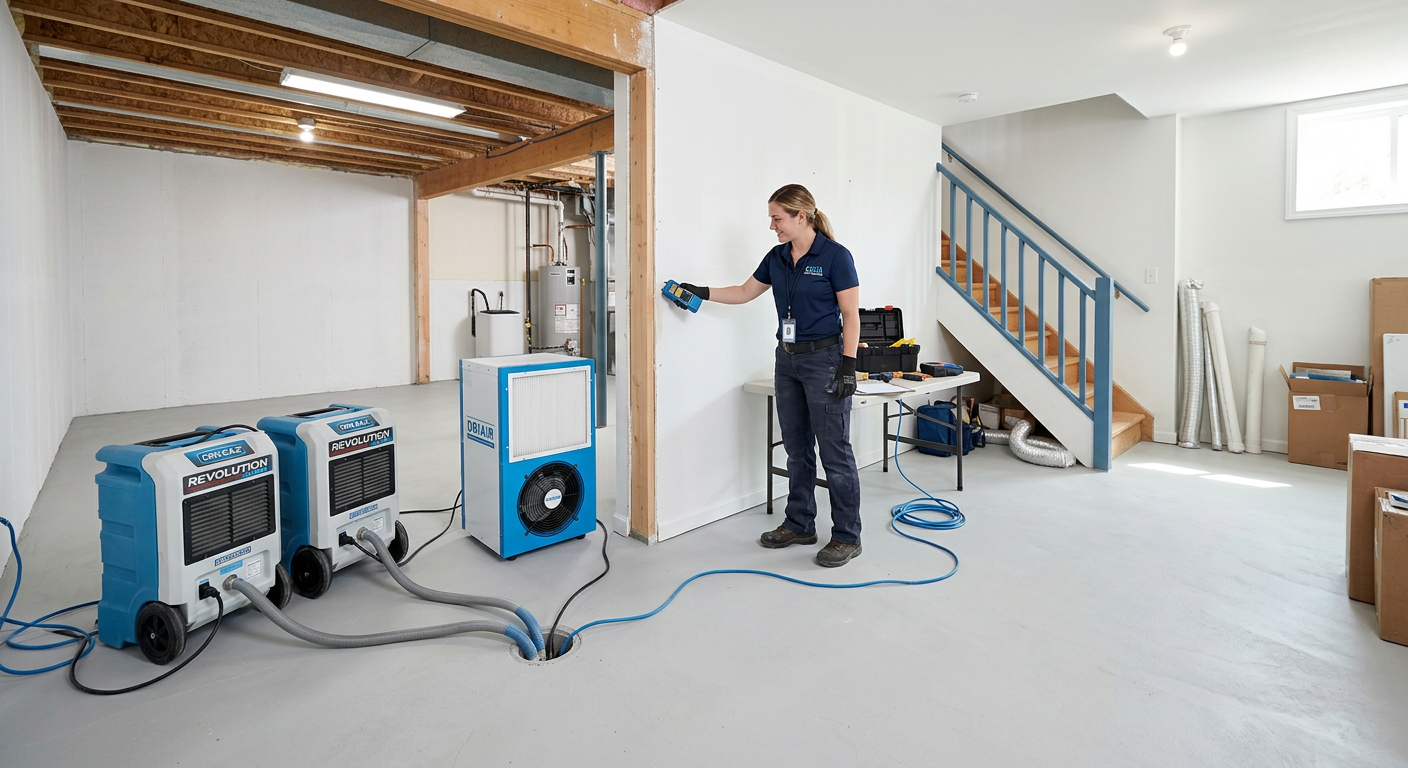
Drying matters just as much as cleaning. A basement that looks dry can still contain moisture in framing, concrete, subflooring, or wall cavities. Professional moisture checks and controlled dehumidification help reduce the risk of lingering odor, material damage, and mold growth.
6. Do Not Forget the Air, HVAC, and Hidden Areas
Avoid running the central heating or cooling system if it may pull air from the affected basement and distribute odors or contaminants elsewhere. Keep interior doors closed between the affected area and clean living spaces when possible.
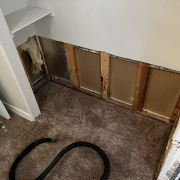
A restoration team may use air filtration, odor-control methods, moisture monitoring, and targeted demolition to address hidden damage. This is especially important for finished basements, rental properties, and seasonal homes in Aspen, Snowmass Village, Basalt, Carbondale, Glenwood Springs, and across the Roaring Fork Valley.
If moisture from the event has reached framing or wall cavities, it is also smart to watch for mold. Our mold damage services can help when a sewage backup and prolonged moisture create a second cleanup concern.
7. Document Everything for Insurance
Before cleanup begins, photograph the source area, standing wastewater, damaged finishes, personal property, and affected rooms. Keep a simple list of discarded items, including estimated age and value when possible.
Call your insurer promptly and ask about sewer backup coverage, water damage coverage, deductibles, and claim documentation requirements. Coverage depends on your individual policy and the cause of the event, but early documentation gives you a clearer starting point.
Helpers Restoration works with insurance carriers and can provide damage documentation to support the process. If the sewage spill is tied to a burst pipe or broader basement flooding, our water damage restoration services address extraction, structural drying, and repairs after the contamination is handled.
8. Prevent the Next Basement Sewage Backup
Once the immediate danger is over, ask a plumber to identify the cause. A main-line blockage, aging pipe, tree-root intrusion, broken lateral line, damaged septic component, or overloaded municipal system may require a different long-term fix.
Useful prevention steps include keeping grease, wipes, paper towels, hygiene products, and other non-flushable materials out of drains. You can also ask a qualified plumber whether a backwater valve, sump-pump upgrade, drain maintenance plan, or sewer-line inspection makes sense for your property.
For homes with a septic system, the EPA recommends inspections every one to three years and pumping every three to five years, depending on system needs. Learn more about septic system maintenance.
Common Questions About Basement Sewage Cleanup
Can we clean a small sewage spill ourselves?
A very small spill on an intact, nonporous surface may be manageable with proper protective gear, careful cleaning, and disinfection. If the spill involves carpet, drywall, stored belongings, multiple rooms, electrical hazards, or a persistent backup, professional cleanup is the safer choice.
How long does sewage cleanup take?
A limited event on sealed concrete may be addressed in a day, while larger losses can take several days or more. The timeline depends on the source, the amount of contamination, affected materials, required drying, and any needed repairs.
Is a basement safe after it has been disinfected?
It can be safe after contaminated materials are removed, remaining surfaces are properly cleaned and disinfected, and the space is thoroughly dried. A professional inspection helps confirm that hidden moisture and contaminated materials have not been overlooked.
Will bleach remove sewage odor from a basement?
Bleach may disinfect certain hard surfaces when used correctly, but it cannot solve odor trapped in carpet, drywall, insulation, wood, or other porous materials. Odor control requires removing the contamination source, cleaning surfaces, and drying the affected structure.
Does homeowners insurance cover a sewage backup?
It depends on the policy, cause of loss, and whether sewer or drain backup coverage was added. Contact your insurer promptly, document the damage before disposal, and keep copies of estimates and invoices.
Should we replace drywall after a sewage backup?
Often, yes. Drywall and insulation that absorb sewage-contaminated water are commonly removed because they are porous and difficult to fully decontaminate. The appropriate removal height depends on the spread of contamination and the construction of the affected area.
Get Immediate Help in Aspen and the Roaring Fork Valley
A sewage spill is not the moment to take chances with your health or property. Helpers Restoration provides 24/7 emergency cleanup for homeowners and property managers in Aspen, Basalt, Carbondale, Snowmass Village, Glenwood Springs, and nearby communities.
Call Helpers Restoration at (970) 927-3600 for urgent help with sewage cleanup, water removal, structural drying, and insurance documentation.
Summary
The safest way to handle a basement sewage spill is to stop the source, keep people out of the affected area, document the damage, and avoid spreading contamination during cleanup. Nonporous surfaces may sometimes be disinfected, but absorbent materials such as carpet, padding, drywall, insulation, and fabric furnishings frequently require removal.
Fast action protects more than the basement. It helps limit water damage, reduce odor and mold concerns, preserve insurance evidence, and give your household or tenants a safer path back to normal.
A Safer Path Forward
Sewage in a basement is overwhelming, but the next steps do not have to be unclear. Put safety before salvage, avoid using household equipment on contaminated water, and let qualified professionals assess materials that may hold hidden contamination.
When we act quickly and follow a complete cleanup plan, we can help protect the structure, the belongings that can be saved, and the people who rely on the property every day.