Drying and Dehumidification After Flood: Aspen Homeowner Guide
A flooded room can look manageable once the standing water is gone, but the real risk often remains inside floors, walls, cabinets, and insulation. Moisture that is invisible to the eye can continue damaging finishes and create the conditions for mold growth.
Drying and dehumidification after flood events is the work that protects your property after extraction is complete. Whether the source was snowmelt, a burst pipe, an appliance leak, or exterior flooding, we recommend a measured drying plan instead of relying on open windows and a few household fans.
The U.S. Environmental Protection Agency advises drying water-damaged areas and belongings within 24 to 48 hours when possible to reduce the chance of mold growth. The agency also notes that indoor humidity should ideally remain between 30% and 50%, with levels below 60%. Read the EPA moisture and mold guidance (epa.gov)
What Proper Flood Drying Looks Like
Drying is not simply about making surfaces feel dry. It is a controlled process that removes liquid water, encourages safe evaporation, captures water vapor from the air, and verifies that affected materials have returned to an acceptable moisture level.
| Drying Step | What It Does | Why It Matters |
|---|---|---|
| Water extraction | Removes standing water | Limits saturation |
| Air movement | Speeds evaporation | Helps surfaces release moisture |
| Dehumidification | Pulls vapor from air | Prevents humid air from slowing drying |
| Moisture testing | Checks materials below the surface | Confirms drying progress |
| Documentation | Records readings and work performed | Supports repair planning and insurance claims |
Extraction Comes Before Equipment Placement
The fastest way to improve drying conditions is to remove bulk water first. A wet carpet, saturated pad, soaked cabinet toe-kicks, or water trapped under flooring will keep releasing moisture long after the visible puddle disappears.
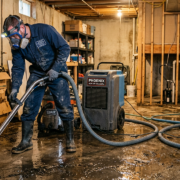
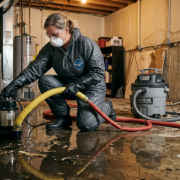
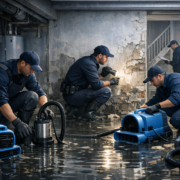
For a small clean-water spill, a homeowner may be able to remove water safely with a wet vacuum. Larger losses, contaminated water, and water that reached wall cavities or multiple rooms require more than surface cleanup. Our water damage restoration services focus on extraction, moisture mapping, structural drying, and clear next steps for repairs.
Air Movers and Dehumidifiers Have Different Jobs
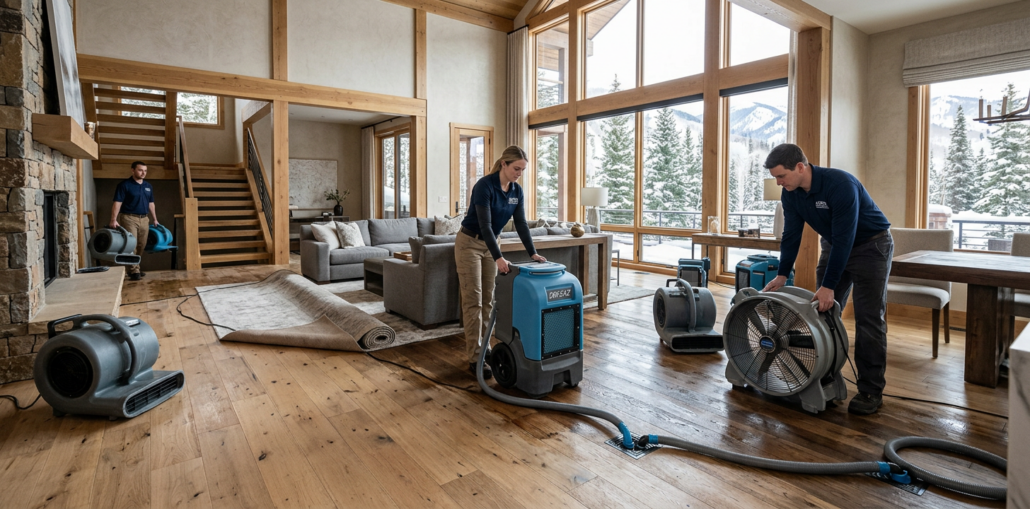
Air movers direct airflow across wet surfaces to encourage evaporation. Dehumidifiers remove the resulting vapor from the indoor air. One without the other can create problems, especially in a tightly built Aspen home where moisture has nowhere to go.
Here is the practical takeaway: fans move moisture, while dehumidifiers remove moisture. Professional teams use both strategically, adjusting equipment as readings change instead of leaving machines running without a plan.
Verification Matters More Than Appearance
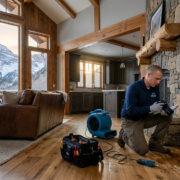
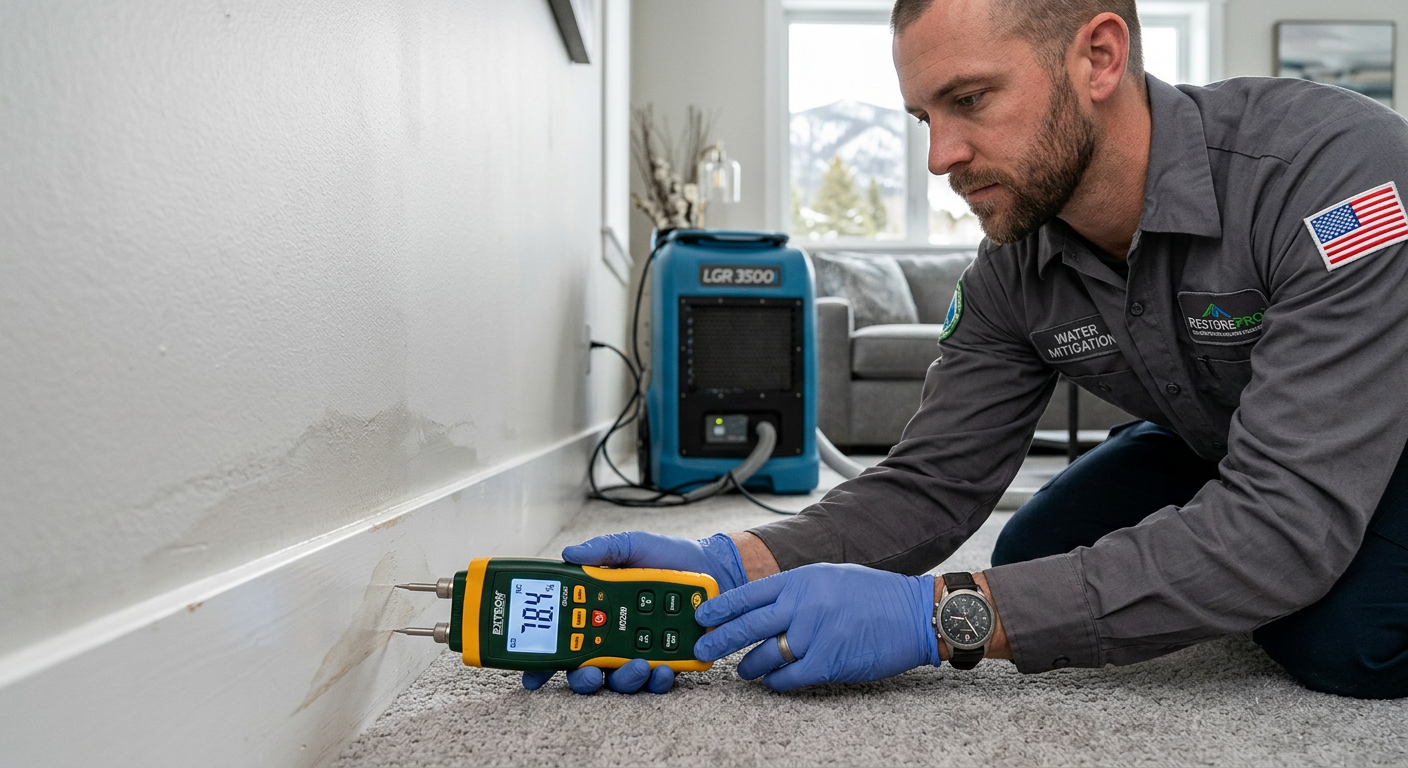
Drywall, engineered wood flooring, insulation, and subfloors can hold moisture after they feel dry to the touch. The EPA recommends using a moisture meter to determine whether walls, cabinets, and flooring are ready for refinishing, and notes that materials should measure 15% moisture content or less before refinishing. See the EPA flood cleanup guidance (epa.gov)
We compare wet-area readings with known dry materials in the same property whenever possible. That comparison helps determine whether drying is progressing, whether targeted demolition is needed, and when reconstruction can begin.
A Practical Timeline After Flooding
Every property dries differently. Water category, temperature, humidity, material type, insulation, and how long water sat all affect the timeline. Still, knowing the general sequence helps homeowners and property managers make smarter decisions.
The First Day
Make safety the priority. Stop the water source if it is safe, avoid wet electrical equipment, and keep people away from water that may contain sewage or other contaminants. Photograph affected rooms and belongings for your insurer before moving items when possible.
If floodwater, a sewer backup, or visibly dirty water entered the property, avoid treating it as a basic cleanup project. Contaminated water changes the safety requirements and may call for specialized sanitation and removal of porous materials. Learn more about sewage backup cleanup if the water source was a drain, toilet, or sewer line.
Days Two Through Four
This is usually the active drying phase. Equipment runs continuously, air movement and humidity are managed, and moisture readings should show a downward trend. Some contained clean-water losses can dry in a few days, while insulated walls, hardwood flooring, plaster, and concrete can take longer.
Opening windows can help only when outside air is drier than indoor air and the weather is suitable. In the Roaring Fork Valley, mountain weather and cold temperatures can make uncontrolled ventilation less effective than purposeful dehumidification.
After Drying Is Verified
Do not rush to close walls, reinstall flooring, repaint, or put wet contents back in place just because the room looks normal. Repairs should follow confirmation that the structure is dry and clean.
If you notice a persistent musty odor, staining, swelling, or recurring moisture, the issue may have moved beyond simple drying. Our mold damage services can help address suspected microbial growth and the moisture source behind it.
Common Mistakes That Slow Recovery
Relying on Household Fans Alone
Box fans can provide some circulation, but they do not remove water vapor from the air. In a closed room, they can simply push humid air around while materials continue releasing moisture.
Turning on HVAC Too Soon
The EPA advises against using HVAC equipment after a flood until cleanup and drying steps are complete and needed repairs have been addressed. If the system or ductwork was affected, circulating it prematurely may spread contaminants or moisture through the home. Review EPA guidance for flooded homes (epa.gov)
Covering Up Wet Materials
Fresh paint, new flooring, baseboards, and insulation can trap moisture inside a wall or floor assembly. That can lead to warped materials, adhesive failures, odor, and expensive repeat work.
Ignoring the Source of the Water
A drying plan only works if the water source is stopped. A roof leak, frozen pipe, failed appliance hose, poor drainage path, or foundation seepage needs correction alongside mitigation.
When Professional Drying Is the Safer Choice
We recommend professional assessment when water reached more than a small, easy-to-access area, when flooring or wall cavities are wet, or when the source was not clean water. It is also a smart choice when you need accurate documentation for an insurance claim or manage a rental, condominium, retail space, or multifamily property.
For homeowners dealing with water damage Aspen residents commonly see after frozen pipes, snowmelt, and plumbing failures, Helpers Restoration provides local emergency extraction, targeted drying, dehumidification, and moisture documentation. We serve Aspen, Basalt, Carbondale, Snowmass Village, Glenwood Springs, and the broader Roaring Fork Valley with a restoration plan tailored to the property and water source.
Frequently Asked Questions
How long does drying and dehumidification take after a flood?
Many contained water losses dry in roughly three to five days, but the timeline can be longer for saturated framing, hardwood flooring, insulated walls, plaster, or concrete. Moisture readings, not the calendar alone, should determine when materials are ready for repair.
Can I use a home dehumidifier after a burst pipe?
A home dehumidifier may help with a minor, clean-water spill after water is removed. It is usually not enough for widespread water intrusion because household units have limited capacity and cannot verify whether moisture remains behind walls or under floors.
Should I open windows to dry a flooded house?
Only when outdoor air conditions support drying and it is safe to do so. If outdoor humidity is high, open windows may add moisture rather than remove it. Mechanical dehumidification provides more consistent control.
Will flood drying prevent mold completely?
Fast, thorough drying greatly reduces mold risk, but no process can promise zero mold in every situation. The key is removing water, controlling humidity, cleaning affected materials properly, and confirming that hidden areas are dry.
How do I know if water is still inside my walls?
Warning signs include a musty smell, bubbling paint, warped baseboards, soft drywall, staining, or recurring humidity. Moisture meters and thermal imaging can help identify hidden wet areas without unnecessary demolition.
Does homeowners insurance pay for professional drying equipment?
Many policies may cover mitigation for sudden and accidental water damage, such as a burst supply line or appliance failure. Coverage depends on the cause, policy terms, and exclusions, so document the loss, notify your insurer, and keep records of mitigation work.
Get a Clear Drying Plan for Your Property
If you are facing a flood, leak, or burst pipe, call Helpers Restoration at (970) 927-3600 for 24/7 emergency water cleanup in Aspen and the Roaring Fork Valley. You can also contact our restoration team to request help with extraction, drying documentation, dehumidification, and insurance coordination.
Summary
The most important part of flood recovery often happens after standing water is removed. Proper water removal, air movement, humidity control, and moisture verification work together to protect finishes, reduce mold risk, and prevent hidden damage from resurfacing during repairs.
For Aspen-area homeowners and property managers, the best approach is simple: address the source, remove water quickly, use controlled drying methods, and do not rebuild until the affected materials are confirmed dry. That protects both your property and your peace of mind.